





Mathematics’ most famous open problem may have fallen on a Friday, and the paperwork is 17 million lines of code. Levent Alpöge, a mathematician on Anthropic’s technical staff, posted a four-page note saying: “I believe I have, working with Claude, discovered a proof of the Riemann Hypothesis.” He posted the proof as a giant archive written in Lean, a language that lets a computer check every logical step. By Saturday morning, independent checkers had thrown a lot of computing power at it and hadn’t found a problem. Mathematicians say understanding it will take a lot longer.
Update · Nov 25, 2026: The Lean FRO and the Mathlib Initiative have certified that Alpöge’s formal proof establishes Mathlib’s standard statement of the Riemann Hypothesis. That is a certification of a machine-checked formal proof, not journal peer review. Andrew Sutherland’s verification log, last updated at 2:05 p.m. PT Nov. 25, now says all checks of the original 17-million-line proof have finished: Lean’s stricter “paranoid” kernel accepted the full exported proof on Nov. 23, a standalone Comparator check passed the same day, and the end-to-end lake comparator run against the canonical challenge passed on Nov. 25. A shorter rewriting was also posted Nov. 25; some of its kernel checks have passed, but its end-to-end comparator runs were still going as of 4:15 p.m. PT.
Last checked: Nov 25, 2026, 4:55 p.m. PT. This is a developing story.
Key points
- Anthropic mathematician Levent Alpöge says he and Claude found a proof of the Riemann Hypothesis and of GRH for Dirichlet L-functions, released only as Lean code.
- The Lean FRO and the Mathlib Initiative have certified that the formal proof establishes Mathlib’s standard statement of the Riemann Hypothesis. That is formal-proof certification, not journal peer review.
- MIT’s Andrew Sutherland reports that all checks of the original 17-million-line proof have finished, including Lean’s “paranoid” kernel on Nov. 23 and an end-to-end lake comparator run on Nov. 25. No human-readable write-up has been posted.
- The same day as the original release, Stanford’s Ravi Vakil posted a separate, all-human 940-page draft proof of GRH, then reported that readers had found problems in it.
The Riemann Hypothesis dates to 1859. It says that all the “interesting” zeros of the Riemann zeta function sit on one vertical line, which pins down how evenly prime numbers are spread out. The Clay Mathematics Institute lists it as one of its $1 million Millennium Prize Problems and notes it has been checked for the first 10 trillion zeros. Checking examples was never going to settle it. There are infinitely many zeros.
What Alpöge actually released
Alpöge writes that the method “easily extends” to the Generalized Riemann Hypothesis (GRH), and that he expects the Extended Riemann Hypothesis to follow “with more time.” A timeline he says Claude put together runs from Oct. 6 to Nov. 16, which lines up with the roughly six weeks of work Reuters reported (via the BBC). Reuters also reported that the proof was found with a non-public version of Claude. He says he has not yet mastered all the mathematics in his own proof. A full write-up generated with Claude ran past 250,000 pages, by his count, and he chose not to post it. The complete version he released on Nov. 20 is the Lean archive, split into 14 downloads. Independent checkers count 175,187 Lean files, and one verification log puts the total at about 17.4 million lines. Alpöge’s homepage lists him as an Anthropic employee and a junior fellow at Harvard’s Society of Fellows.
What the machines have checked
Andrew Sutherland, an MIT mathematician, is keeping a running public log of checks, which he says were run with Claude Code. As of the page’s last update, 22:05 UTC Nov. 25 (2:05 p.m. PT), it reported that all checks of the original proof have finished:
| Check | Result Sutherland reports |
|---|---|
| Compile all 175,187 modules (Lean 4.33.1, Mathlib 4.33.1) | Pass, zero errors |
| Axioms used by the five headline theorems | Only Lean’s three standard axioms |
| Lean kernel replay, module by module | 175,187 of 175,187, zero rejections |
| nanoda (independently written checker, in Rust) | Accepts full exported proof |
| con-leche (another independent checker) | Accepts; its compare mode matches all five theorem statements to the challenge file |
| lean4lean, module by module | Pass (five modules needed a higher step limit) |
| Lean default and “paranoid” kernels on the full export | Both accept the full export; the paranoid kernel finished Nov. 23 |
| Standalone Comparator v4.33.0 check | Pass on Nov. 23; “Your solution is okay!” |
| End-to-end lake comparator with the canonical challenge | Pass on Nov. 25; “Your solution is okay!” |
In a Nov. 21 joint statement, the Lean FRO and the Mathlib Initiative said they have “full confidence” that Alpöge’s proof is correct and “hereby certify that both the statement and the proof of the Riemann Hypothesis are correct.” They say the code proves Mathlib’s existing RiemannHypothesis statement, that the library compiles, and that several proof checkers, including Lean’s official kernel and the independently written con-leche and con-ron checkers, accepted an inert export of the proof. Certification of a formal proof is not the same as journal peer review.
The headline theorem uses Mathlib’s existing definition of the Riemann Hypothesis, not one the submission made up. An independent mirror repository packages a “challenge” file that states the five theorems while importing only Mathlib. Sutherland also combined the proof with a separate Lean formalization of Robin’s and Lagarias’s criteria; the combined result proves those inequalities outright, without mentioning the zeta function.
One scope note: the “GRH” in this archive covers Dirichlet L-functions only. Sutherland’s page says Dedekind zeta functions, Hecke L-functions and automorphic L-functions in general “are not among the statements that were checked.” A shorter Lean rewriting of the same five theorems was published on Nov. 25, in a “readable” edition of about 300,000 lines and a “compact” edition of about 76,000. His separate log, last updated at 4:15 p.m. PT Nov. 25, says both editions compile and that several independent checkers accept their exports, but that the end-to-end lake comparator runs had not yet reached a verdict. That shorter code is still Lean, not a prose write-up.
Why compiled code isn’t the end of the story
Kevin Buzzard of Imperial College London has written that the first question is what the theorem in the Lean code actually states, and whether that matches the real theorem. Scientific American reported that he was waiting for a successful comparator run, “so the code is not just exploiting an as yet unknown bug in Lean’s official kernel.” That run was still going Saturday morning; Sutherland’s log now records that it has passed.
The bigger gap is understanding. Terence Tao said, per Reuters, that “the digestion process will take some time.” Andrew Granville told Nature, “What he released is garbled.” Fields medalist James Maynard told Nature: “If this fully checks out, it is clearly a historic milestone in mathematics.” Clay’s rules require publication in a qualifying outlet, at least two years, then “general acceptance in the global mathematics community.” A personal web page and a code archive aren’t the finish line.
Meanwhile, a human proof hit snags the same day
The same day, Stanford mathematician Ravi Vakil posted a “Hurried Announcement” that Alessandro Masullo has a proposed proof of GRH, “all human, with no AI,” and released a 940-page draft. About eight hours later he reported that readers, with help from AI models, had found problems in it. It isn’t a withdrawal, but the draft can’t be called a proof right now.
Anthropic made its Nasdaq debut on Nov. 19, as we covered, and Alpöge’s note landed the next morning. He writes that “The precise timing is horrible” and that a cynical reading of the timing “is false.” As of Nov. 25, we still hadn’t found an official Anthropic statement. The formal checks now say the Lean checks out. “There are numerous results that are conditional on the generalised Riemann hypothesis, and now those are theorems!” James McKee told New Scientist — for results that need only the Dirichlet version. Encryption and banking don’t suddenly change, Scientific American notes. The remaining test is community scrutiny, not the machine checks of the original proof.
Open questions
- Do the remaining checks of the shorter rewriting pass? Sutherland’s separate log still lists end-to-end lake comparator runs as in progress.
- When does a readable proof appear? The shorter Lean rewriting is much smaller, but it is still code, not a prose paper.
- Does the method really extend? Only Dirichlet-character GRH is in the archive. Broader claims are Alpöge’s expectation, not checked results.
- What is wrong with the Masullo draft, and is it fixable? Vakil hasn’t said.
- Will Anthropic say anything? As of Nov. 25, we still hadn’t found an official company statement.
The takeaway
With the formal checks of the original proof now finished, the question stops being whether the Lean checks out and becomes how humans keep up with understanding what it proved. Now comes the part nobody can hand to a machine: understanding it.
Update (Nov 25, 2026): The Lean FRO and the Mathlib Initiative have certified Alpöge’s formal proof of the standard Riemann Hypothesis. Sutherland’s log now reports that Lean’s paranoid kernel accepted the full proof on Nov. 23, a standalone Comparator check passed that day, and the end-to-end lake comparator run passed on Nov. 25; all listed checks of the original proof have finished. Certification of a formal proof is not the same as peer review. This story earlier said those remaining machine checks were still running.
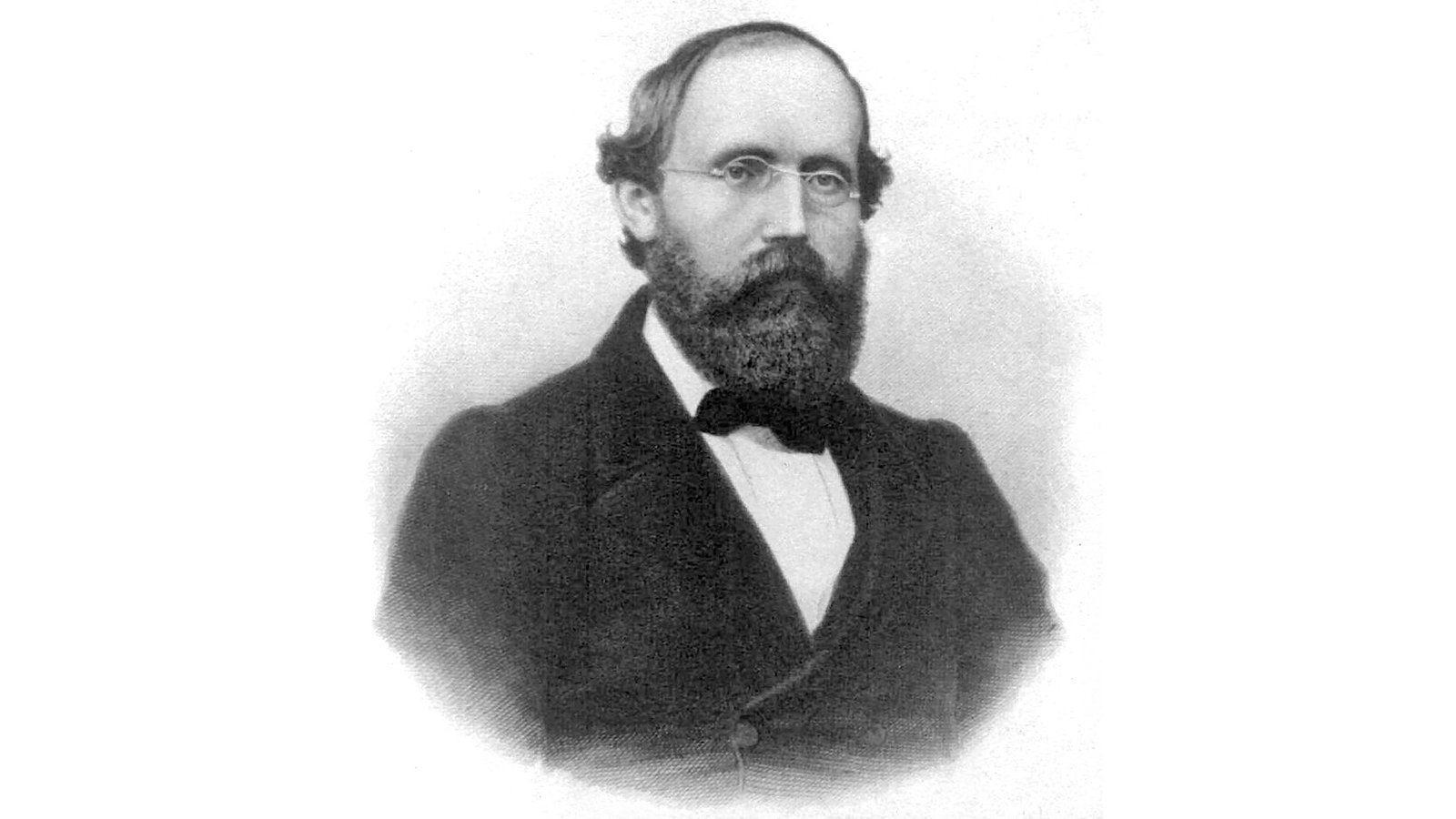
Lead image: Bernhard Riemann, photographed in 1863, public domain, via Wikimedia Commons.
Hype in. Signal out.