


Until now, smartwatch flashlights have pointed the same way: out the top of the case, like a tiny headlamp on your wrist. Coros thinks that’s wrong. Its new Vertix 4, announced Tuesday, puts the LED on the right side of the case, aimed at whatever your hand is doing. The $799 expedition watch also swaps its old low-power screen for a 3,500-nit AMOLED and promises free satellite maps next year. Reviewers mostly like the hardware. They’re less sure about the software, and much less sure about the price.
Key points
- Coros announced the Vertix 4 on Nov. 24 at $799, $100 more than the Vertix 2S, with orders opening Nov. 27.
- It is Coros’ first watch with a built-in flashlight, and Coros put the LED on the right side of the case instead of the top, so it points toward your hand.
- Coros rates it at up to 105 hours of standard GPS and 30 days of daily use, but its own spec sheet drops those to 75 hours and 10 days with the always-on display.
- DC Rainmaker and Tom’s Guide both report heart-rate misses in testing, and DC Rainmaker says $799 is too much next to discounted Garmin and Suunto rivals.
A flashlight that points at your hand
Coros’ launch post says the light sits at the 3 o’clock position so it shines on what your hands are doing, like strapping on crampons or digging a carabiner out of a pack in the dark. The product page lists a 5700K cool-white beam with a 90-degree spread. Coros says it can run for up to 100 hours on brightness level 1, of three, with the screen off. There are also strobe and SOS modes, but no red or green light, which GearJunkie notes Garmin’s Fenix 9 offers.
DC Rainmaker’s Ray Maker says Coros asked his opinion on the side placement at least a year ago, and he told them to “just follow everyone else.” After testing it, he says it’s “growing on me” for hand-focused tasks, but feels “weird and forced” when you want to light up the area in front of you. On a bike ride after sunset, the light did “a so-so job” lighting the road at low speeds and was “mostly useless” at higher ones, though it helped oncoming cars see him. Tom’s Guide’s Nick Harris-Fry is still “on the fence” about the placement.
The bigger complaint is the controls. Double-pressing the lower-left button turns the light on, but double-pressing it again doesn’t turn it off. It cycles into flashing and SOS modes instead, and you turn the light off with a different button. Maker calls it “a haphazard UI.” During a workout, the normal shortcut doesn’t work at all; he says you have to dig through a menu to find the flashlight. That’s fixable in software, but it isn’t fixed yet.
What else changed
The Vertix 4 replaces both the Vertix 2 and Vertix 2S, according to Coros’ press release. Coros skipped the number 3 to line the Vertix up with its Pace 4 and Apex 4 watches. Here’s what’s new, from Coros’ spec sheet and Maker’s change list:
- Screen: 1.47-inch LTPO AMOLED (466 × 466) under sapphire glass, rated up to 3,500 nits. The Vertix 2S used a memory-in-pixel (MIP) screen, which is dimmer but sips power.
- Size: 49.4 × 49.4 × 13.8 mm, which Coros says is 14% thinner than the Vertix 2S. It weighs 84 grams with the silicone band and 68 grams with the nylon one. Both bands come in the box. There’s only one size.
- Voice: a speaker and two microphones for phone calls (with your phone nearby), voice commands and “Voice Pins,” spoken notes pinned to a spot on your map.
- Storage and maps: 64 GB, double the old model, for offline topo maps with trail and street names. Satellite maps are listed as “coming early 2027.”
- Toughness: titanium bezel, 10 ATM water rating and a working range of -22°F to 122°F (-30°C to 50°C).
What’s still missing: Tom’s Guide says there are no contactless payments and no music streaming services; you can only drag and drop your own music files onto the watch. GearJunkie adds that it lacks Garmin-style routable maps and third-party apps.
Read the battery fine print
Coros’ headline numbers are 105 hours of GPS and 30 days of daily wear. Both assume the screen goes dark when you’re not looking at it. With the always-on display, which is how many people will want to run an AMOLED watch outdoors, Coros’ own spec sheet lists much lower figures:
| Mode (Coros’ claims) | Screen wakes on demand | Always-on display |
|---|---|---|
| Standard GPS (GPS/QZSS) | 105 hours | 75 hours |
| All satellite systems (“High”) | 75 hours | 58 hours |
| Dual-frequency (“Max”) | 60 hours | 48 hours |
| Daily use with sleep tracking | 30 days | 10 days |
That changes the comparison with the old watch. Coros’ Swiss launch post says 60 hours of dual-frequency GPS is “40% more than the Vertix 2S.” That 40% matches 60 hours against the Vertix 2S’s 43, the figure Maker lists for the old watch. Maker compares the two with the screen always on: 43 hours before, 48 now. That’s about 12% more, not 40%. And Maker says the all-systems GPS rating with the always-on screen fell from 73 hours to 58. Wareable says standard GPS dropped from 118 hours on the Vertix 2S to 105.
Early real-world numbers look decent. Harris-Fry says that with the screen always on and daily runs in dual-frequency mode, his watch was on track for more than 10 days, though he hadn’t used it for sleep tracking. Nobody has published a full battery test yet.
Accuracy: GPS mostly fine, heart rate wobbles
Both in-depth testers saw heart-rate problems. Harris-Fry says that on a hard progression run in cold weather, the Vertix 4’s readings were “too high throughout” compared with a chest strap, and he’d pair one with it. Maker says the optical sensor lost his heart rate entirely on a steep trail climb and had “notable cycling heart rate issues.” He got better accuracy from Coros’ cheaper Pace 4 Pro.
GPS fared better. Harris-Fry says his tracks were “spot on” next to a Garmin Fenix 9 Pro. Maker saw “a lot of small errors” while running, but “nothing that’s a dealbreaker.” His summary: the Vertix 4 is “definitely far from industry leading right now.”
The satellite maps are a beta, and reviewers had early access. Maker says getting them onto the watch, over a direct Wi-Fi link from your phone, was “flaky.” Harris-Fry found it “pretty quick and easy” and says the maps “look great” on the AMOLED. Garmin charges $49 a year for satellite imagery through its Outdoor Maps+ subscription, according to Maker; Coros says its version will be free.
The price problem
Coros could hardly have picked a worse week. Orders open Nov. 27, which is Black Friday. Maker calls that “a baffling business decision” because the watch lands next to a Garmin Fenix 8 on sale for $749. Tom’s Guide also lists the Fenix 8 at $749 right now. Maker argues the Fenix 8 has a better flashlight with more modes and colors, a much better heart-rate sensor and more polished features, and expects that sale price to become normal after the holidays.
Here’s where it sits, using prices the reviewers cited:
| Watch | Price cited | Source |
|---|---|---|
| Coros Vertix 4 | $799 (list) | Coros |
| Coros Vertix 2S | $699 (previous price) | DC Rainmaker |
| Suunto Vertical 2 (has a flashlight) | $599; titanium model $699 | DC Rainmaker; Tom’s Guide |
| Garmin Fenix 8 | $749 (current sale) | DC Rainmaker; Tom’s Guide |
| Garmin Fenix 9 lineup | From $999 | Tom’s Guide |
| Garmin Fenix 9 Pro (51mm) | $1,200 | GearJunkie |
Against the newest Garmins, $799 looks fine. GearJunkie’s Andrew McLemore says the Vertix 4 is “several hundred dollars cheaper” than the Fenix 9 Pro and has a brighter screen and more battery life. Against discounted older models, it doesn’t. Maker also points to the Suunto Vertical 2, which has a flashlight and costs $200 less. His verdict: Coros “should have either priced it lower, or launched it months ago.”
Coros seems to know some buyers aren’t shopping on value. Darian Allberry, Coros’ head of product marketing and support, told GearJunkie one target buyer is “the person who drives a souped-up truck on city roads” and wants “the best of the best.”
Coros hadn’t listed the Vertix 4 on Amazon.com when we checked Tuesday afternoon, so there’s no Amazon link here.
Who should buy it, and who should skip it
Consider it if you want a very bright screen, long GPS life and free satellite maps without a subscription, and you’re already happy with Coros’ app. It makes the most sense for long hikes and multi-day trips far from a charger.
Skip it if you need accurate heart rate during hard efforts without a chest strap, want contactless payments or music streaming, or have a small wrist, since there’s one size. If you mostly want a flashlight watch, check the Fenix 8 and Suunto Vertical 2 prices first. And if you want maximum battery life, the MIP-screen Vertix 2S may still serve you better.
What to watch
Three things specific to this watch. First, whether Coros fixes the flashlight controls, especially the missing shortcut during workouts. Second, whether satellite maps actually ship in early 2027 and download more reliably than the beta. Third, whether Coros trims the price once Garmin’s holiday discounts become permanent, as Maker expects.
Hype in. Signal out.
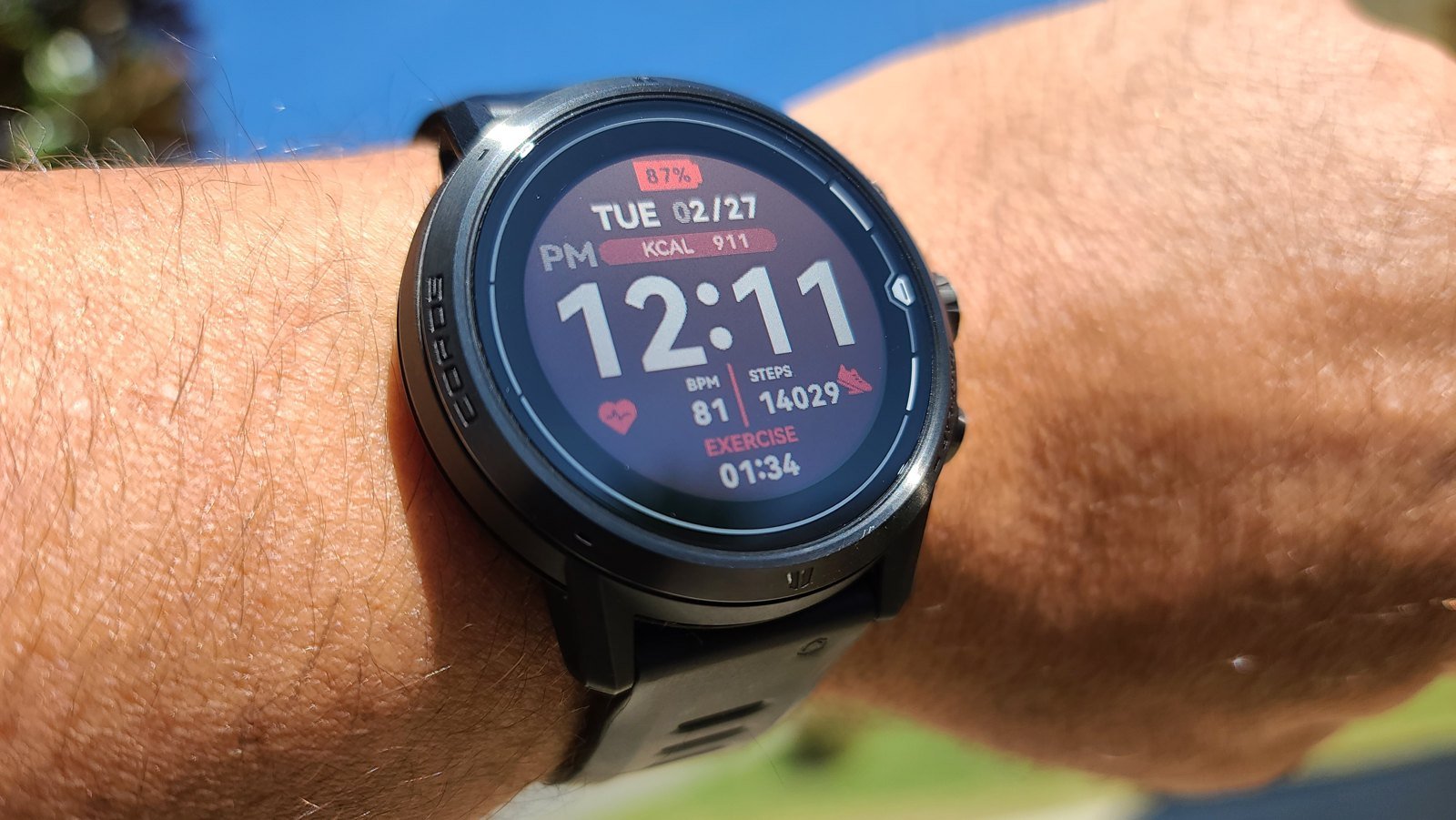
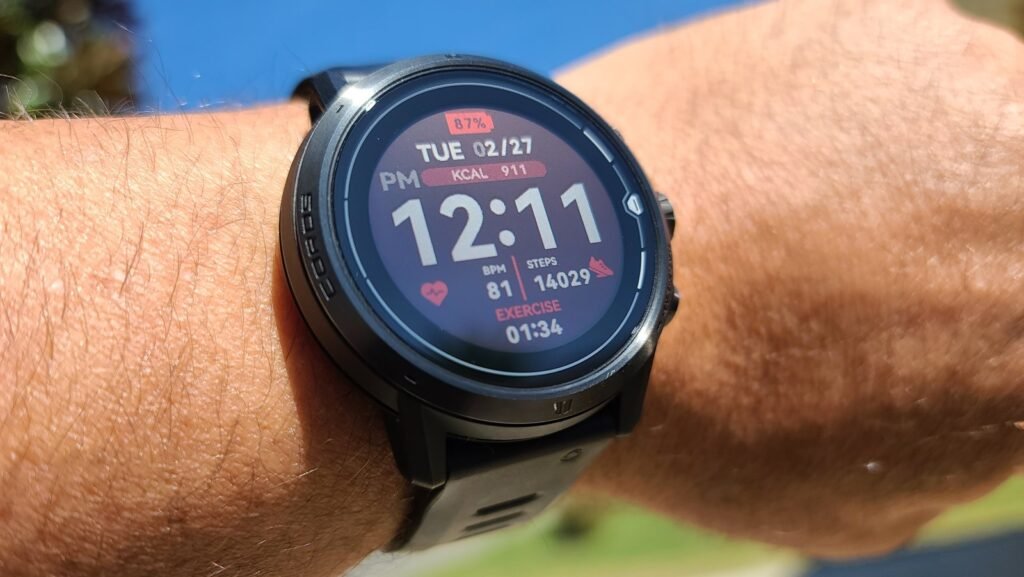
Lead image: a Coros Apex Pro, an older Coros multisport watch, not the Vertix 4. Photo by Motwog via Wikimedia Commons, licensed CC BY 4.0. Resized.