


NASA is asking companies to design the first nuclear reactor built to make electricity on the Moon. The agency said Monday that Lunar Reactor-1, or LR-1, will produce 20 kilowatts, and it wants a system ready to launch by 2030. Proposals are due Dec. 21.
That 20 kW figure is a fifth of what NASA ordered just 15 months ago. In August 2025, then-acting Administrator Sean Duffy signed a directive calling for a reactor with a “minimum 100kWe power output,” ready to launch “by the first quarter of FY30,” which runs from October to December 2029. The new statement of work asks for 20 kWe, “ready for launch by December 2030.” So: a fifth of the power, and about a year later.
Last checked: Nov 23, 2026, 8 PM PST. NASA’s release and the final solicitation documents posted Nov. 20 are the newest official sources. No contracts have been awarded.
Key points
- NASA’s final request for proposals for Lunar Reactor-1 asks for a 20-kilowatt fission power system on the lunar south pole, ready to launch by December 2030 and running for at least 5 years.
- That’s a fifth of the 100 kW minimum in NASA’s August 2025 directive, which also wanted launch readiness by late 2029. The cut came in an April 2026 White House memo, not this week.
- The contract only pays for a design and non-nuclear ground tests over 18 months. NASA’s own documents say launch and landing are out of scope, and no flight phase is authorized yet.
- NASA says it has spent over $200 million on surface reactor technology since 2000 “with no significant advancement towards flight system readiness.” This RFP is the latest try.
What NASA actually asked for
The request runs through a new contract called Space Power and Reactor Capabilities, or SPARC, managed by NASA’s Glenn Research Center. According to NASA’s answers to bidders from its industry day, SPARC has a $350 million ceiling, and that ceiling can cover other reactor work, not just LR-1. NASA said in its release that it “may issue additional task orders to support the development of other space nuclear power systems.”
The first job under SPARC is LR-1 Phase 1. The statement of work, dated Nov. 20, lists 40 requirements. The headline ones:
- Power: at least 20 kWe delivered, even after a single failure inside the system, sent over a 3-kilovolt line to users up to 1 km away.
- Fuel and conversion: one reactor using high-assay low-enriched uranium (HALEU, uranium enriched more than ordinary power-plant fuel but well short of weapons grade), with a closed Brayton cycle, a gas turbine loop that turns reactor heat into electricity.
- Where and how long: the lunar south pole, between 84°S and 90°S, on slopes up to 10 degrees, through darkness of at least 354 hours, running at full power for 5 years with no maintenance.
- Size: no more than 15 metric tons, including lander adapters, and it has to fit in a cylinder 4.57 meters wide and 7.8 meters tall.
- Radiation: no more than 5 rem a year above lunar background at 1 km inside a 36-degree cone, and 50 rem a year outside it.
- Safety: the reactor “shall not be operated at power prior to arrival on the lunar surface,” and it needs two independent hardware methods to prevent an accidental chain reaction.
NASA’s “16 households” comparison checks out. Twenty kilowatts running all year is 175,200 kilowatt-hours. The U.S. Energy Information Administration puts the average home at 10,791 kWh a year, which works out to about 16 homes. That’s a small neighborhood’s worth of power, on a world where the night lasts two weeks.
The 100 kW goal didn’t vanish this week
It’s tempting to read this as NASA quietly shrinking the plan. The timeline is more boring than that. On April 14, 2026, the White House issued National Space Technology Memorandum 3, which told NASA to build a “mid-power” reactor with a lunar version “ready for launch by 2030.” The memo says those reactors “will be designed to provide at least 20 kilowatt electric (kWe)” for at least 5 years on the lunar surface.
The 100 kW number moved to a separate, later reactor. The same memo tells NASA to pursue a “high-power space reactor” of at least 100 kWe that “can be ready for launch in the 2030s,” and says at least one of the mid-power designs should be “extensible up to at least 100 kWe.” NASA’s answers to bidders repeat that: scalability “is not a requirement,” and the memo’s 100 kW target is there “for extensibility.” NASA’s August draft already carried the 20 kWe figure.
Why it matters: the Duffy directive itself said industry told NASA that surface power needs are “at least 100kWe for long-term human operations including in-situ resource utilization,” meaning making oxygen, water or fuel from lunar materials. LR-1 is a fifth of that. It’s a real power source for a small outpost, not the plant that runs a mining operation.
What the contract buys, and what it doesn’t
This is the part the “reactor on the Moon by 2030” headlines skip. The statement of work says plainly: “Currently, only a design phase with hardware demonstrations is authorized.”
Phase 1 runs 18 months from award. It asks for three things: a design at preliminary design review (PDR) level, an electrically heated engineering test unit, and radiation testing of components. “Electrically heated” means heaters stand in for the reactor core. No uranium gets split under this task. NASA told bidders the test unit doesn’t even have to match the flight design “in size, fidelity, or redundancy.”
Bidders also asked what happens after the design review, how many units NASA would buy, and whether there was demand, “since no customer is identified in the Concept of Operations.” NASA’s answer: “The LR-1 Program’s current scope is to complete the hardware-driven PDR.” On getting it to the Moon, NASA was blunt: “The LR-1 program scope does not include system launch or landing. LR-1 is a payload to be incorporated into a mission by future users.”
Here’s our math on the schedule. NASA told bidders it expects to award contracts about 120 days after proposals arrive. With proposals due Dec. 21, that points to roughly late April 2027. Add 18 months and the design review lands around late 2028. That would leave about two years to build, fuel, test and certify a flight reactor and have it ready to launch in December 2030, with no lander picked and no flight phase funded yet. NASA could move faster than that. Its own history says it usually doesn’t.
NASA has tried this before
The Duffy directive doesn’t sugarcoat it. “Since 2000, the Agency has invested over $200M towards FSP technologies ranging from 1kWe to 200kWe with no significant advancement towards flight system readiness,” it says. FSP stands for fission surface power, NASA’s long-running name for this idea.
The most recent round was in 2022, when NASA awarded three roughly $5 million, 12-month design contracts for a 40-kilowatt lunar reactor concept. The teams were led by Lockheed Martin, Westinghouse and IX, a joint venture of Intuitive Machines and X-energy. NASA said then that the system “could be ready to launch by the end of the decade.” The directive says the studies wrapped up in 2023. None turned into hardware headed for the Moon.
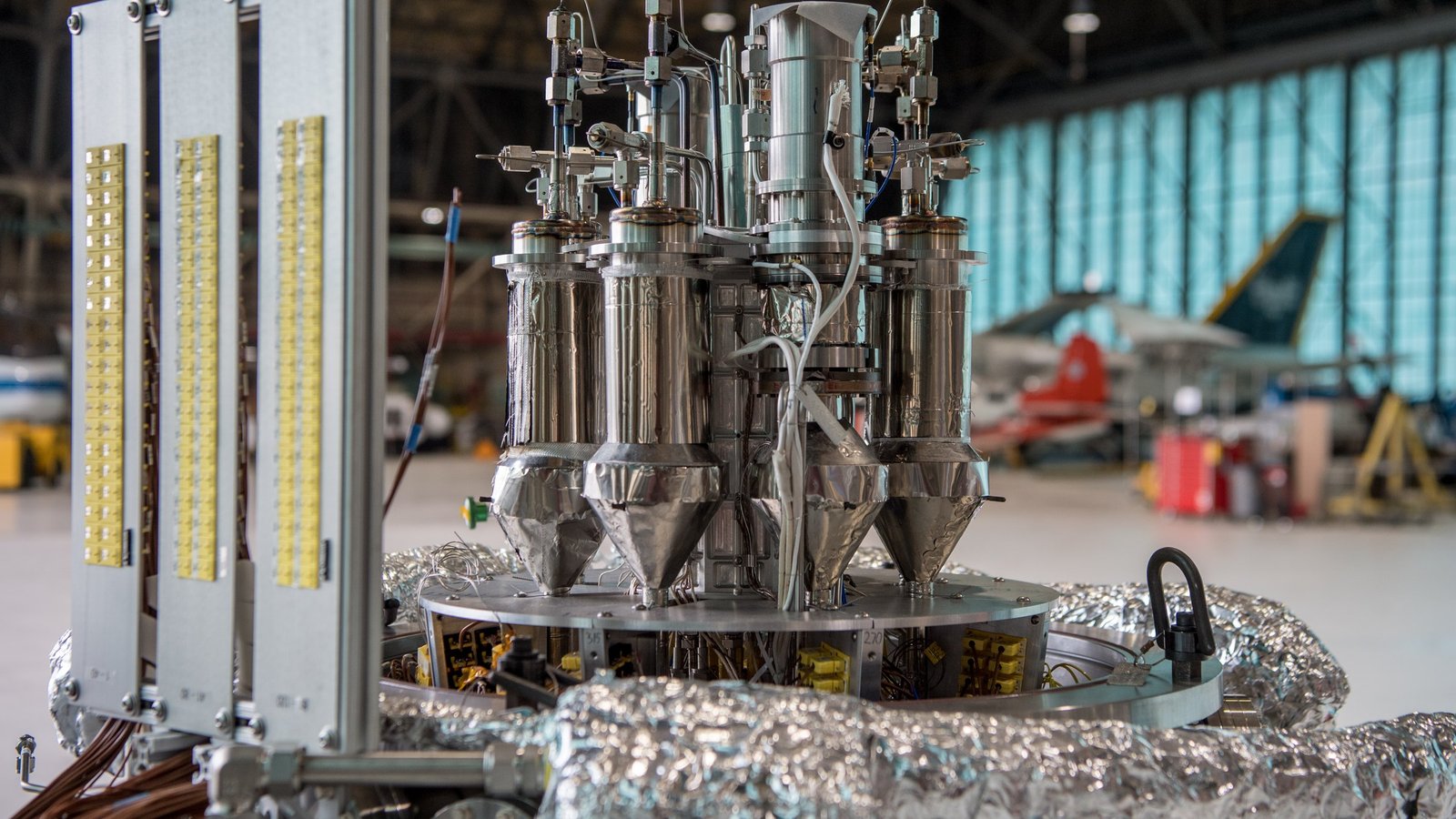
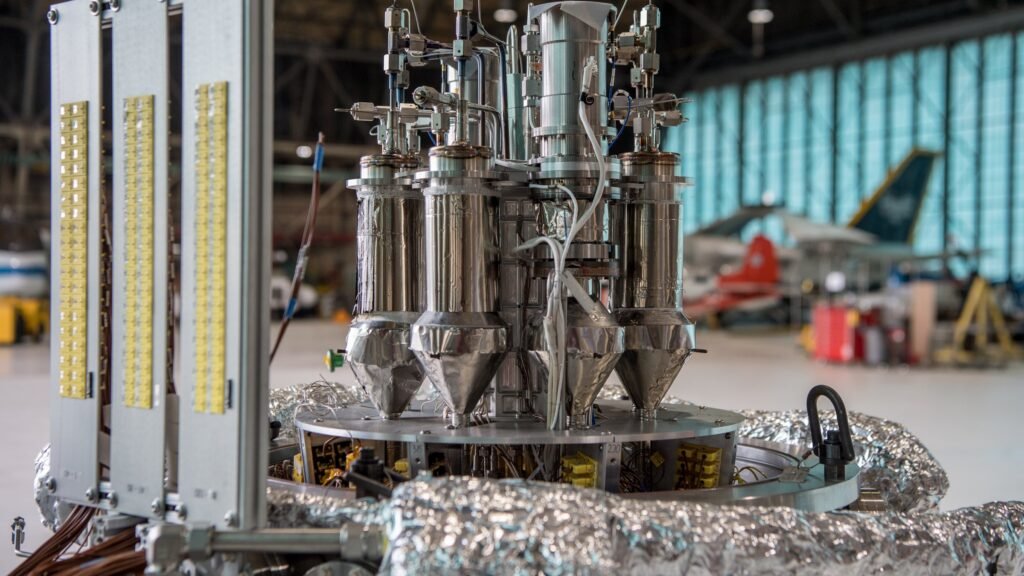
The closest NASA has come to a working space reactor recently was the Kilopower project’s KRUSTY test in Nevada in 2018. NASA called it a successful demonstration, and the team’s results paper describes a reactor that ran 28 hours on the ground. It was a 1-kilowatt-class design. LR-1 is 20 times that.
The only reactor the U.S. has ever put in space was SNAP-10A, launched in 1965. The Department of Energy says it ran for 43 days before a high-voltage failure in its host spacecraft’s electrical system shut it down. That’s 61 years without a second one.
Why NASA wants it anyway
Solar power struggles at the lunar south pole. NASA’s statement of work says polar regions “experience extended periods during which little to no sunlight is observed on the surface,” which makes batteries and solar panels hard to size. A reactor doesn’t care what time it is. NASA’s release adds that dust storms on Mars can block sunlight for months, so the same technology could matter there.
There’s also a geopolitical push. The Duffy directive says China and Russia have announced “on at least three occasions” a joint effort to put a reactor on the Moon by the mid-2030s. It warned that “the first country to do so could potentially declare a keep-out zone” that would hamper U.S. plans. That’s NASA’s framing of a risk, not a fact on the ground. The Outer Space Treaty bars national claims of sovereignty on the Moon, though safety zones around equipment are a live debate.
NASA is also working on a second reactor. Its release says the same Space Reactors Division runs Space Reactor-1 Freedom, which NASA says is “scheduled to launch in 2028” to demonstrate nuclear electric propulsion and deliver three SkyFall helicopters to Mars. Bidders asked whether LR-1 should borrow from it. NASA said using similar technology “is not precluded but is not required.”
The catch
- No ride yet. Launch and landing aren’t part of LR-1. The 15-ton mass limit is based on “projected lander availability,” and NASA told bidders it doesn’t expect the lander to be reused. Which lander is coming is someone else’s problem.
- No flight money yet. Phase 1 is design and ground tests. Follow-on phases happen “if authorized.”
- Fuel. NASA says it has coordinated with DOE “for an allocation of HALEU,” but the contractor still has to apply to DOE to get the fuel.
- Approvals. The reactor has to comply with presidential launch rules for nuclear payloads (NSPM-20) and DOE safety standards. Those reviews take time, and the schedule leaves little of it.
The takeaway
Watch for three things. First, who bids by Dec. 21, and whether the 2022 teams show up again. Second, how many companies NASA picks around spring 2027; the White House memo says NASA should narrow to “no more than two designs within one year.” Third, whether any later budget actually pays for a flight unit and a lander to carry it.
Our read: picking 20 kW over 100 kW is the most realistic call in this program’s history. A smaller reactor is easier to build, test and fit on a lander, and a working 20 kW reactor beats a 100 kW one stuck in slides. But the 2030 date rests on a design contract with no lander, no flight phase and a fuel supply the contractor still has to request. More than 25 years and $200 million in, NASA is still at the design stage.
Less power, more paperwork, same deadline. Hype in. Signal out.