

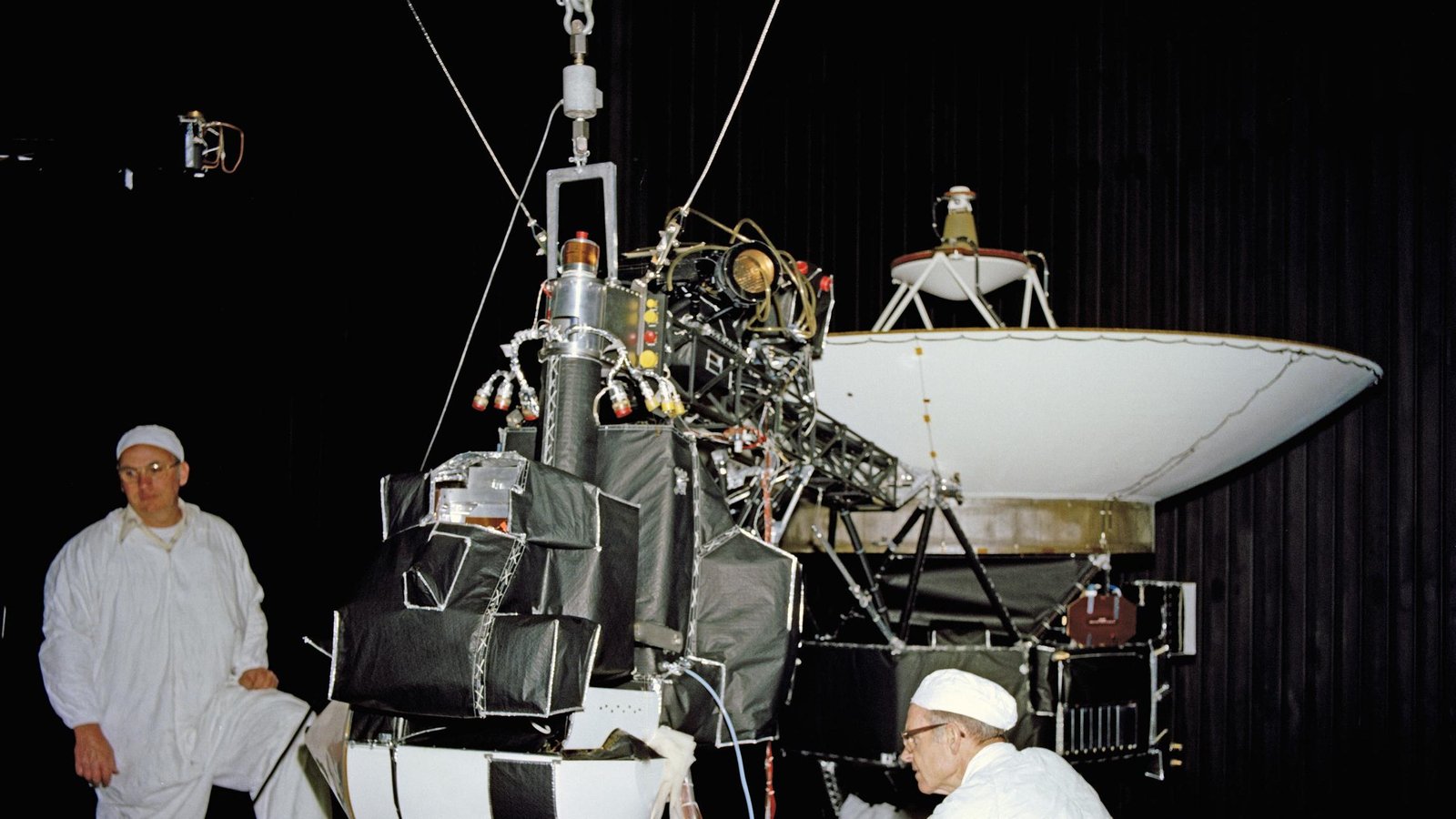
NASA’s Voyager 1 is now one light-day from Earth, the first human-made object to get that far. The probe crossed the line at 2:16 a.m. PST on Nov. 18, about 16.1 billion miles (25.9 billion kilometers) out, and the signal confirming it reached NASA’s Jet Propulsion Laboratory early Thursday, Nov. 19, according to NASA’s announcement.
The party has an awkward guest. Since Nov. 14, Voyager 1 has been sending a radio tone but none of the science or engineering data that tone is supposed to carry, according to a NASA mission update. NASA confirmed the milestone from the bare signal and its trajectory math, and engineers are still working out what broke.
Last checked: Nov 19, 2026, 8 PM PST. NASA had not reported a fix.
Key points
- NASA says Voyager 1 reached one light-day from Earth, about 16.1 billion miles, at 2:16 a.m. PST on Nov. 18, after 49 years, two months and 11 days of flight.
- Since Nov. 14 the probe has sent a carrier signal but no science or engineering data, and NASA says the problem probably sits in the computer that packages data for transmission.
- A similar fault that started on Nov. 14, 2023 took about seven months to fix, and every command-and-check cycle now takes at least 48 hours.
- NASA says diagnosing the new problem may take weeks or longer, and it is checking for a link to a 48-hour loss of contact in October.
So the most distant machine humans have ever built hit its biggest round-number milestone while temporarily unable to tell us anything except that it’s still there. That is still good news. It’s just not the whole story.
What a light-day actually is
A light-day is distance, not time: how far light travels in 24 hours. NASA’s explainer puts it at 16,094,799,096 miles (25,902,068,356 kilometers). Radio waves move at the speed of light, so a command sent from a Deep Space Network dish now takes a full day to reach Voyager 1, and the reply takes another day to come back.
For scale, NASA says sunlight reaches the Moon from Earth in about 1.3 seconds and reaches Neptune in about four hours. It then needs roughly another 20 hours to catch Voyager 1.
Nothing changed on the spacecraft at the line. NASA’s October preview said Voyager 1 “will not detect any change in its environment when it passes one light-day.” The milestone matters because of what it says about distance and endurance. Voyager 1 launched on Sept. 5, 1977, and it was built for a five-year mission to Jupiter and Saturn, according to NASA’s mission fact sheet.
Its twin, Voyager 2, took a slower path to Uranus and Neptune. NASA expects it to reach its own light-day in November 2035.
The tone is there. The data isn’t
Here is what NASA says happened. On Nov. 14, a Deep Space Network antenna in Canberra, Australia, locked on to Voyager 1 and received its carrier signal, the radio wave that normally carries the probe’s data, but no data rode on it. The mission update says that tells engineers a few useful things:
- The Attitude and Articulation Control computer is still keeping the spacecraft pointed at Earth.
- The antenna and the broadcast equipment still work.
- The missing data points to the onboard computer that collects readings from the spacecraft’s subsystems, including the science instruments, and formats them for transmission.
NASA’s update doesn’t name that computer. In 2023 and 2024, JPL identified the part that does that job as the flight data subsystem, or FDS, one of Voyager 1’s three onboard computers.
At a NASA news conference Thursday, Voyager project manager Suzanne Dodd called it “an anomaly that is not unseen before” and said she was “confident” the science data would flow again, Live Science reported. She also set expectations: “It takes two days to diagnose anything with the spacecraft — so we can’t do anything fast, and the data rates are very low.”
We’ve seen this exact movie before, starting on the exact same date
This is where the story gets a little eerie. According to JPL, Voyager 1 “stopped sending readable science and engineering data back to Earth on Nov. 14, 2023.” The new problem was spotted on Nov. 14, 2026. Same day, three years apart.
There’s no evidence the date means anything, and NASA hasn’t suggested it does. Spacecraft don’t keep anniversaries. But the 2023 fault is the best guide to what comes next, and NASA says the team is drawing on it. Here’s how that one went, from JPL’s own updates:
- Nov. 14, 2023: Readable data stops, though the probe is still receiving commands.
- March 2024: Engineers trace it to the FDS. They later find a single failed memory chip that took some of the computer’s software code with it.
- April 18-20, 2024: With no single spare spot big enough, the team splits the lost code into pieces, stores them in different parts of the FDS memory, and gets engineering data back first.
- May 19, 2024: A second command restores science data from two instruments right away.
- June 13, 2024: JPL says all four instruments operating then were returning usable science data.
That’s about five months to get engineering data back and seven months to full science. And in April 2024, JPL said a signal took about 22.5 hours each way. Now it takes 24.
Our read: The extra hour and a half each way sounds small. It isn’t nothing when every test cycle costs two days. Using NASA’s figure that Voyager 1 moves away at about 3.5 astronomical units a year (one AU is the Earth-Sun distance), our math says the one-way delay grows by roughly half an hour every year. Each future repair will start out slower than the last.
October’s scare, and the question NASA is asking
This isn’t Voyager 1’s first hiccup this fall. On Oct. 18 and 19, the Deep Space Network couldn’t hear the probe at all during two scheduled passes, according to JPL. The signal came back by itself on Oct. 20, before engineers had sent any troubleshooting commands.
JPL said one group of thrusters had gone offline and the backups switched on, a swap the spacecraft’s fault protection is programmed to make automatically when something looks wrong. “This is the first time we’ve seen the spacecraft do something like this,” Voyager mission manager Kareem Badaruddin said then.
NASA now says it is checking whether the October gap and the November data loss are connected. The update says the spacecraft “resumed communication by itself and was operating normally until Nov. 14.” It has not said what caused either event.
Why the probe is running on fumes
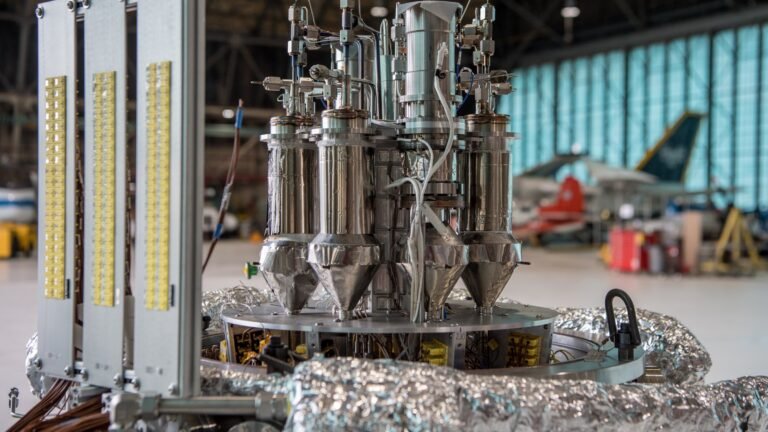
Voyager 1 runs on radioisotope thermoelectric generators, which turn heat from decaying plutonium into electricity. NASA says both Voyagers lose about 4 watts of power every year. At launch, Voyager 1’s three generators made about 158 watts each, according to the mission page.
To stretch what’s left, engineers pulled off a risky maneuver nicknamed the “Big Bang” in early September: they turned off three devices on Voyager 1 and switched on three lower-power substitutes at the same time, so the spacecraft would use less power and still spread heat correctly. JPL said that without the swap, the mission would have had to shut off another instrument as early as summer 2027.
NASA’s release says the savings should keep both spacecraft’s current instruments running until at least their 50th launch anniversaries next summer. Live Science reports that Voyager 1 is now down to two science instruments, a magnetometer and a plasma wave instrument. NASA’s release doesn’t give a count.
The catch
Three things are worth keeping straight.
- The milestone is confirmed, just not by the usual telemetry. NASA says it used the carrier signal plus trajectory calculations based on years of tracking. Voyager 1 can’t change its speed, so the glitch can’t change when it crossed the line. We have no reason to doubt the timing.
- “Not unseen before” isn’t a diagnosis. Dodd’s comparison is to 2023, but NASA hasn’t said this fault has the same cause. A failed chip, a software problem and a knock-on effect from October would each need a different fix.
- Nobody is promising a date. NASA says diagnosis “may take weeks or longer,” and the mission says it expects to lose both spacecraft eventually to problems it can’t fix.
Even so, the pattern since 2023 runs in Voyager’s favor. Since 2023 the team has recovered from a months-long data blackout, waited out a 48-hour silence and pulled off a risky power swap. As Dodd put it in NASA’s release: “We listen to Voyager 1 every day and send commands to the spacecraft weekly. It just takes a little longer to communicate than it used to.”
Where it’s going
Voyager 1 is moving at about 38,000 mph (61,155 kph) toward the star Gliese 445 in the constellation Ursa Minor, NASA says. It should pass within about 1.7 light-years of that star in roughly 40,000 years. It carries the Golden Record, a gold-plated copper disc of sounds and images from Earth, for anyone who ever finds it.
Voyager project scientist Linda Spilker said in the release that one big surprise has been how far the Sun’s influence reaches into interstellar space, all the way out to Voyager 1. “Where does the Sun’s influence end and pristine interstellar space begin? Perhaps Voyager may endure long enough to answer that question,” she said. That answer depends on getting the data flowing again.
The takeaway
Voyager 1 reached one light-day as the farthest working probe humans have, still pointed at home and still transmitting, but not yet saying anything new. What to watch:
- Any NASA or JPL update naming the cause, and whether it’s the FDS again.
- Whether engineering data comes back first, as it did in April 2024. That would tell the team how healthy the rest of the spacecraft is.
- Whether NASA links the problem to the October thruster swap and loss of contact.
- The 50th launch anniversaries, Aug. 20 and Sept. 5, 2027. NASA’s power plan is meant to keep the current instruments running at least until then.
The good news is that a quiet Voyager isn’t a lost Voyager. The bad news is that every conversation with it now takes two days. Hype in. Signal out.
Sources: NASA release 26-098 and the Nov. 18 Voyager mission blog; JPL updates from April 2024, June 2024 and October 2026; NASA’s light-day explainer, Voyager 1 mission page and fact sheet; press-conference quotes as reported by Live Science. Image: NASA/JPL-Caltech, public domain.