





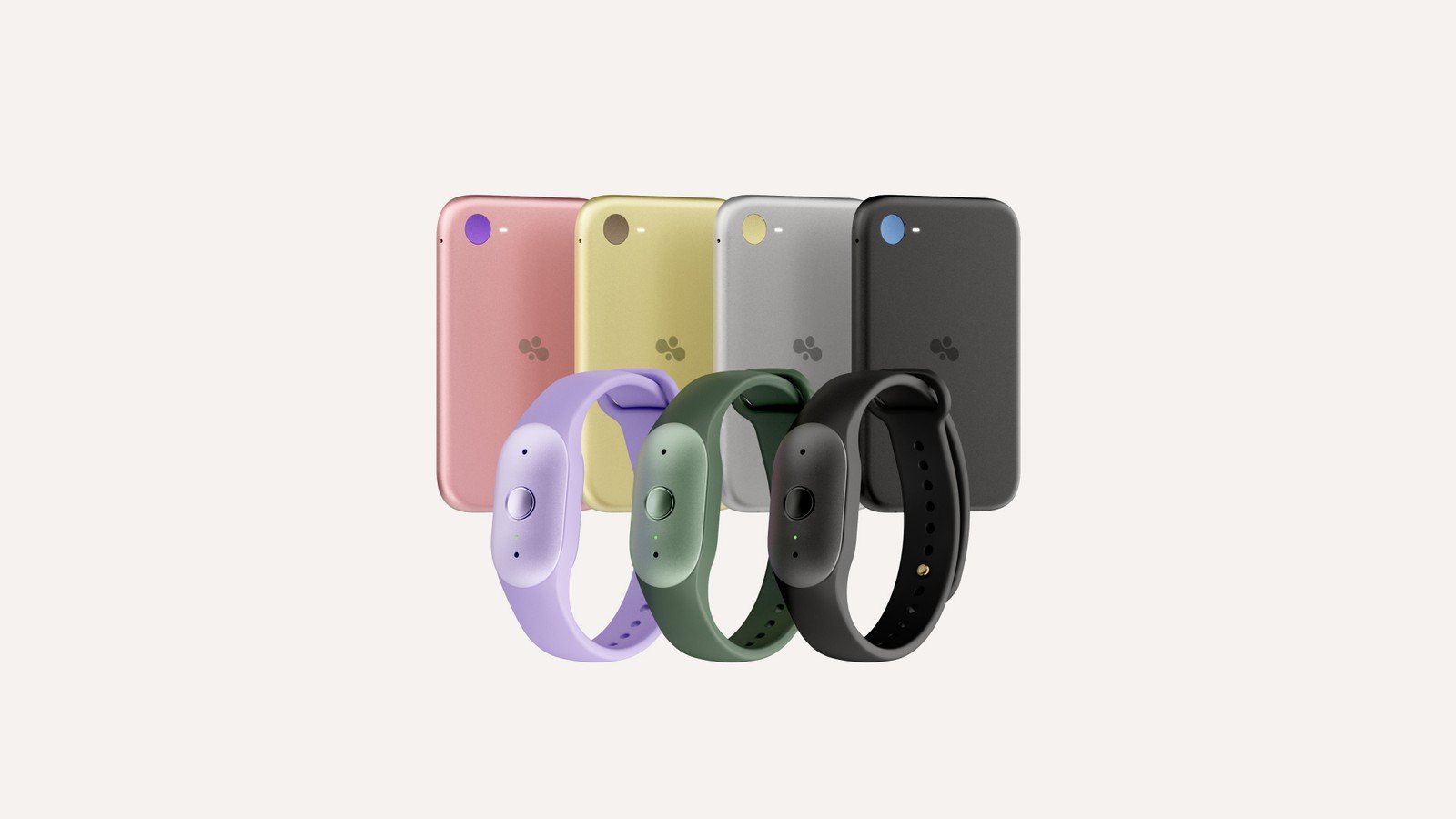
Amazon’s Bee Frontier, announced Oct. 15, is a $74.99 wristband — or a clip for your clothes — that records conversations when you press a button, then turns them into summaries, to-dos, and reminders. The Onyx Bee Frontier, the Sage model, and the Lavender model were all $74.99 and in stock on Amazon.com this afternoon, sold by Amazon. A free tier includes 14 days of memory. A Bee Pro plan, which Amazon prices at $11.99 a month, unlocks unlimited summaries, app integrations, and, if you opt in, shopping suggestions on Amazon. The Verge‘s Victoria Song wore one for three weeks, including in therapy, and came away questioning her own memories. Amazon says the gadget prompts you to get permission from call participants every time a recording starts.
Key points
- Amazon announced Bee Frontier on Oct. 15 at $74.99 in Onyx, Sage, and Lavender. All three were $74.99 and in stock on Amazon.com this afternoon, sold by Amazon. A magnetic Bee Eclipse phone attachment is listed at $99.99 and is not yet available.
- Amazon says the wearable has an IP67 rating, up to seven days of battery life, USB-C charging, and dual microphones. A button starts and stops recording, with an indicator light. Users, Amazon says, are prompted to get permission from call participants each time a recording starts.
- Conversation summaries and 14-day memory are included. Bee Pro is $11.99 a month and adds unlimited summaries, a desktop app, third-party integrations, and optional connections to Alexa+ and Amazon.com. New customers get 30 days of Pro free.
- The Verge’s Victoria Song, after three weeks with a Frontier, said it sometimes helped her remember work talking points, often misattributed conversations, and has an indicator light she found too small. Her therapist asked her to get rid of it.
A $75 band, a $12 plan, and a store in the transcript
Amazon acquired Bee last year. The original wearable, Bee Pioneer, sold for $50, The Verge‘s Song reported in her launch write-up. Frontier is the next wrist-or-clip version, in official colors Lavender, Sage, and Onyx. Amazon rates it IP67, claims up to seven days of battery life, and charges it over USB-C. It has dual microphones with what the company calls advanced noise filtering.
A sibling device, Bee Eclipse, is a credit-card-sized magnet for the back of a phone. Amazon lists it at $99.99 in Silver, Midnight, Honey, and Blush, claims more than 21 days of battery life, and says it will be “available soon.” There was no live Amazon listing to check for Eclipse this afternoon, so that price stays a company figure.
The software split is the part that matters after you leave the product page. Amazon says every Bee purchase includes conversation summaries, recaps, and 14-day memory. Bee Pro, at $11.99 a month, adds unlimited recent summaries, suggested to-dos, daily memories, a personal chat assistant, conversation templates, third-party integrations, the desktop app, and connections to Alexa+ and Amazon.com. New Bee customers get 30 days of Pro free. Some features, Amazon notes, require the subscription.
The Amazon hook is optional, and it is not subtle. Connect Bee to Amazon.com, the company says, and the device can “surface items you mention before you forget,” with product recommendations on the Amazon homepage and in the Bee apps. Connect it to Alexa+ and you can ask an Echo for a meeting summary or a to-do without opening your phone. TechCrunch‘s Sarah Perez noted the $74.99 Frontier undercuts gadgets like the Plaud Note, which she priced at $159, or $189 for the Note Pro. That comparison is about hardware price, not about whether you want a notetaker that can also restock your cart.
Amazon says the audio is deleted. A reviewer still did not trust the notes
Amazon’s privacy pitch is built around a button and a claim about architecture. You start and stop recording with one press, and a light is supposed to show that it is on. Amazon says users are prompted to get permission from call participants each time a recording starts, and that you can set the device to turn off automatically if it hears no sound for a stretch, such as 5 or 15 minutes. Under what the company calls Bee Private Compute, “no audio is ever stored”; audio is “processed into insights in real time and deleted after processing.” Transcripts, Amazon says, are encrypted with keys only the device creates and controls, and you can delete transcripts and summaries at any time.
Those are company claims, and they do not settle the social problem. A wearable that listens in a restaurant or an office still needs the people around you to know it is on. Song, in a Nov. 4 column, wrote that the LED indicator is “way too small and unnoticeable” and that “it’s easy to forget this thing is recording when you’re just going about your day.” She asked her therapist for consent before wearing it into a session. After three weeks of talking about it, she wrote, her therapist asked her to chuck it out a window.
Song had first tested Bee early last year. In this later stretch, she said it had gotten better at telling her speech from TV dialogue, could pull in calendar and photo data, and sometimes helped her remember job-related talking points. “But most of the time, it’s led to me questioning my reality.” The transcripts, she wrote, often interpreted conversations differently than she remembered, and were “not always precise about who said what.” In three weeks, she said, it concluded that she argued frequently with a coworker’s spouse she had never met. A device that offers itself as a memory aid is a poor one if the notes keep inventing the other people in the room.
Who should buy it, and who should skip it
Shop: Bee Frontier in Onyx, $74.99, Sage, $74.99, Lavender, $74.99.
Consider it if you already want an AI notetaker you can wear, you are prepared to ask people before you press the button, and you will treat the summaries as drafts, not as a record. The $74.99 hardware is cheap next to several rivals. The useful work Song described was mostly for job-related talking points, and even that came with a $11.99-a-month plan if you want the fuller feature set after the 30-day trial.
Skip it if you do not want a microphone on your wrist in rooms where consent is messy, or if the idea of conversation snippets turning into Amazon product cards makes your skin crawl. Skip it, too, if you were hoping the transcripts would settle arguments about who said what. Song’s three-week test is a warning on that point. And if you wanted the magnetic Eclipse instead, it is still “coming soon.”
The takeaway: Amazon put a cheaper, cleaner Bee on a wristband and attached a storefront to the subscription. The company says the audio is deleted. The reviewer who wore it still would not trust it as a memory.
Hype in. Signal out.
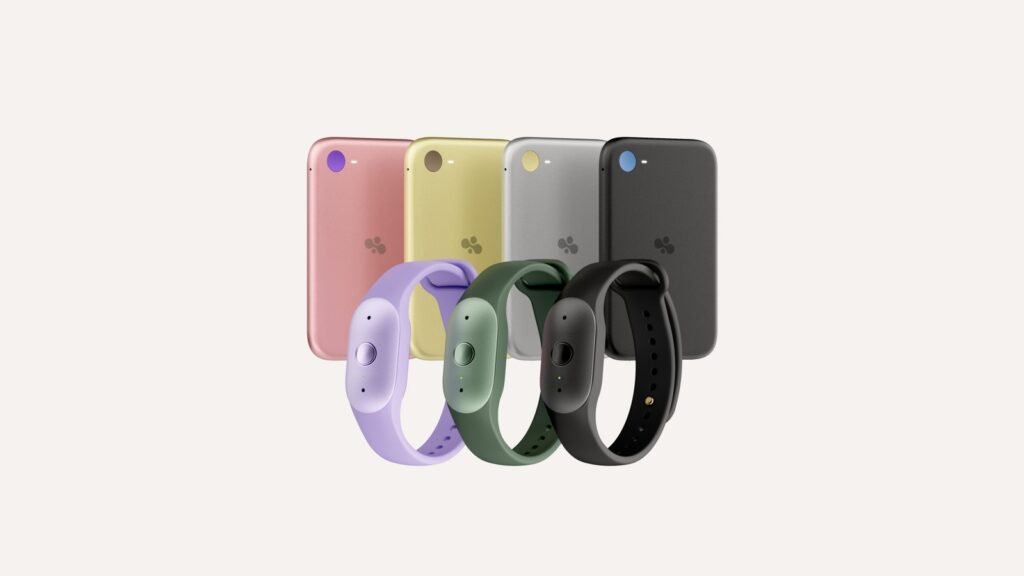
Lead image: Three Bee Frontier wearables and four Bee Eclipse attachments, from Amazon’s Oct. 15 announcement. Image: Amazon. Official alt text identifies both products. Resized to 16:9 and saved as JPEG for this post.