

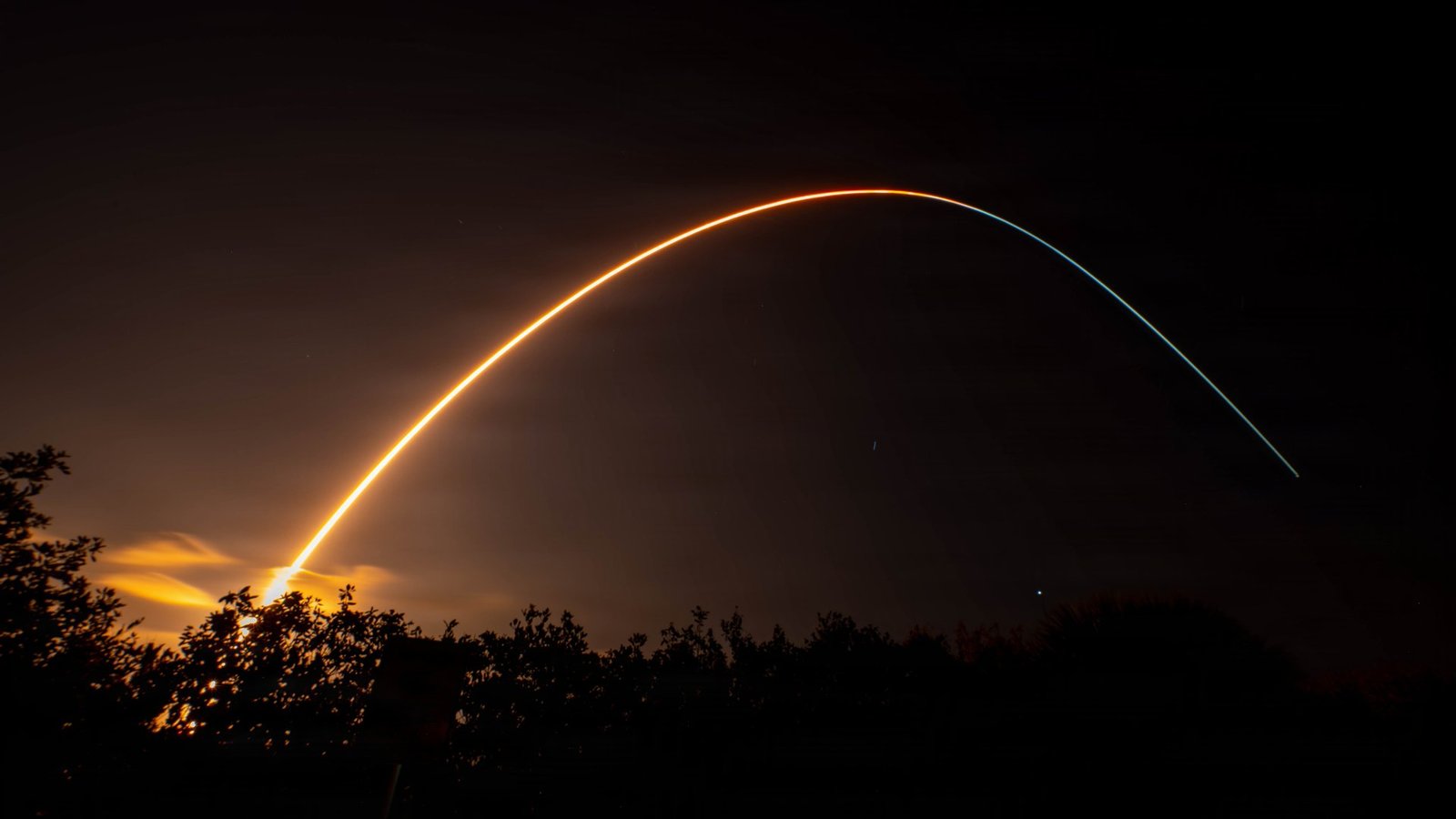
A United Launch Alliance Vulcan rocket failed about 10 minutes after lifting off from Cape Canaveral on Sunday, Nov. 15, and the 40 Amazon Leo internet satellites on board never reached orbit. ULA confirmed the loss about 50 minutes after launch and said it didn’t yet have “any specific data” on what went wrong. It is the first total mission failure since Boeing and Lockheed Martin formed ULA in 2006, Ars Technica and Spaceflight Now report.
Last checked: Nov 16, 2026
Key points
- ULA says its Vulcan rocket suffered an anomaly 10 minutes into Sunday’s flight and failed to put 40 Amazon Leo satellites in orbit, and it has not named a cause.
- Ars Technica’s sources point to the booster stage, whose Blue Origin BE-4 engines fired at least 30 seconds longer than planned, while Reuters reports it is unclear whether the engines played a role.
- The mission was the first of 38 Vulcan launches Amazon has bought, and Vulcan was slated to carry more than 1,500 of Amazon’s first-generation satellites, according to GeekWire.
- Reuters reports the Pentagon had been waiting on this flight before clearing Vulcan to fly national security payloads again.
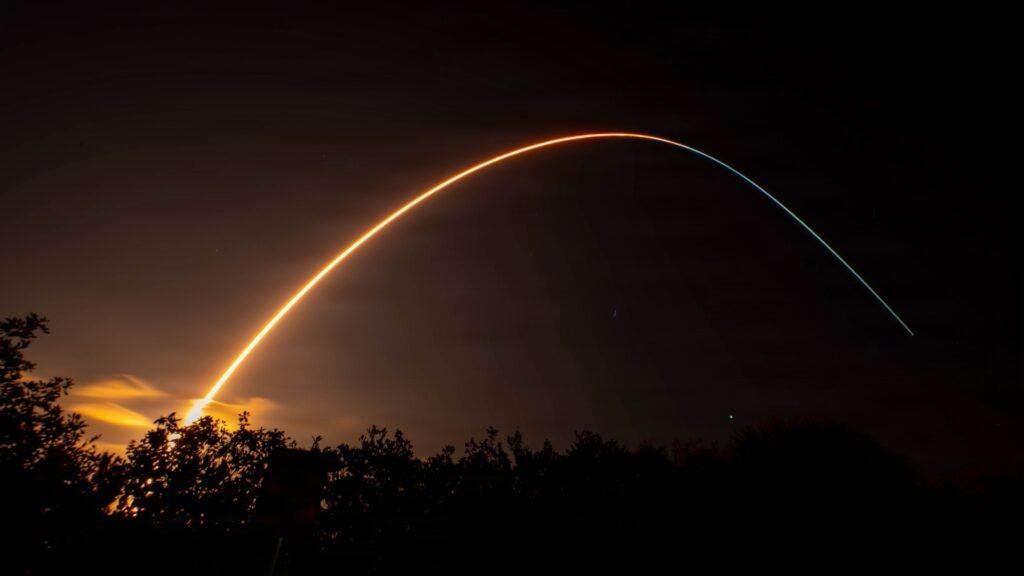
The 40 satellites are the smaller problem. The bigger one is that the rocket Amazon calls its workhorse now faces an open-ended grounding. Early reporting points at its booster stage, which runs on the same Blue Origin engine family as New Glenn, another big Amazon launcher that has been stuck on the ground since a May explosion. Two of the three rockets Amazon booked the most launches on are now waiting on investigations.
Three days of delays, then 10 bad minutes
Vulcan Leo 1, which Amazon calls LV-01, was supposed to fly Friday, Nov. 13. According to Spaceflight Now, Friday’s attempt was scrubbed when a gaseous nitrogen plant that serves several launch companies went down, and Saturday’s was called off over network problems between the rocket and ground systems. On Sunday, controllers held the count at T-minus 20 seconds for an unexplained technical issue, fixed it, and launched at the very end of the window.
That was 12:40 p.m. EST (9:40 a.m. PT), the last minute of the 12:11-to-12:40 window on ULA’s mission page. ULA hasn’t said what it fixed during the hold, and Spaceflight Now and GeekWire both say it isn’t known whether that issue played any role in the failure.
This was a heavy, new configuration. ULA’s pre-launch mission post described a VC6L Vulcan with six solid boosters, a longer payload fairing and the first LEO-optimized Centaur V upper stage. That stage is about six feet shorter and carries a third less propellant than the version that flew Vulcan’s earlier missions. ULA said the flight would put more than 50,000 pounds into orbit, a company record, and that 40 satellites would be the most on any single Amazon launch so far.
Where it went wrong: the flight plan vs. what people saw
ULA hasn’t released a cause, so the best we can do is compare the published flight plan with early reporting. They don’t fully agree on where the trouble started, and that gap is the most important open question.
- The plan. ULA’s mission post says the solid boosters burn out about a minute and a half in, the twin BE-4 engines shut down around five minutes after liftoff, and the Centaur’s first burn lasts nearly 12 minutes. Spaceflight Now put that burn at 12 minutes, 15 seconds.
- The solids. The strap-on boosters that caused trouble on two earlier flights appeared to work normally and fell away about 1 minute 40 seconds in, per Spaceflight Now.
- The booster. Ars says the BE-4s, which should have shut down just shy of five minutes, kept firing for at least 30 more seconds. Spaceflight Now also saw a longer burn and a later-than-expected stage separation. Ars notes that an overburn can mean the stage was underperforming and running longer to make up for it.
- The spin. ULA’s telemetry-driven animation showed Vulcan starting to spin just after booster engine cutoff, Ars reports. The Centaur’s two RL10 engines lit and appeared to vector their thrust in an attempt to get back on course, and Spaceflight Now describes “unusual orientation adjustments” early in the burn.
- The official clock. ULA’s statement puts the anomaly 10 minutes into the flight, which falls during the Centaur’s burn on its own timeline.
Multiple sources told Ars the problem was in the booster stage, not the Centaur or the solids. They couldn’t say whether that means the engines themselves, the plumbing that feeds them, or something else. Reuters reports it was unclear whether the BE-4s played a role and that the failure appeared to come after stage separation.
Our read: those accounts can both be true. A booster that underdelivers can hand the upper stage a bad starting point (wrong speed, wrong attitude, spinning) and the mission can still die minutes later on the upper stage’s watch. The “10 minutes” in ULA’s statement may tell you when the mission was lost, not where the problem began. Until ULA publishes telemetry, that’s a hypothesis, not a finding.
Why the engine question matters most
The BE-4 is built by Blue Origin, Jeff Bezos’s rocket company, which is working with ULA on the investigation, according to a person familiar with the matter who spoke to Reuters. The same engine family powers Blue Origin’s New Glenn, which exploded during a ground test in Florida in May. Spaceflight Now reports investigators traced that explosion to an oxygen valve on one of New Glenn’s seven BE-4s.
ULA said before the flight that it had dealt with that. CEO Mark Peller told Aviation Week, as quoted by Spaceflight Now, that Blue Origin developed a “design improvement” for the valve and installed a “retrofit” on this rocket’s engines “probably a couple months ago.” Blue Origin has already pushed New Glenn’s return to flight to January, The Next Web reports.
If the BE-4 turns out to be the cause, two rockets have a problem, not one. Ars notes that New Glenn has a backlog of NASA Artemis work next year, including test flights of Blue Origin’s lunar lander. If the problem is elsewhere in Vulcan’s booster, Blue Origin is off the hook and ULA owns the fix.
Vulcan’s record: three anomalies in five flights
Vulcan is the successor to ULA’s Atlas V, and Reuters notes the company’s Atlas and Delta rockets had a 100% mission success record under ULA. Vulcan’s short history, from Space.com, GeekWire and Ars:
- January 2024: Vulcan’s debut.
- October 2024: Second flight. A solid booster nozzle burned through and fell off about 30 seconds after launch; the rocket still reached its orbit.
- August 2025: Third flight, the USSF-106 Space Force mission, with no reported anomaly.
- February 2026: Fourth flight, also for the Space Force. Another nozzle failure; payloads still delivered. The Space Force then paused national security launches on Vulcan.
- Nov. 15, 2026: Fifth flight, the first in nine months and the first with six solid boosters. Total loss.
That’s three anomalies in five flights, with this one the first the rocket couldn’t fly through. In fairness, the nozzle fix seems to have worked. The solids behaved Sunday, and ULA said in its pre-launch post that it had found “three credible causes” for the nozzle problem and addressed all of them. A different system failed instead.
Amazon’s launch math just got worse
Amazon Leo, formerly Project Kuiper, is Amazon’s attempt to compete directly with SpaceX’s Starlink for consumer satellite internet. Here’s where the network stands, from GeekWire unless noted:
- In orbit: 396 satellites launched on 14 missions since April 2025. (Reuters says 398.) Spaceflight Now says Sunday’s flight would have taken the total to 436.
- Required: all 3,232 first-generation satellites deployed and operating by July 30, 2029. In June, the FCC let Amazon keep deploying after missing its July 30, 2026 milestone of 1,616, but satellites not operational by then temporarily lose priority in key spectrum bands.
- On the ground: Amazon recently said it has built its 1,000th satellite, which by Ars’s math leaves more than half of its satellites sitting in storage waiting for rockets.
- Service: Amazon has said it plans to start initial commercial service this year, and Amazon officials told Ars in October that it already had enough satellites in orbit to do it.
By our math, the 396 satellites in orbit are about 12% of the 3,232 required. The 40 lost Sunday are about 1% of the total, a real loss but not a fatal one. The problem is what Vulcan was supposed to do next. GeekWire reports Vulcan is slated to carry more than 1,500 first-generation satellites, close to half the network and more than any other rocket in the program. Melissa Wuerl, Amazon Leo’s director of launch systems, called it the program’s “primary workhorse over the next several years.”
Now look at the other rides. Spaceflight Now counts Amazon’s bookings as 38 on Vulcan, 24 on New Glenn, 24 on Ariane 6 and 13 on Falcon 9, after eight completed Atlas V flights. As of today:
- Vulcan: grounded pending the investigation, with 37 Amazon launches left.
- New Glenn: grounded since May, return pushed to January.
- Ariane 6: three Amazon launches done, per Ars. The next, with 36 satellites, is targeted for Nov. 23 at the earliest, per GeekWire.
- Falcon 9: Ars says 10 more missions are booked, and Reuters reports SpaceX is no longer taking new Falcon 9 bookings.
- Atlas V: retired from the program after its eighth and final Leo launch in July.
So for now, Amazon’s network grows on a European rocket and its main rival’s workhorse. Amazon was gracious in its statement: “There is risk with any launch, and that’s especially true for inaugural missions like LV-01. ULA has been a trusted partner for Amazon, and we believe they’ll learn from this mission and deliver on their long-term plans for Vulcan.” We haven’t seen either company put a dollar figure on the lost satellites or say whether they were insured.
The Pentagon and NASA have a stake, too
Amazon isn’t ULA’s only big customer. Ars reports Vulcan is on contract to launch roughly half of the U.S. military’s national security space missions over the next few years. Earlier Vulcan delays already pushed the Space Force to move six of those launches to SpaceX. Reuters reports the Pentagon hadn’t yet cleared Vulcan to resume national security flights and was waiting on this mission’s performance. Sunday was supposed to be the audition.
NASA has a link too. The agency recently picked a version of ULA’s Centaur upper stage for future Space Launch System flights, which Ars says could carry crews to the Moon as soon as 2028. If the Centaur turns out to be blameless, that’s a relief for NASA. If not, it’s a new problem. NASA Administrator Jared Isaacman posted his support on X: “Artemis, Moon Base, and the nation need ULA. We are in your corner and here to help.”
Who benefits: SpaceX, mostly by doing nothing. Every grounded competitor sends more military payloads and more Amazon satellites toward Falcon 9, a rocket Ars notes SpaceX is moving toward retirement as it shifts to Starship. Reuters reports Starlink already has more than 11,000 satellites in orbit. The timing stings: the same weekend, SpaceX caught a Starship upper stage returning from orbit.
What we still don’t know
- Booster or Centaur? ULA’s first technical update should settle whether the problem started in the BE-4-powered booster, as Ars’s sources say, or in the Centaur, where ULA’s own timing puts the anomaly. That single answer decides whether New Glenn and NASA’s Centaur plans are affected.
- The new hardware. This was the first six-booster Vulcan and the first LEO-optimized Centaur V, carrying less propellant than earlier versions. Whether either change matters is unknown, and we’re not assuming it does.
- Who leads the probe. ULA says it will work with its customer and “other appropriate organizations.” We found no FAA statement about the mishap as of Monday morning.
The takeaway
ULA’s record lasted 20 years and one bad Sunday ended it. The satellites can be rebuilt (Amazon has hundreds more waiting), but the schedule can’t. Watch three dates. First is ULA’s first data-backed explanation, which tells us whether Blue Origin’s engine is implicated. Then comes the Ariane 6 launch targeted for Nov. 23, now the only near-term way Amazon can add satellites apart from SpaceX. After that, the Space Force has to decide whether Vulcan has earned back its national security missions or whether more of them go to SpaceX.
Hype in. Signal out.
Image credit: A Vulcan rocket launches the USSF-87 mission from Cape Canaveral Space Force Station, Feb. 12, 2026 (not the Nov. 15 Amazon Leo launch). U.S. Space Force photo by Staff Sgt. Samuel Becker, public domain, via Wikimedia Commons; cropped to 16:9.