


The software glitch that cut short BepiColombo’s arrival burn at Mercury was not a long shot. CNN reported Friday, the day the European Space Agency briefed reporters in London, that ESA later calculated that the timing fault had a 1-in-6 chance of occurring, and that the mission team had not used that scenario in its training runs before the Nov. 21 burn.
Mission managers now say they have a workaround for the fault, SpaceNews reports, but they also acknowledge there is less margin left to absorb any future problems. The two science orbiters still ride as one stack, and they are due to split on Dec. 9.
Last checked: Nov 27, 2026, 8:30 PM PST. ESA’s own live-updates page still showed Nov. 23 as its newest entry, and ESA had not yet posted a written summary of Friday’s briefing. Details of the workaround come from press reports.
Key points
- ESA says BepiColombo’s Nov. 21 orbit insertion burn stopped early because of a software issue in attitude guidance and thruster control, delivering about 77% of the planned change in speed.
- CNN reports the burn ran 28 of a planned 37 minutes, and that ESA later put the chance of the timing fault at 1 in 6, a scenario the team had not used in training.
- SpaceNews reports managers have a workaround but less margin for new problems, and the stack is in a 75-hour orbit instead of the planned 58-hour one.
- ESA and JAXA still plan to separate the two orbiters on Dec. 9–10, with science due to start in April 2027.
We covered the arrival itself on Nov. 21, when ESA took nearly six hours to confirm that BepiColombo had been captured. Now we know more about what those hours looked like from inside mission control, and why the agency’s next big step, splitting the spacecraft in two, just got harder.
What went wrong, in ESA’s words and CNN’s
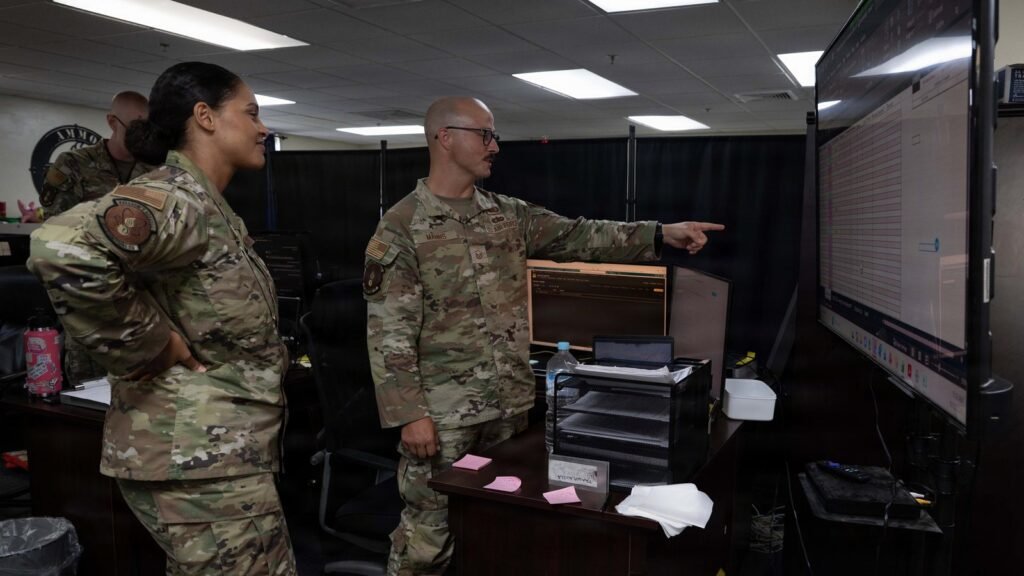
ESA’s own Nov. 23 account is the primary record. At 18:24 UTC on Nov. 21 (10:24 a.m. PST), with the spacecraft 635 km above Mercury, the four axial thrusters on ESA’s Mercury Planetary Orbiter (MPO) began a burn scheduled to last 37 minutes. When contact resumed through ESA’s New Norcia antenna in Australia, telemetry showed the burn “had been autonomously interrupted” and the spacecraft had dropped into safe mode, a protective state that shuts down everything nonessential.
ESA says the burn delivered “around 77% of the total planned velocity change,” and that teams at its control center in Darmstadt and at prime contractor Airbus traced the anomaly to “a software issue involving attitude guidance and thruster control.”
CNN’s report, by Jacopo Prisco and Ashley Strickland, adds detail that ESA’s written updates do not. It says the burn ended after 28 minutes, and that the cause was “an unlikely timing mismatch between the spacecraft’s guidance software and its thruster controls, which triggered an abnormally strong command.” Ignacio Tanco, ESA’s head of inner Solar System mission operations, told CNN the first clue was that the signal came back early: “that meant something was not right.”
Then comes the part that should make anyone who writes flight software wince. CNN reports the fault “had been among a range of simulated scenarios,” but the team “didn’t use it in training runs before the orbit insertion attempt,” and only later did ESA calculate “a 1 in 6 chance of the glitch occurring.”
Our read: “1 in 6” is a die roll, not a black swan. We don’t know how ESA arrived at that figure, whether it applies to every long burn or only to this one, or why the scenario was left out of rehearsals. Those are the questions a public anomaly report should answer.
How close it came
Mercury is a hard place to stop. ESA’s arrival media kit says the Sun’s gravity means it takes more energy to enter a stable orbit around Mercury than to send a mission to Pluto. BepiColombo arrived slowly, using what ESA calls “weak stability capture,” and ESA flight dynamics manager Frank Budnik says that kind of capture holds “for several orbits, but only temporarily” without insertion burns.
Tanco told CNN the immediate question was blunt: “Were we in orbit around Mercury, or had we just flown by?” If it had flown by, he said, the team could have tried again, but the fuel needed to come back would have made it hard to reach a good science orbit. “We absolutely didn’t want to end up in that scenario.”
There is precedent for a second chance. Japan’s Akatsuki missed Venus orbit in 2010 when its main engine failed, then spent five years looping the Sun before JAXA fired its small attitude thrusters for about 20 minutes in December 2015 to finally get captured. The Planetary Society’s account of that rescue is a good reminder that a missed orbit isn’t always fatal. It does tend to cost years and science.
The orbit they got, by the numbers
ESA says the stack is now in a 75-hour orbit rather than the planned 58-hour one. CNN reports its high point is about 10,000 km higher than planned, which Tanco called “inconvenient, but not terrible.” We checked that figure ourselves using Kepler’s third law and NASA’s Mercury fact sheet values for the planet’s mass and radius, assuming the low point stayed near the 635 km where the burn began.
| Planned orbit | Orbit achieved | |
|---|---|---|
| Period (ESA) | 58 hours | 75 hours |
| Average distance from Mercury’s center (our estimate) | ~29,000 km | ~34,400 km |
| High point above the surface (our estimate) | ~52,400 km | ~63,300 km |
| Difference in high point (our estimate) | — | ~10,800 km higher |
That lines up with CNN’s “about 10,000 km.” The same math says something less obvious: at the low point, the planned orbit and the achieved one differ in speed by only about 16 meters per second, roughly 36 mph. That’s our rough estimate of the braking BepiColombo didn’t get. If it equals the missing 23%, the whole burn was planned to shed about 70 m/s. Real burns aren’t instantaneous, so treat both numbers as ballpark figures, not ESA data.
Why it matters: a 16 m/s shortfall sounds trivial, and in propellant terms it may be. The bigger cost is time. Every orbit now takes 17 hours longer, which shifts when the remaining burns can happen before the Dec. 9 separation.
The workaround, and what ‘less margin’ means
On Nov. 23, ESA said the remaining insertion sequence had “already been adapted to the new trajectory, with no additional burns required,” and that the change would not affect the separation or MPO’s ability to reach its final science orbit. JAXA said Friday the same thing from its side: the spacecraft is healthy, the orbit will be lowered through a series of maneuvers, and its Mio orbiter is still expected to separate on Dec. 10 Japan time.
Reporting around Friday’s briefing added nuance. According to SpaceNews, managers have developed a workaround for the software issue but acknowledge there is less margin to deal with future problems. ESA’s own pages don’t describe the fix yet, and the rest of the SpaceNews story is paywalled, so we can’t say whether it is a software patch, a change in how burns are commanded, or both. CNN reports that some of the remaining maneuvers will have to be longer and happen at different times because of the new orbital period, and that there is now less time to fit them in.
“There’s a price to pay,” Tanco told CNN. “We’ll need to correct.”
The catch: ESA’s message is consistent (no extra burns, separation on schedule), but “no additional burns” is not the same as “no additional risk.” Longer burns on a tighter timeline, run by flight software that only started flying this configuration in September, is exactly the kind of setup where margin gets used up.
A spacecraft that keeps changing shape
Tanco’s most revealing line may be this one, from CNN: “We’re using BepiColombo’s software in flight for the first time. Since we separated from MTM in September, we are basically flying a new spacecraft.” MTM is the Mercury Transfer Module, the ion-engine stage that carried the stack for eight years. ESA says it separated on Sept. 3, handing control of the final approach to MPO’s chemical thrusters.
And it will change again. After the Dec. 9 separation, ESA’s orbiter will fly without Mio for the first time, still carrying Mio’s sunshield until it ejects it on Dec. 16. “Dynamically, the spacecraft is going to be different. There are significant question marks there,” Tanco told CNN. He said he wasn’t nervous, but added: “We could be facing a tough Christmas and New Year’s.”
He also flagged a longer-term unknown: how an eight-year-old spacecraft will handle the heat of a very low Mercury orbit. “The final orbit is really low, and we’re modeling that, but how accurate are our models?”
What’s left on the arrival checklist
| Date | Step | Status |
|---|---|---|
| Sept. 3, 2026 | Mercury Transfer Module separates | Done (ESA) |
| Nov. 21, 2026 | Mercury orbit insertion burn | Done, but cut short at ~77% of planned speed change (ESA) |
| Before Dec. 9 | Remaining insertion-sequence burns | Replanned for 75-hour orbit; some longer, per CNN |
| Dec. 9–10, 2026 | MPO releases JAXA’s Mio | Still on schedule (ESA, JAXA) |
| Dec. 16, 2026 | MPO ejects Mio’s sunshield (MOSIF) | Planned (ESA) |
| March 2027 | MPO reaches final science orbit | ESA says still achievable |
| April 2027 | Science operations begin | Planned (ESA) |
BepiColombo has already absorbed one big delay. In 2024, an issue that {A(MTM,’reduced the power available’)} from MTM’s solar arrays forced a new route; CNN puts the resulting delay at 11 months. ESA has managed every setback so far without losing the mission, which deserves real credit. Getting into orbit at all after a burn that fell nearly a quarter short is a sign the insertion plan was built with slack.
The takeaway
ESA’s headline is still good news: BepiColombo is in orbit, healthy, and on its schedule. The fine print from Friday is that the fault had a 1-in-6 chance, it wasn’t in the rehearsal set, and the fix leaves less room for the next surprise. What to watch:
- Dec. 9–10: whether Mio separates on time, and how the newly solo MPO behaves afterward.
- The remaining insertion burns: whether ESA reports any more early cutoffs, and whether it publishes the achieved orbit.
- An anomaly write-up: how ESA got to 1 in 6, why the scenario wasn’t rehearsed, and whether the workaround is a code change or a procedure change.
- Dec. 16 and March 2027: the sunshield ejection and MPO’s descent to its final science orbit.
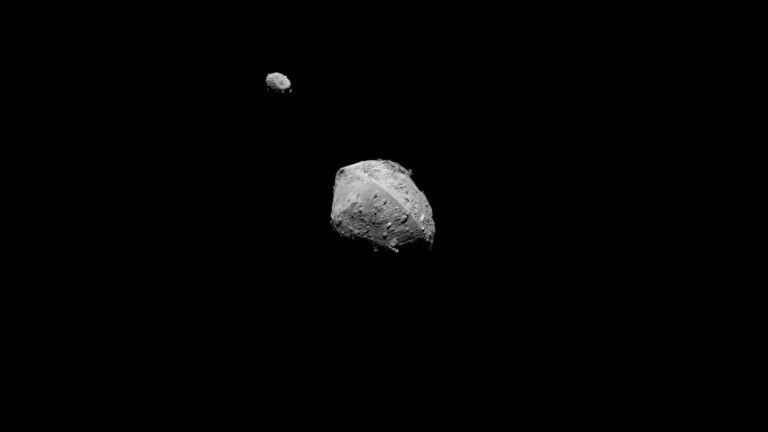
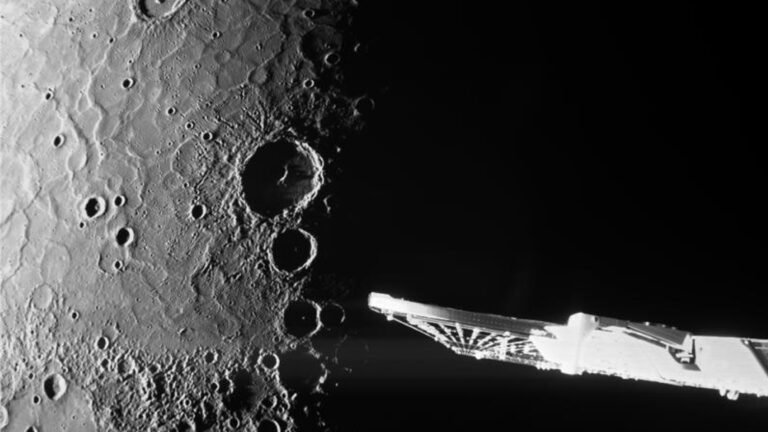
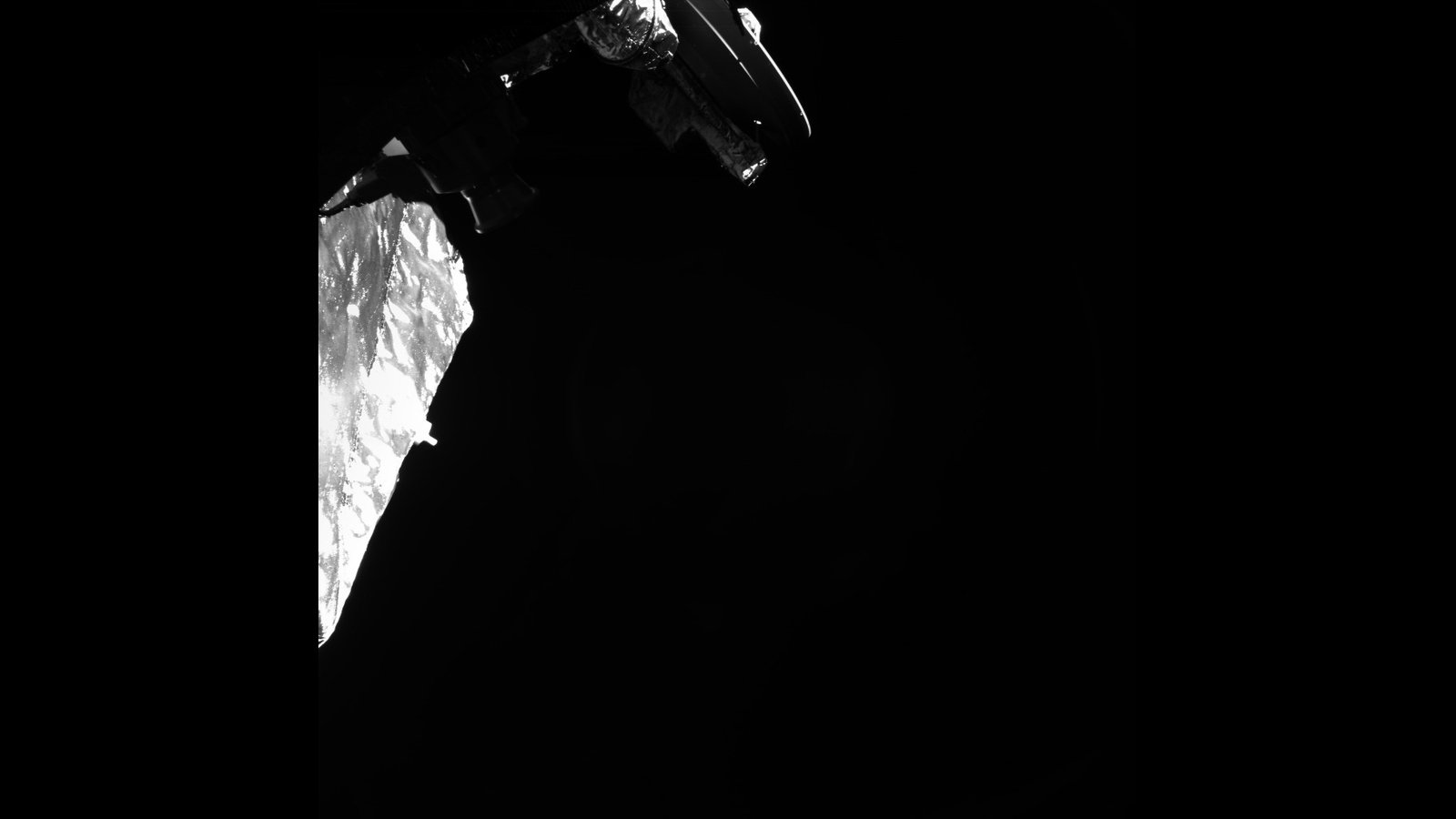
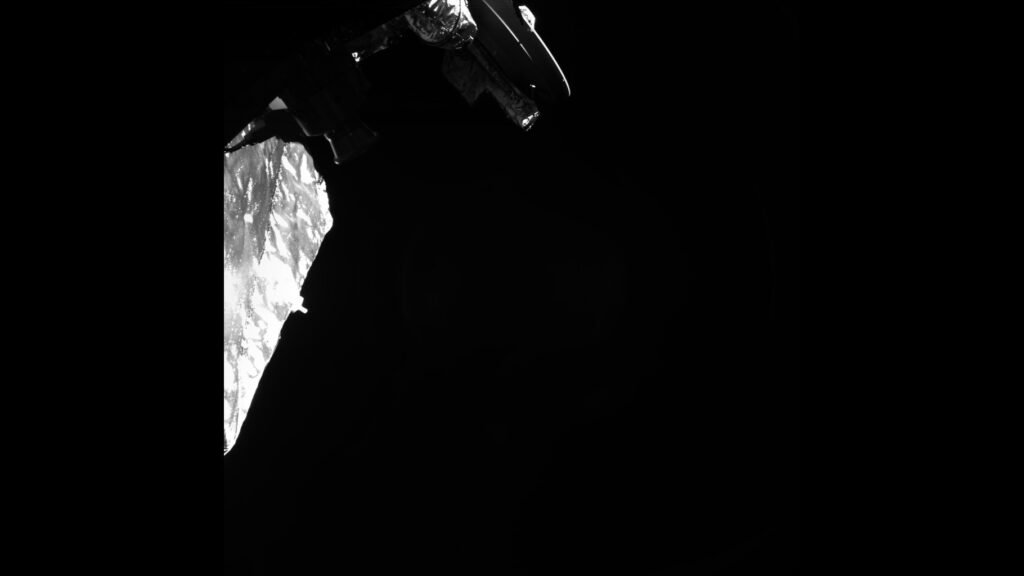
Photo: ©ESA, taken by MTM’s monitoring camera 3, “A last selfie from MTM’s monitoring camera 3”, used under ESA’s terms for editorial use. Black side bars added to fit 16:9. Video: European Space Agency (ESA), embedded from ESA’s official YouTube channel.
Hype in. Signal out.