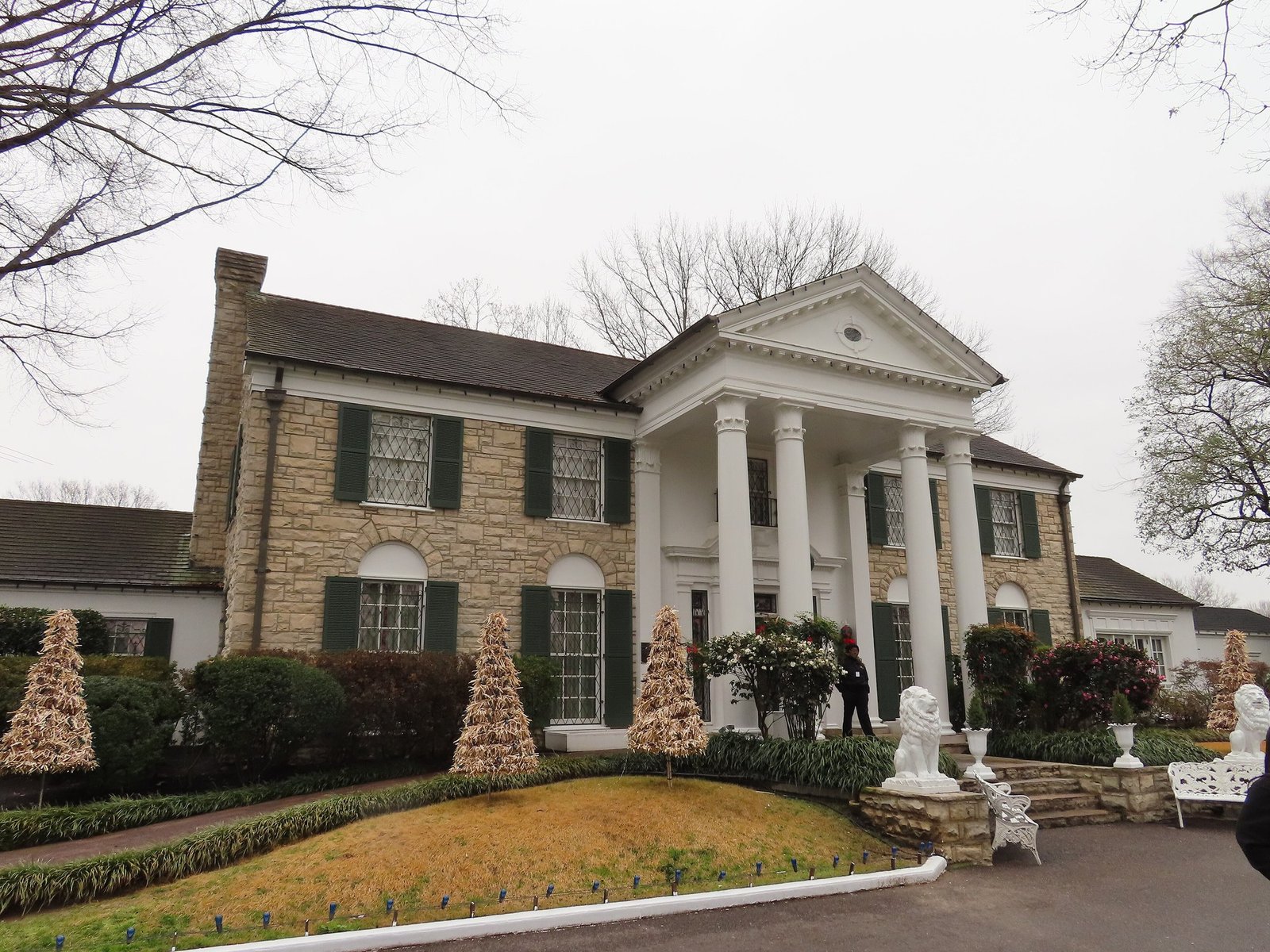
The King has entered the AI copyright fight. The owners of Elvis Presley’s music sued Anthropic on Friday, October 23, alleging the company used lyrics from 274 of his songs without a license to train Claude, and that the chatbot still produces infringing versions today, NBC News reports.
The plaintiffs are led by Authentic Brands Group, the licensing company that controls Presley’s intellectual property, along with other companies, trusts and individuals who own rights to his catalog. The songs include “All Shook Up,” “Can’t Help Falling in Love,” “Don’t Be Cruel,” “A Little Less Conversation” and “Return to Sender.”
The complaint calls the catalog “some of the most groundbreaking, revolutionary, influential, and enduring musical compositions in human history.” Lawsuits aren’t known for understatement.
What they want
The complaint seeks $41.1 million in statutory damages. That’s the $150,000 maximum for each of the 274 works it says were willfully infringed. Statutory damages are a fixed per-work amount set by copyright law, so plaintiffs don’t have to prove exactly how much money they lost. The $150,000 ceiling applies only if a court finds the infringement willful.
The suit also asks for a permanent injunction against “further infringing” and an order that Anthropic destroy all unauthorized copies.
Anthropic’s response, per NBC: “We disagree with the claims and intend to defend this case fully.”
Two theories in one lawsuit
Like most AI copyright cases, this one makes two distinct claims, and they should be judged separately.
Training. The plaintiffs say infringement occurred throughout “the entire development” of Claude, through scraping and copying lyrics into training data without a license.
Outputs. They say users can still get Claude to reproduce copyrighted lyrics or create unauthorized adaptations today.
The distinction matters because of how the most important ruling so far came out. In June 2025, in a case brought by authors, Judge William Alsup ruled that training Claude on books was “exceedingly transformative and was a fair use.” He also ruled that downloading pirated copies to build a permanent library was not. That second finding is what pushed Anthropic toward settling.
A different judge could see lyrics differently from books. But the Alsup ruling makes a training-only theory a harder road, which is why this complaint leans so hard on outputs.
The output argument
The more pointed claim is about what Claude produces now. “Even after the Defendant supposedly put up ‘guardrails’ after being sued, in one of its latest iterations, Claude continues to infringe,” the complaint says.
It says that when asked to re-create specific songs “for a modern audience,” Claude did, with results that “keep landing very close to the originals: same structure, same hooks reused with light rewording, and full sets of verses/choruses/bridges.” The complaint adds: “That’s edging past ‘inspired by’ into reproducing the copyrighted song, even when the words are swapped out.”
Our read: training-data claims are slow and abstract. Output claims are concrete: here’s the prompt, here’s what came back. That’s the part of this case that’s hardest to wave away, and the part most likely to drive product changes regardless of the verdict.
The catch: “same structure” and “same hooks with light rewording” is a fuzzier standard than verbatim copying. Song structures aren’t copyrightable on their own, and courts have spent decades arguing about where homage ends and infringement begins. The plaintiffs will need to show specific outputs that cross that line, not just that Claude can write something Elvis-shaped.
A crowded docket
This is far from Anthropic’s first music lawsuit. NBC notes that Universal Music, Concord and ABKCO expanded their lyrics lawsuit against Anthropic in January, and that BMG, Sony Music Publishing and Warner Chappell filed similar suits this year. Anthropic and AI music generator Suno were also recently sued by independent publisher Round Hill and by Reservoir Media.
Round Hill is represented by Richard Busch, the same lawyer leading the Elvis case. “As we say in the lawsuit, the Elvis Plaintiffs are guardians of, and highly protective of, Elvis’s song which are some of the most iconic of all time,” Busch said in a statement.
The complaint also leans on Anthropic’s history. It says the company “built its entire business model on infringing copyrights at an unfathomable scale,” pointing to alleged mass scraping and the pirating of books. It cites the $1.5 billion settlement Anthropic agreed to last year with authors over pirated books, which NBC calls the largest in US copyright history.
Why it matters
Why it matters: the music industry is organized, well-funded and very used to suing technology companies. It did it to Napster, and it’s doing it now to AI labs. Each new plaintiff adds pressure, and a famous estate makes the cause recognizable to people who don’t follow copyright law.
For Anthropic, the money is manageable. The catch: $41.1 million is small next to the $1.5 billion book settlement. The real threat is the precedent of an injunction on outputs, which could force broader filters on how Claude handles any copyrighted song.
Who this affects
- Anthropic: another front in a multi-publisher war, now with a household name attached.
- Other AI labs: an output-focused theory that works against Claude would work against anyone’s chatbot.
- Songwriters and estates: a test of whether catalog owners can extract licensing deals from AI companies the way they did from streaming services.
- Users: expect chatbots to get stricter about lyrics, parodies and “in the style of” requests.
The takeaway
The takeaway: music publishers are building a stack of cases against AI labs, and a famous estate gives the movement a very recognizable face. The training claim faces an uphill fight after Alsup. The output claim is the one to watch.
What to watch:
- Whether courts treat near-verbatim lyric output differently from training itself.
- Whether Anthropic tightens Claude’s song-reproduction guardrails before a judge makes it.
- Whether any of the music cases settle into a licensing framework, as the book case did.
- Rulings in the older Universal-Concord-ABKCO lyrics case, which will set the tone for this one.
Image: Fallaner / Wikimedia Commons, CC BY-SA 4.0