




Nvidia has told the companies that build servers around its chips to stop shipping them to Malaysia, Singapore, Thailand and Indonesia, the Financial Times reported Thursday, citing three people with knowledge of the matter. Dell and Supermicro have told buyers in those four countries that Nvidia won’t let their orders ship, according to the report. Nobody involved has said how long the freeze lasts, and a cloud executive quoted by the FT says the new US rule behind it came with “no guidance on execution.”
Last checked: Nov 26, 2026. This is a developing story based on anonymous sourcing; Nvidia, Dell and Supermicro had not commented publicly as of this writing.
Key points
- Nvidia has told server makers including Dell and Supermicro not to ship its servers to Malaysia, Singapore, Thailand and Indonesia, the FT reported, citing three people familiar with the matter.
- A US rule in effect since Nov. 19 already requires a license to send advanced AI chips to those four countries and Brazil, except to buyers headquartered in the United States.
- Data centers already supplying large amounts of computing to companies headquartered in China and other countries of concern have 90 days from Nov. 19 to get a license to keep doing so.
- Nvidia declined to comment to the FT, and Dell and Supermicro did not respond, according to the FT and Reuters.
What was reported
The FT’s story, republished by CNA, is short on official detail and long on anonymous sourcing. Here’s what it says: Nvidia has told manufacturing partners to stop shipping servers to the four countries; partners such as Dell and Supermicro, “which package Nvidia’s chips into servers,” have told buyers that Nvidia won’t allow their orders to be shipped; and it’s “unclear whether the halt is temporary” while Nvidia and its partners work out how to comply with Washington’s new export controls.
Reuters matched the FT report without independently confirming it, and said Nvidia, Dell and Supermicro didn’t respond outside business hours. TechCrunch, citing the Wall Street Journal, described the move as a pause “for an unspecified period” while Nvidia “assesses whether its regional partners are meeting U.S. export requirements.” Nvidia declined to comment to the FT. As of our last check, none of the three companies had posted a statement, and Malaysia’s trade ministry hadn’t commented on the halt either, Tech Wire Asia reported.
So the core fact is coming from three unnamed people via one newspaper. That’s often how supply-chain news breaks. But it means the details that matter most, such as which products, which customers and for how long, aren’t public.
The rule that set this off
The trigger is an interim final rule from the Commerce Department’s Bureau of Industry and Security, announced Nov. 16 and published in the Federal Register on Nov. 19, the day it took effect. We walked through it when it was announced. It does two things that matter here.
- A new license requirement for five countries. Exporting, re-exporting or transferring advanced AI chips “to or within Indonesia, Malaysia, Singapore, Brazil, and Thailand” now needs a license. The rule calls these countries a “higher-than-normal risk of diversion.” BIS says it will review applications case by case, including “the effectiveness of a destination’s export control regimes.”
- A big exemption. That license requirement doesn’t apply when the buyer is “headquartered in, or whose ultimate parent company is headquartered in, the United States,” as long as the exporter files monthly reports with BIS on each shipment: who bought it, the product, its performance rating and the quantity.
- A remote-access rule with a 90-day clock. Data centers anywhere that supply more than a set amount of computing power to companies headquartered in China, Macau or other Country Group D:5 destinations need a license. Ones already doing so “must obtain a license with 90 days of the effective date of this IFR or face future export restrictions.” By our count, that’s Feb. 17, 2027.
Then, on Nov. 23, Commerce added seven companies in Malaysia, Singapore and Thailand to its Entity List, including three Megaspeed entities and Speedmatrix in Malaysia. Commerce said they pose a “significant risk” of “diversion of advanced computing commodities to unauthorized end uses or end users.” Any export to them now needs a license, reviewed under a “presumption of denial.” Megaspeed is the Singapore cloud company where Alice Huang, the woman at the center of the scandal that briefly cost Jensen Huang his job, was an executive; Nvidia announced his reinstatement the same day. One of the seven, Apex Enterprise Solutions, is an Alibaba subsidiary, and Alibaba said it would “pursue all legal avenues” and that Apex had never diverted restricted chips, CNBC reported, citing Reuters.
The part that doesn’t add up yet
Put the rule next to the reported halt and a few gaps show up.
| What the rule says | What the halt reportedly does | |
|---|---|---|
| Countries | Indonesia, Malaysia, Singapore, Thailand and Brazil | Malaysia, Singapore, Thailand and Indonesia. Brazil isn’t mentioned in any report we found |
| Buyers based in the US | Exempt from the five-country license, with monthly reporting | Not specified. Reports say partners told “buyers” in the four countries |
| Shipments already in transit | Could proceed if they were en route on Nov. 19 and the export is finished by Dec. 21, 2026 | Not specified |
| How long | Licenses reviewed case by case; no review timeline in the rule text we read | “Unclear whether the halt is temporary” |
Two of those gaps are worth spelling out.
First, for most non-US buyers, a halt is close to what the law already requires. Since Nov. 19, shipping advanced AI chips to a Malaysian or Thai company without a license hasn’t been allowed (outside the in-transit grace period). If Dell or Supermicro customers in those countries don’t have licenses yet, their orders weren’t supposed to ship regardless of what Nvidia told anyone. What would make Nvidia’s reported move bigger than the rule is if it also covers buyers the rule exempts, like local units of US cloud companies, or if it applies to products that don’t meet the rule’s performance thresholds. The reports don’t say either way. Malaysian officials have said the country’s AI buildout stays on track because the big US cloud companies operating there qualify for the exemption, The Rakyat Post reported.
Second, Brazil is in the rule but not in the story. The rule treats Brazil exactly like the four Southeast Asian countries. We don’t know whether Nvidia’s instruction left Brazil out, or whether the FT’s sources simply didn’t mention it. It matters: the Institute for Progress, a Washington think tank, lists a ByteDance-linked data center build in Brazil with Omnia among examples of overseas capacity serving Chinese companies.
Why Southeast Asia, and why the money is big
The FT says the four countries “have become favoured destinations for Chinese AI developers” seeking Nvidia’s top chips, mostly by renting them from cloud providers rather than buying them. That’s the loophole the remote-access rule is aimed at. In an October report, IFP estimated China would have access to about 1 million H100-equivalent AI chips through remote access by the end of 2026, out of roughly 4.6 million H100-equivalents from all sources, and that about 75% of that remote-access capacity sits in Southeast Asia. Those are estimates; IFP itself calls remote access “difficult to size” and says Chinese hyperscalers’ rental arrangements are often “held off-book.”
For Nvidia, the FT says the company booked $104 billion of revenue through its Singapore subsidiary in 2025, up 72% in 12 months, citing company accounts. Treat that number carefully. The FT notes Nvidia also books some Taiwan and China revenue through the Singapore unit, so it isn’t a count of chips that stayed in Singapore, and it says nothing about how much of the halted business is in these four countries. Nvidia hasn’t disclosed that.
The money downstream is clearer. Malaysia approved RM123.5 billion in data center and cloud investment across 86 projects in the first nine months of 2026, according to figures from the Malaysian Investment Development Authority cited by Tech Wire Asia. Shares of YTL Power, Nvidia’s AI cloud partner in Johor, fell 10.4% in late-afternoon trading on Thursday, The Rakyat Post reported. And the FT says bankers who’d agreed to finance Aolani, a Singapore cloud company planning to lease computing power to TikTok owner ByteDance, have stopped issuing about $500 million in credit, with ByteDance potentially dropping the deal. ByteDance and Aolani didn’t respond to the FT.
Who this hits
- Local and regional cloud providers, often called neoclouds, that buy Nvidia servers through Dell or Supermicro and rent them out. They’re the ones the rule targets and the ones without a US-headquarters exemption. Analysts at Maybank Investment Bank called GPU owners that sell computing capacity the most exposed, according to Tech Wire Asia.
- Chinese AI labs that rent compute in the region. The FT says China’s leading labs still lean heavily on Nvidia chips for early-stage training.
- Singapore’s and Malaysia’s governments, which have spent the week insisting they’re trustworthy hubs. Singapore’s digital and trade ministries said they’re “exploring how to facilitate trusted access for Singapore companies” in a joint statement. Prime Minister Lawrence Wong said, “We do not want Singapore to be used and abused as a conduit by companies to circumvent America’s export controls,” per CNBC.
- Dell and Supermicro, which have to tell customers their orders are stuck. Supermicro has its own problem here: Lianhe Zaobao reports that the US Justice Department is investigating it and Megaspeed over suspected chip smuggling.
The chaos quote, and a fair question
“There’s this new rule but no guidance on execution,” a cloud provider executive told the FT. “No one knows how to apply for this licence while the 90-day clock is ticking. It’s causing sheer chaos in the region.”
That’s one unnamed person, so weigh it accordingly. But it fits the paper trail. The rule took effect the day it was published, and the agencies’ public materials we read don’t say how long license reviews will take. Malaysia’s trade minister said on Nov. 18 that the country was still seeking clarification from US authorities, per Tech Wire Asia, citing Bernama. Singapore’s ministries said on Nov. 16 that they were “studying the details of this new measure carefully.”
There’s also a reasonable skeptic’s question pointed the other way: is a broad stop good for Nvidia? A company that just went through weeks of scrutiny over Megaspeed, and whose CEO has agreed to appear before House investigators, has every reason to avoid a single questionable shipment. A blanket pause shifts the waiting to customers and puts the pressure on Commerce to clear licenses. Nvidia hasn’t explained its reasoning.
What to watch next
- A statement from Nvidia, Dell or Supermicro. Especially whether the freeze covers buyers headquartered in the US, and whether Brazil is included.
- The first licenses. We haven’t seen BIS say publicly how many applications it has or how fast it will decide them. The first public approval or denial will show whether “case by case” means weeks or months.
- Dec. 21. The deadline for completing in-transit shipments under the rule’s grace period. The Entity List additions have their own deadline: Dec. 23.
- Jan. 19, 2027. Public comments on the rule are due. Expect Singapore, Malaysia and the cloud industry to ask for clearer license procedures.
- Feb. 17, 2027. The end of the 90-day window for data centers already serving China-headquartered customers, by our count from the Nov. 19 effective date.
- Huang on Capitol Hill. The House Foreign Affairs Committee has said Huang agreed to appear; expect questions about where Nvidia’s chips in the region ended up.
This story is not investment advice.
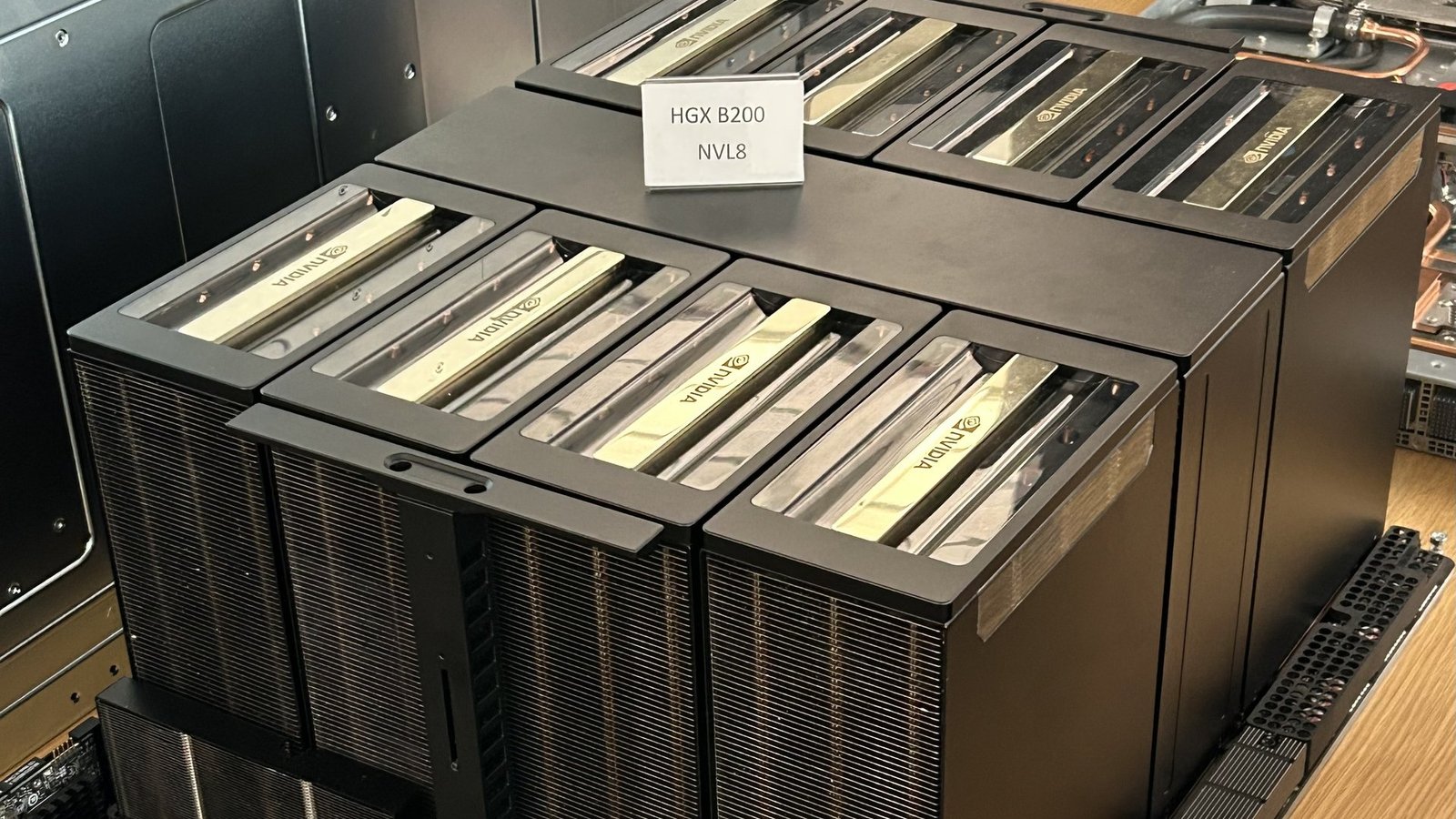
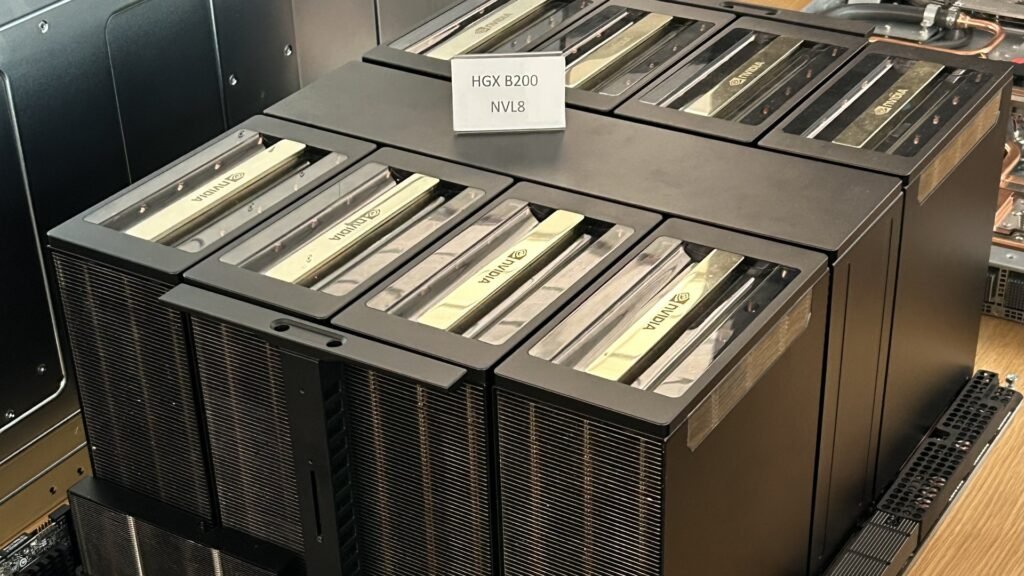
Lead image: an Nvidia HGX B200 eight-GPU board, photographed in September 2025, the kind of board built into the AI servers Dell and Supermicro sell. It is not from one of the halted shipments. Photo by Pokiiri via Wikimedia Commons, CC BY-SA 4.0; cropped and resized.
Hype in. Signal out.