President Trump has formally declared that imports of robots, industrial machinery and their parts “threaten to impair the national security of the United States.” The Oct. 28 proclamation doesn’t put a tariff on anything yet. Instead, it orders 180 days of negotiations with trading partners and keeps tariffs, duties, quotas and fees on the table if those talks go nowhere.
Key points
- An Oct. 28 Section 232 proclamation agrees with the Commerce Department that imported robots, industrial machinery and their components threaten US national security.
- It sets no tariff rate, product list or effective date; Commerce and the US Trade Representative must report on negotiations with trading partners within 180 days.
- The proclamation itself admits US makers can’t produce enough robots and machinery to meet national security needs, and the IFR says most robots installed in the US come from Japan and Europe.
- It reaches the stationary factory robot arms that the FCC’s July 2026 ban on new foreign mobile robots, humanoids and robot dogs explicitly left out.
That makes this a finding with a deadline attached, not a tax. Nothing changes at the border today. But for every automaker, aerospace plant and warehouse operator that buys robot arms from Japan, Switzerland or Germany, the threat of future duties is now in a signed presidential document, and the clock runs to late April 2027.
What the proclamation actually does
Section 232 of the Trade Expansion Act of 1962 lets the president restrict imports that the Commerce Department finds are a threat to national security. It’s the same law behind the steel, aluminum and copper tariffs. Here, the proclamation says Commerce Secretary Howard Lutnick sent the president his report on robots and industrial machinery “within the past 90 days,” and that the president “concur[s]” with its finding.
The operative part is short. Commerce and the US Trade Representative must “jointly pursue or continue pursuing negotiations of agreements” with trading partners and update the president within 180 days, which lands around April 26, 2027. Depending on how those talks go, the president “may consider alternative remedies in the future, including imposing or modifying tariffs, duties, quotas, and fees,” plus “a program to incentivize new investment” in US production. Commerce is also told to keep monitoring imports and flag anything that calls for more action.
What’s missing is everything a tariff needs to work: no duty rate, no list of tariff codes, no effective date, no country-by-country treatment. The White House fact sheet doesn’t add any. EY’s tax team notes that the existing Section 232 tariffs on steel, aluminum and copper aren’t changed, so machines heavy in those metals can still be hit by them.
The 180 days aren’t arbitrary. The statute itself, 19 U.S.C. 1862(c)(3)(A), says that if the president chooses to negotiate and no agreement is reached within 180 days, or an agreement isn’t carried out or doesn’t work, the president “shall take such other actions as the President deems necessary to adjust the imports.” The proclamation quotes that path almost word for word. In other words, the negotiation track is also the legal on-ramp to tariffs.
How “robotics” got defined so broadly
The word “robots” undersells the scope. When Commerce opened the investigation on Sept. 2, 2025, its Federal Register notice defined “robotics and industrial machinery” to include robots and programmable, computer-controlled mechanical systems, plus CNC machining centers, turning and milling machines, grinders, stamping presses, tool changers, welding and cutting tools, industrial ovens, laser and water-jet cutters, and more. Drones were carved out because they have their own Section 232 investigation.
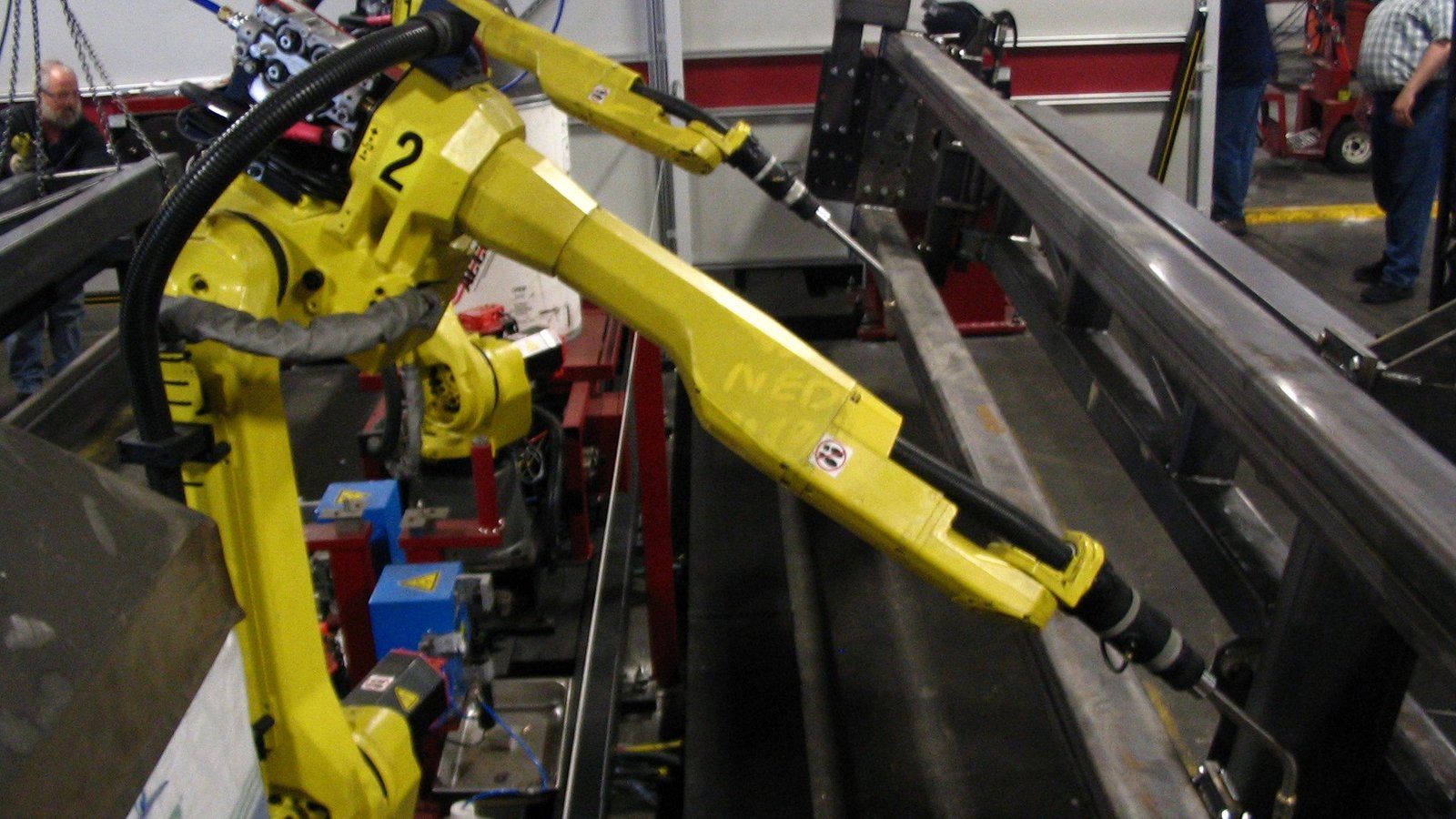
So this isn’t only about the orange and yellow arms you picture on a car line. It’s about much of the equipment that makes other equipment. The proclamation leans into that, saying robotics and machinery support “approximately $7.1 trillion in shipments of manufactured goods in 2024.” That’s a figure for the downstream goods made with machinery, not for the machines. The same paragraph puts US production of the equipment itself at “approximately $86 billion” in 2024. Neither figure comes with a published methodology, and the Commerce report they’re drawn from hasn’t been released; we couldn’t find a public copy.
The timeline: from robot dogs to robot arms
This is the second federal swing at foreign robots in four months, and the two moves fit together like puzzle pieces.
- Sept. 2, 2025: Commerce opens the Section 232 investigation and asks for public comments by Oct. 17, 2025.
- Oct. 2025: Industry groups file comments. The National Association of Manufacturers, Business Roundtable and the robotics trade group A3 all argue against broad tariffs.
- July 28, 2026: The FCC adds foreign-produced “advanced robotic devices” to its Covered List, which blocks new models from getting the equipment authorization they need to be imported and sold.
- Oct. 28, 2026: The president signs the Section 232 proclamation covering robotics and industrial machinery.
- Around April 26, 2027: Commerce and USTR owe the president a negotiation update, and the statute’s 180-day window for an agreement closes.
The FCC’s national security determination covered mobile machines: autonomous mobile robots, humanoids and quadrupeds over 4.4 pounds with sensors, network connections and onboard or remote control software. It explicitly excluded “a fixed, stationary, non-mobile robot,” including the articulated, SCARA, delta and gantry robots “intended for industrial or medical use.” It also left out cars, drones and FDA-regulated medical devices, and it only applies to new models, not robots already authorized or sitting in your house, according to the FCC and coverage of the rule.
Our read: the factory arm was the obvious gap, and Section 232 is the tool that fills it. Put the two actions side by side and almost every kind of robot an American company might import is now under some federal national-security finding. The difference is the remedy. The FCC rule is an outright block on new mobile models. The trade proclamation is a threat with a 180-day fuse.
The awkward admission in paragraph 7
The most striking line in the proclamation isn’t a threat. It’s a confession. Commerce found that “the domestic industry does not produce enough robotics, industrial machinery, and their components to meet national security needs,” and that the US “still produces less robotics and industrial equipment than it consumes” and “lacks the capacity” to fill the gap with domestic sources.
The industry’s own data says the same thing. The International Federation of Robotics reported in September that the US installed 38,400 industrial robots in 2025, up 12% from 2024, passing Japan’s 36,200 to become the world’s second-biggest market after China, which installed 354,200. The car industry was the biggest US customer at 13,500 installations. And, in the IFR’s words, “the majority of robots in the United States are still imported from Japan and Europe.”
That’s the “big four” of heavy industrial arms: Japan’s FANUC and Yaskawa, Switzerland’s ABB and Germany’s KUKA. As Ars Technica points out, no US company currently offers comparable heavy-duty arms, and buyers include GM, Ford, Tesla, Boeing and Lockheed Martin. Even Amazon, which builds many of its own robots, still uses some FANUC arms, Ars reports.
The National Association of Manufacturers put a number on the capacity problem in its October 2025 comment: domestic machinery production runs at around 80% of capacity, and even at 100% it could meet only 55% of current US demand, NAM says. That’s a trade group’s estimate, but nobody in the record seems to dispute the direction.
Which “foreign entities,” exactly?
The proclamation never names a country. It says robots and machinery “from certain foreign entities pose unique security and safety risks” because they’re wired into factories and defense systems and “routinely process and store sensitive data.” That’s the same cybersecurity logic the FCC used, and in July Reuters framed the FCC rule as aimed at Chinese humanoids.
But the main suppliers of factory arms are US allies, and the ownership map is messier than the flags on their headquarters. KUKA, the German one, has been wholly owned by China’s Midea Group since Midea completed its squeeze-out of minority shareholders in 2022. ABB agreed in October 2025 to sell its robotics division to Japan’s SoftBank Group. A policy that sorts robots by “foreign entity” will have to decide whether a German-built KUKA arm is German or Chinese, and whether an ABB arm counts as Swiss or Japanese.
A tariff deal with Japan or the EU would have to handle that, too. The proclamation lets Commerce and USTR negotiate with “any foreign trading partner” they choose, which leaves open whether the goal is to squeeze allies into building more in the US, to wall off Chinese suppliers, or both.
Who pays if the tariffs come
If tariffs do follow, the importers pay them: the US carmakers, plane builders and warehouse operators buying the machines. That’s why the business lobby pushed back hard during the comment period. Business Roundtable said any remedy “should avoid tariffs,” which it called “unnecessary barriers to products that are essential to expanding and modernizing U.S. manufacturing,” and asked that any proposed tariffs be stayed until tailored plans were worked out with industry.
A3, the Ann Arbor-based robotics trade group that says it represents more than 1,400 organizations, made the sharpest version of the argument in its public comment. It urged Commerce not to tariff the countries whose robots and components are “crucial to making the American robotics industry stronger,” and to adopt a national robotics strategy instead. “Falling behind presents a far greater national security risk than our current reliance on foreign robots and components,” A3 wrote.
Here’s the catch the White House hasn’t addressed in public: robots are how you reshore manufacturing without a labor force that doesn’t exist. Taxing the machines raises the cost of the very factories the administration wants built. The proclamation’s own nod to “a program to incentivize new investment” suggests someone noticed, but it offers no details, budget or timeline for one.
There’s also a precedent for exceptions. Ars notes that Intel recently got waivers to keep using foreign-made robots despite a nominal ban. If tariffs arrive, expect the exclusion process to matter as much as the rate.
How much of this is hype?
Less than the phrase “national security threat” suggests, at least for now. The document imposes no tariff, quota or fee. The real effect today is uncertainty. A plant manager deciding whether to order a line of welding robots for 2027 now has to price in a possible duty with no rate and no date, and that alone can slow orders.
It’s also worth separating the security argument from the industrial one. The cybersecurity concern about networked machines from adversary-linked suppliers is specific and testable. The import-reliance concern applies mostly to allies whose factories the US can’t currently replace. One is a reason to vet software and connectivity; the other is a reason to build capacity. A tariff is a blunt tool for the first and a slow one for the second.
What to watch next
- Whether the Commerce report comes out. The proclamation cites findings about cybersecurity risk and import share without publishing the evidence. The report would show which products and countries Commerce actually has in mind.
- Robots in the Japan and EU trade talks. Japan is home to two of the big four. Watch whether robots and machine tools show up as a line item in deals with Tokyo and Brussels before the April deadline.
- How a deal treats KUKA and ABB. Ownership by Midea and, once the sale closes, SoftBank makes “foreign entity” a harder test than “country of origin.”
- New US assembly announcements. FANUC and ABB already do some robot work in Michigan, as an A3 board member noted when the investigation opened. More US assembly from the big four would be the clearest sign the threat is doing what the administration wants.
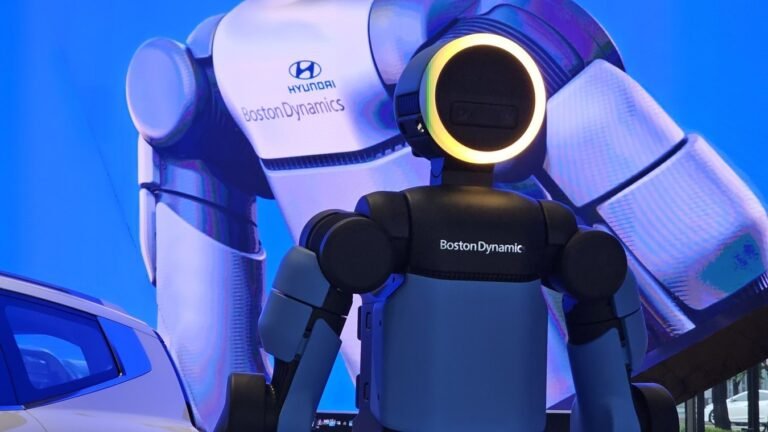
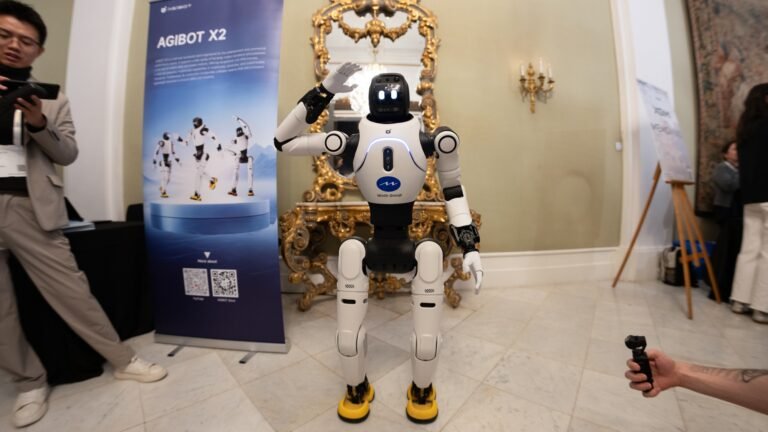
- The humanoid crossover. The FCC rule blocks new foreign humanoids; this proclamation names “humanoid and quadruped robots” as defense-relevant. US humanoid makers like Figure, Agility, Apptronik and Tesla stand to benefit from both, if they can build at volume.
This story is based on the proclamation as published by the White House on Oct. 28, 2026, and reporting available as of Friday morning, Oct. 30.
Hype in. Signal out.
Image: FANUC ARC Mate 120iC/10L six-axis welding robots. Photo by Phasmatisnox / Wikimedia Commons, CC BY 3.0; cropped to 16:9.