


Tesla is finally selling a Cybercab to people who aren’t Tesla. On Friday its official Robotaxi account said “select customers” are being invited to buy one “for personal use.” The order page, as reported by Electrek, lists the two-seater at $29,990 before taxes. The catch is a $299-a-month “Autonomy Subscription,” and the agreement behind it says the car “will not operate” without one. Hours later, Elon Musk replied on X that the fee is “too high.”
Last checked: Nov 15, 2026
Key points
- Tesla says select customers are being invited to buy a Cybercab for personal use; the order page lists $29,990, a $1,000 non-refundable deposit and estimated December 2026 delivery in Austin, according to Electrek.
- Tesla’s Cybercab Autonomy Subscription Agreement, as quoted by several outlets, says the car will not operate without a $299-a-month subscription and only works inside Tesla-enabled Robotaxi geofences that Tesla can change.
- The agreement bars owners from putting the car on Tesla’s Robotaxi network, ride-hailing, delivery or rental apps without Tesla’s written authorization.
- Musk said on X that the fee should be “more like ~$115/month”; as of Nov. 14 reports, Tesla had not changed the $299 price.
What Tesla is actually selling
The basics come from the order page and invitation, which Tesla’s Robotaxi account posted as a screenshot and which Electrek and TeslaNorth described in detail: $29,990 before taxes, a $1,000 non-refundable deposit, estimated delivery in December 2026 in Austin, and the $299 monthly subscription pre-selected with the first month included. The fine print reads “Subscription and regular vehicle maintenance required to operate.”
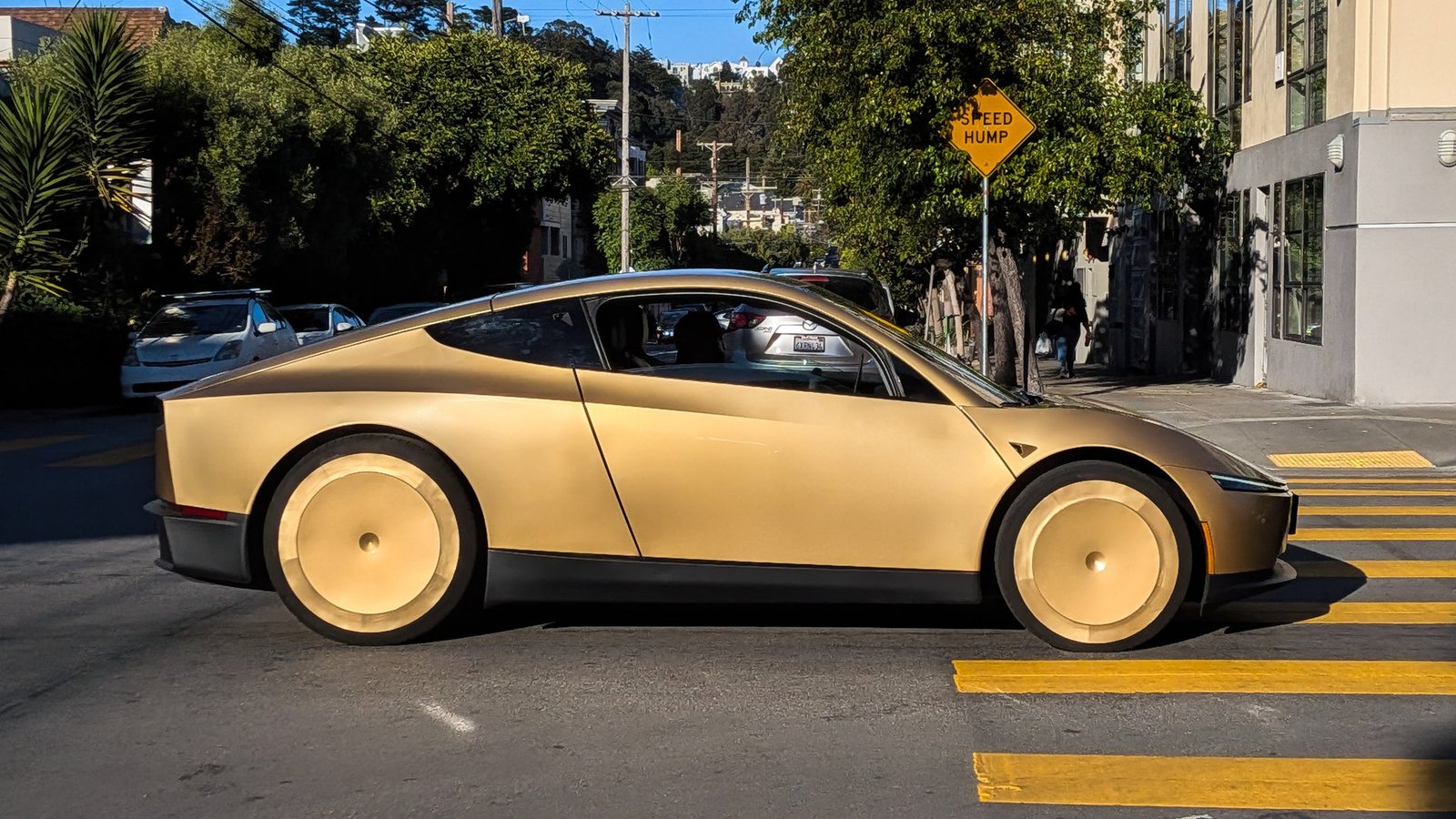
Tech reviewer Marques Brownlee summed up the order page on X: invite only, delivery must be accepted in one of a handful of Texas cities, the car “only operates in those existing geofenced areas,” and it’s “one vehicle per customer.” The car itself is the one Tesla has been showing since 2024: two seats, no steering wheel and no pedals. That last part is why the subscription matters so much. On any other Tesla, if you cancel Full Self-Driving, you drive the car yourself. Here there is nothing to drive with.
Tesla AI chief Ashok Elluswamy added on X that the Cybercab will “work unsupervised inside all the same geo locations as @robotaxi, just serving the owners’ needs.” So it is a private robotaxi with a service area, not a car with a range.
The agreement, clause by clause
The document that matters is the Cybercab Autonomy Subscription Agreement, version 20261112, which Electrek reports went up on Tesla’s configurator late Friday. Tesla hosts it on its configurator site, which blocked our direct requests, so the clauses below come from the agreement as quoted and summarized by Electrek, TeslaNorth, Carindust and NotATeslaKiller, which agree on the key points. As those outlets describe it:
- No subscription, no motion. “Your Cybercab will not operate without an active Autonomy Subscription.”
- The price can move. Tesla can change the subscription price with one month’s notice, and can change the terms; continued use after a change means you accept them. It renews monthly, can be canceled any time, and isn’t prorated.
- The map can move. The car runs only inside Tesla-enabled Robotaxi geofences. Driving outside them is prohibited and may be technically blocked, and Tesla “may expand, reduce, relocate, or otherwise modify the operating area at any time.” TeslaNorth notes the agreement says coverage may not match Tesla’s Robotaxi service exactly.
- Strikes and suspensions. Three or more “strikeouts” for improper or unsafe use trigger a one-week suspension of autonomous driving, during which the car may not operate. Tesla can also suspend or cancel for “unauthorized or inappropriate use.”
- Remote control. Tesla can remotely locate, restrict or control the car, put it in a “safe state,” or end access, and Electrek reports the agreement says those actions don’t give the owner remedies beyond what the terms provide.
- Cameras on you. Tesla collects “Autonomy Data,” including images from the cabin camera, kept for 30 days by default, per Electrek.
- Personal use only. No Tesla Robotaxi network, no Uber, no delivery app, no rentals, unless Tesla authorizes it in writing or enables it in the product.
- Hands off the look. Wraps, tint and wheel changes only through Tesla or an authorized provider, or the subscription can be suspended.
- Disputes. Individual arbitration under Texas law unless the buyer mails an opt-out within 30 days, according to Carindust.
It isn’t all restriction. Per TeslaNorth, the fee bundles autonomous driving, connectivity, remote support and roadside assistance with towing up to about 50 miles, plus a covered-services list that currently includes tire replacement, windshield replacement and wipers, cabin air filters, inspections and camera-lens cleaning. Owners still pay for insurance, registration, charging and parking. For service, the car drives itself, empty, to a Tesla service center and back. One outlet, Drive Tesla Canada (as cited by NotATeslaKiller), also reads the separate purchase terms as barring resale without Tesla’s written permission; we haven’t been able to check that document ourselves.
The math, at $299 and at Musk’s $115
Musk, replying to Brownlee late Friday night Pacific time, wrote: “It will be available nationwide, as we receive regulatory approval. But the monthly fee is too high. Should match the cost of Tesla FSD and connectivity for other models, which is more like ~$115/month.” For reference, Not a Tesla App puts FSD (Supervised) at $99 a month and Premium Connectivity at $9.99 a month, which is about $109 together. As of reports on Nov. 14, Tesla had not changed the $299 price on the order page, and we found no newer change.
Here is what the gap means over time. These are our own sums using the listed price, before taxes, insurance, registration and charging, and assuming one free month, as the order page says:
- Year one at $299: $29,990 plus 11 paid months ($3,289) comes to $33,279.
- Five years at $299: $29,990 plus 59 paid months ($17,641) comes to $47,631, the same figure Electrek calculated.
- Five years at ~$115: $29,990 plus 59 paid months ($6,785) comes to $36,775.
- The difference: about $10,856 over five years, or roughly a third of the car’s sticker price, decided by a number Tesla can set with a month’s notice either way.
Put differently, $299 a month is about $9.83 a day just for the right to have the car move. Whether that’s a bargain depends entirely on where you live. Inside the geofence, with no other car, it may compete with ride-hailing. One block outside it, the car is a gold-colored lawn ornament.
Why the geofence is the real price
A subscription price is visible. The operating area is the term buyers can’t see in advance, and it’s the one Tesla can change unilaterally. Electrek has reported that an independent tracker, Koby Pierce, tested thousands of addresses in the Robotaxi app and found the areas where Tesla actually accepts pickups and drop-offs cover only 59% to 78% of the advertised geofences in the six cities he checked, about 59% in Austin. Those are third-party measurements, not Tesla figures, but they show the map on the marketing page and the map the car obeys can differ.
That matters more for a car you own than for a ride you hail. If a Robotaxi zone shrinks, a rider opens a different app. If a Cybercab owner’s zone shrinks after purchase, the agreement as reported gives Tesla that right and the owner a $29,990 object with fewer places to go.
A robotaxi you can’t run as a taxi
The strangest clause is the personal-use ban. For years Musk pitched Tesla owners on adding their cars to a robotaxi fleet and earning money while they slept. The first Tesla sold to consumers for unsupervised operation is, per the agreement, barred from doing that without Tesla’s written say-so. Electrek reports that on Tesla’s Q3 2026 earnings call, Elluswamy said customer cars might join the network around Q2 2027. That is a forecast, not a term in the contract.
Brownlee flagged the same irony in his own post: “You can’t actually use it as a cab(??!) It’s limited to private use only. Inside the existing geofenced locations. It’s a paperweight if I take this thing home.”
Oh, and there’s a bet
Brownlee’s post wasn’t only a review. He has a long-running wager, which he restated on Friday as “Cybercab publicly available for under $30k by the end of 2026,” with his hair on the line. His case that he hasn’t lost: no deliveries yet, and invite-only isn’t “publicly available.” Musk’s response to a fan account urging Brownlee to “honor your word” was three words: “He’s a chicken.”
Our read: the timing is suggestive. Musk promised a Cybercab “below $30,000” at its 2024 unveiling, per Electrek, and the listed price lands $10 under that line with seven weeks left in 2026. Electrek argues the launch looks rushed to win the bet. We can’t know Tesla’s motive, and an invite-only, Texas-only sale with December “estimated” delivery is a real step toward consumer sales, not nothing. But the clock for “publicly available by the end of 2026” runs out Dec. 31.
A short history of the $30,000 robotaxi
- October 2024: Tesla unveils the Cybercab at its “We, Robot” event; Musk promises a price below $30,000.
- February 2026: the first Cybercab comes off the Giga Texas line, per Electrek.
- September 2026: Tesla starts charging for Cybercab rides in Austin; a week later NHTSA issues a special order with 21 questions on how a car without a steering wheel or brake pedal meets federal safety standards, per Electrek.
- Oct. 30, 2026: Tesla answers NHTSA and, Electrek reports, asks that the entire response be kept confidential. The agency hasn’t publicly ruled.
- Nov. 12-13, 2026: agreement version 20261112 appears; Tesla invites select customers to order.
- December 2026: estimated first deliveries in Austin.
That regulatory question hasn’t gone away because the car is now for sale. A private buyer takes on whatever NHTSA eventually decides about a vehicle with no manual controls, on top of the terms Tesla can change.
Official Tesla video: “The Future Has Arrived | Cybercab.” Source: Tesla on YouTube.
What to watch next
- Whether $299 actually drops. Musk said ~$115; the order page said $299 as of the latest reports. Watch for a change before December deliveries, and whether it’s written into the agreement or just a promo.
- A geofence guarantee. The most buyer-friendly change Tesla could make isn’t a lower price. It’s a commitment not to shrink an owner’s operating area, or a refund if it does.
- Actual deliveries, and to whom. Whether any customer receives a Cybercab before Dec. 31, and whether orders open beyond invitations, decides both Tesla’s “below $30,000” promise and Brownlee’s haircut.
- NHTSA. Any public response to Tesla’s confidential answers on brake, steering and mirror rules now affects private owners, not just Tesla’s own fleet.
- The Q2 2027 fleet idea. If owners are later allowed onto the Robotaxi network, the economics change completely. Until it’s in the contract, it’s a forecast.
Tesla built a robotaxi, then sold it to people who can’t run it as a taxi, can’t drive it, and can’t take it past a line Tesla draws. The CEO thinks the monthly price is wrong. The good news for buyers is that the agreement lets Tesla change it. That is also the bad news.
Hype in. Signal out.
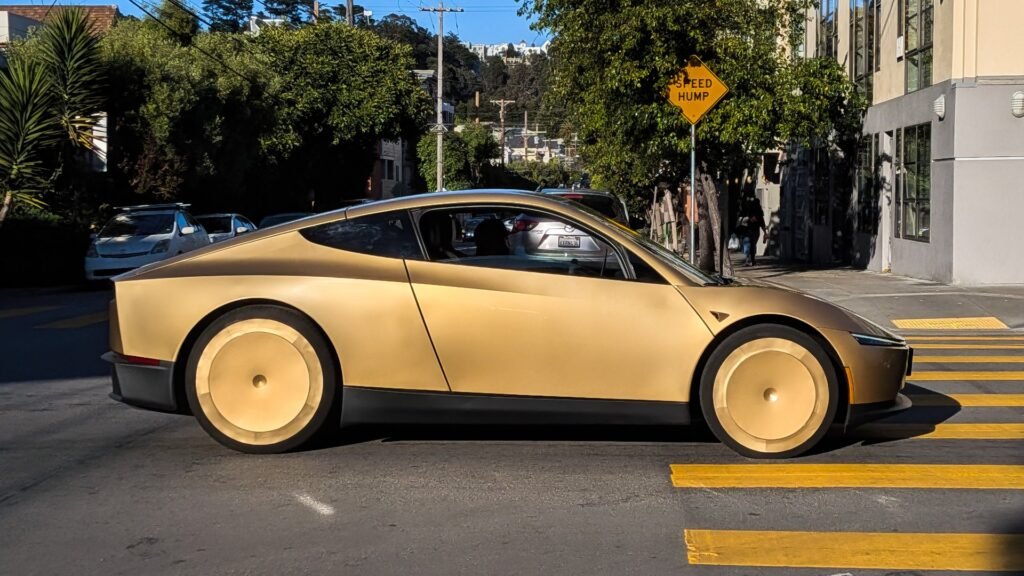
Image credit: Tesla Cybercab in San Francisco, June 2026. Photo by Wikimedia Commons user 9yz, via Wikimedia Commons, licensed CC BY 4.0; cropped to 16:9.