




Toyota Motor Corporation said on Nov. 5, 2026, that it will create Toyota Robotics as a company-wide organization under direct corporate oversight, effective Jan. 1, 2027. In its official release, Toyota says it will position robotics as “a key pillar of its future business,” fold scattered robotics people and functions into one unit, and put Operating Officer and Chief Production Officer Takefumi Shiga in charge. What the release does not name is a robot, a budget, or a ship date.
Key points
- Toyota’s Nov. 5 newsroom release says Toyota Robotics starts Jan. 1, 2027, under Chief Production Officer Takefumi Shiga, with robotics framed as a key future business pillar.
- Reuters reports Toyota will first deploy robots inside Toyota, its group and suppliers, with external sales and “living domain” uses aimed at growing revenue from 2030 onward.
- Separately, Toyota and Waymo said on Oct. 30 they will test and validate an autonomous Toyota bZ4X fleet in Japan in 2027, with UK and other Waymo markets planned later.
- Toyota Research Institute and Boston Dynamics already run a joint humanoid research program on Atlas; that work sits beside this new corporate unit, not inside the release’s product plan.
What Toyota actually announced
The Toyota Global Newsroom post is an organizational-and-personnel bulletin, not a product launch. Buried among education, “Kanri,” regional CEO swaps and the abolition of a couple of research centers is the robotics line that matters for this beat:
Toyota says it will build Toyota Robotics on the engineering and genba (front-line manufacturing) capabilities from its car business. The company says it wants robots “not as machines that take away people’s jobs, but as partners that stand alongside them and expand their potential.” Shiga will keep his production-engineering hats and also head the new unit, “bringing together robotics-related expertise, personnel, and functions spread across the company.” The brief says the group will work with development departments, start from manufacturing-floor problems, and accelerate “practical application, commercialization, and deployment.”
That is the whole product brief. No Digit. No Atlas. No Optimus. No dollar figure. No factory named as the first customer site. For a company that usually measures progress in takt time and defect rates, the vagueness is the tell: this is a governance move first.
What Reuters says Toyota said off the page
A Reuters dispatch by Rie Ishiguro and Maki Shiraki, carried in Japanese by Newsweek Japan, adds commercial color that is not in the English newsroom release. Treat it as Reuters reporting of company comments, not as a second official filing.
Per Reuters, Toyota plans to start with deployments inside the company, the Toyota group and suppliers, while also eyeing external sales and applications in daily life, with an aim to grow sales from 2030 onward. Executive Vice President Yoichi Miyazaki, speaking at a briefing that day, pointed to Toyota Production System strengths and said Toyota has about 60 factories worldwide and about 18,000 skilled craftspeople improving processes daily; he said that “high-quality” front-line data could accelerate robot development in a way rivals cannot easily match.
Reuters also ties the unit to a larger factory-automation spend already in motion across Toyota’s supply chain: a plan to invest on the order of ¥1 trillion a year to renew aging plant equipment, and a long-range robot-count outlook of about 150,000 units for the Toyota group (in-house plus purchased) and about 250,000 at suppliers between 2028 and 2040 — about 400,000 in total. Those are planning-scale numbers Reuters attributes to Toyota, stretched over more than a decade. They are not purchase orders, and they are not the same kind of money as Agility’s SPAC proceeds or anyone’s capex guidance for next quarter.
The autonomy track next door
The robotics org chart lands two weeks after Toyota and Alphabet’s Waymo advanced their autonomous-driving collaboration. In a Toyota UK media release dated Oct. 30, 2026, the companies say they will begin initial operations to test and validate an autonomous Toyota bZ4X fleet in Japan in 2027, with deployment to the United Kingdom and other Waymo-serviced markets planned in following years. Toyota will build the vehicles at its Takaoka plant in Toyota City, Aichi Prefecture, integrating Waymo’s AV hardware under one roof.
Waymo co-CEO Dmitri Dolgov, quoted in that release, said the partnership helps bring Waymo Driver technology to more people, including Japan, and cited Waymo’s company-reported claim that in areas where it operates it has been “up to 20x safer than human drivers when it comes to serious crash injuries.” That is Waymo’s own safety framing; treat it as a company claim, not an independent regulator scorecard. Toyota board member and executive vice president Hiroki Nakajima said Waymo chose Toyota as a partner and that safety tech “makes the biggest difference when it reaches as many people as possible.”
TechCrunch read the deal less as a new AV platform moonshot and more as Waymo securing a right-hand-drive volume vehicle for Japan and the UK while Toyota learns how to bolt Level 4 hardware onto a production line. The companies also say they will keep exploring Waymo tech in personally owned Toyotas, and work with Woven by Toyota on broader road-safety ideas. None of that is Toyota Robotics. It is the other half of Toyota’s physical-AI story: wheels that drive themselves, versus arms and legs that work the plant.
Atlas, TRI and the research that already exists
Toyota is not starting from a blank whiteboard. In October 2024, Boston Dynamics and Toyota Research Institute announced a joint research partnership aimed at general-purpose humanoids, pairing TRI’s Large Behavior Models with Boston Dynamics’ Atlas. In August 2025, the same partners said a single LBM was driving Atlas through continuous whole-body packing, sorting and organizing sequences, with mid-task disruptions that required the robot to adapt. Those are research demonstrations on a research platform owned by Hyundai-controlled Boston Dynamics, not a Toyota-branded warehouse SKU.
Our read: Toyota Robotics is the corporate container that can eventually own commercialization. TRI plus Boston Dynamics is still the scientific pipeline for humanoid behavior. Conflating the two is how you get “Toyota is shipping Atlas next year” headlines that neither company has earned.
Why it matters now
Timing is not subtle. Agility Robotics began trading on Nasdaq as AGLT on Nov. 5, the same day Toyota filed the org chart, after closing its Churchill Capital Corp XI SPAC the day before — a story we covered this morning. Public markets are suddenly pricing a pure-play warehouse humanoid with real tote-moving hours and contingent Digit 5 orders. Toyota is answering with something older and colder: put the production chief in charge, gather the internal talent, start from the plant floor, and talk about partners instead of replacements.
That framing also sits against U.S. trade politics. In late October the Trump administration declared certain robot imports a national security concern after a Commerce investigation, with negotiations and possible tariffs, duties or quotas still ahead — another Futureshock thread. Toyota’s pitch that robots should stand “alongside” workers is corporate messaging, but it is also a political posture for a Japanese automaker that already lives inside tariff risk and wants factory automation without looking like a headcount eraser.
Who feels this first is not retail shoppers. It is Toyota’s own plants, group companies and suppliers that become the proving ground and, if Reuters’ 2028–2040 counts hold, a captive demand base measured in the hundreds of thousands of machines. Competitors in industrial robotics — FANUC, ABB, Yaskawa, KUKA and a long list of Chinese vendors — should read a customer that intends to build more of the stack itself. Humanoid startups should read a giant that may buy, partner or compete, and has not said which.
The catch
An org chart is not a robot. Toyota’s English release is careful about values and structure and silent about hardware. Reuters’ commercial timeline — internal first, outside and “living” uses later, sales growth after 2030 — is a multi-year fuse. The ¥1 trillion-a-year equipment-renewal figure and the ~400,000-robot planning range are long-horizon, company-attributed planning numbers; they mix in-house builds and purchases, and they stretch to 2040. Do not smash them into one “Toyota robotics budget” and call it a day.
There is also a category blur. Robotaxis, factory arms, humanoids and home helpers are different products with different safety cases, margins and failure modes. Toyota is now formally in the robotics pillar business while also scaling a Waymo-equipped bZ4X and funding Atlas research through TRI. That is breadth. Breadth without a named first SKU is how companies sound visionary in November and vague in the following March.
The takeaway
Watch three concrete things, not the slogan about partners:
- What Toyota Robotics owns on day one. Headcount, budget lines and which existing projects move under Shiga will say whether this is a real P&L or a renaming exercise.
- The first named internal deployment. A plant, a supplier and a robot count with an intervention rate beat another philosophy paragraph.
- How the Waymo line and the TRI–Boston Dynamics line connect, or don’t. Takaoka’s 2027 bZ4X validation and Atlas research can stay separate forever. If Toyota starts talking about a shared physical-AI stack, that is a different story.
Toyota just told the market that robots are a pillar. The signal will be whether the pillar holds up a product.
Hype in. Signal out.
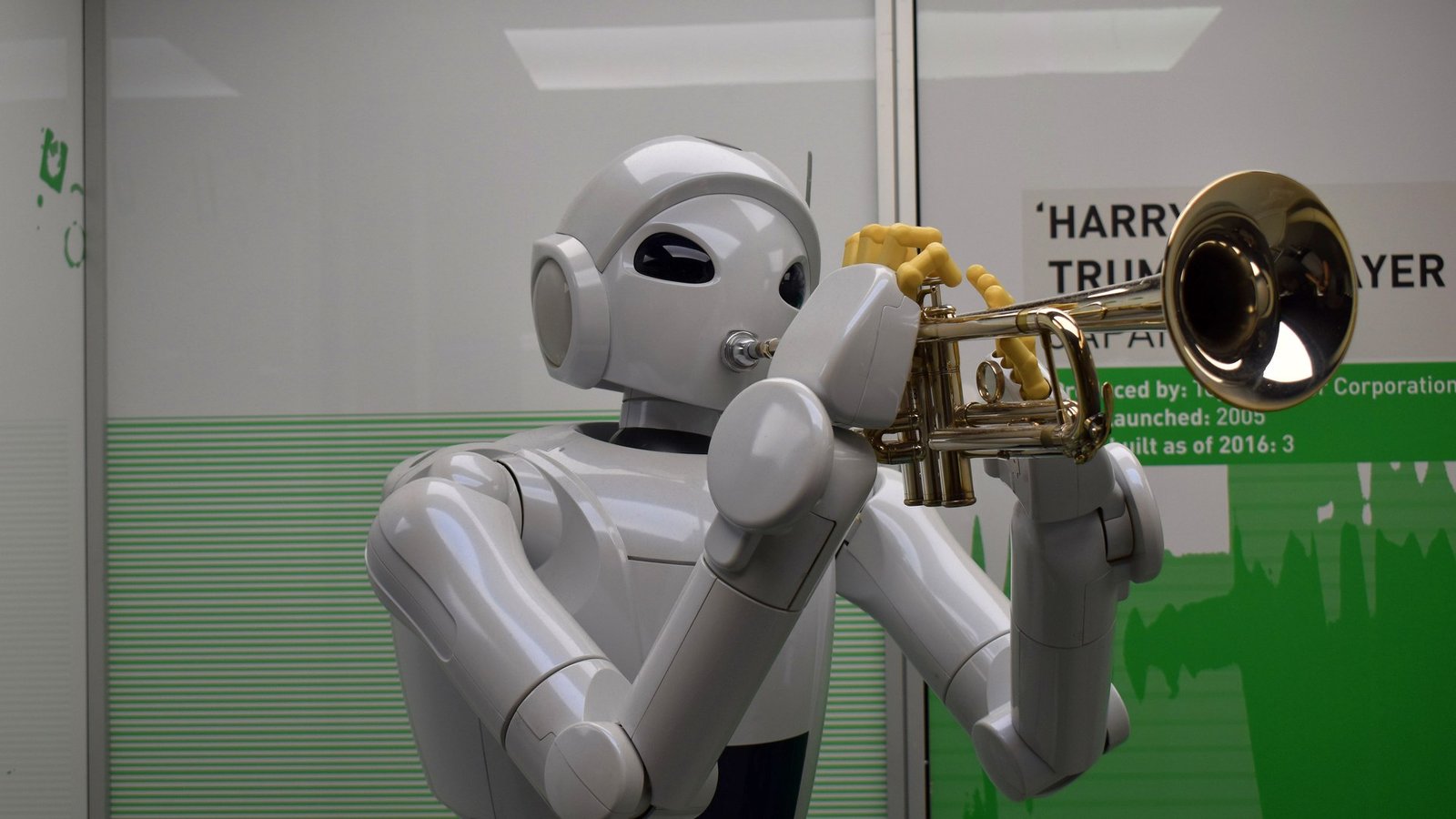
Featured image: Toyota Partner Robot at Tekniska museet (Swedish National Museum of Science and Technology), Aug. 21, 2019. Photo by BugWarp via Wikimedia Commons, CC BY-SA 4.0. Cropped to 16:9 for this post.