




Sony’s cheapest new PlayStation headset gets the fancy drivers. The PlayStation Pulse wireless headset goes on sale Nov. 19 for $99.99 with planar magnetic drivers, the flat-diaphragm design that Sony’s PlayStation headsets got for the first time with the $149.99 Pulse Elite in 2024, plus PlayStation Link and Bluetooth at the same time. Early reviews like the sound and the battery. They are much less kind to the microphone, which GamingTrend’s reviewer says “sounded roughly like a phone microphone.”
Key points
- Sony’s PlayStation Pulse headset launches Nov. 19 in the U.S. and other regions at a recommended $99.99, in White or Midnight Black.
- Sony says it uses larger planar magnetic drivers than the 2024 Pulse Elite and rates it at up to 30 hours of battery life.
- Reviewers at The Verge, GamingTrend, CBR and Press Start praised its sound, comfort and simultaneous PlayStation Link and Bluetooth audio.
- The built-in mic drew the most criticism; there’s no noise canceling or boom mic, and GamingTrend says no charging cable comes in the box.

What $99.99 buys
Sony announced the Pulse and a pricier Pulse Edge in September, then added the price and date in an Oct. 21 update to the PlayStation Blog post. The Pulse launches Nov. 19 in the U.S., Canada, the U.K., Japan, Australia, New Zealand and much of Europe, at $99.99, £89.99 or €99.99. Pre-orders opened Oct. 29.
Here’s what’s in it, according to Sony:
- Drivers: custom planar magnetic drivers with four magnets each. Sony says they’re larger than the Pulse Elite’s, for “fuller, deeper bass.”
- Wireless: a PlayStation Link adapter with a USB-C plug in the box, for what Sony calls lossless, ultra-low-latency audio on PS5, PlayStation Portal, PC and Mac, plus a Bluetooth connection running at the same time.
- Mic: an integrated microphone with “AI-enhanced noise rejection.” No boom mic.
- Battery: up to 30 hours, per the product page, which notes that figure came from pre-production hardware over PlayStation Link.
- Design: rotating earcups that fold flat, built-in volume controls, White or Midnight Black.
Planar magnetic drivers push a thin, flat diaphragm with magnets spread across its surface instead of shoving a cone from the middle. Fans credit them with detail and low distortion. They used to be an audiophile-headphone thing. Now they’re in a $100 console headset.
What reviewers liked
Futureshock hasn’t tested the Pulse. Four outlets that got early units have, and on sound they mostly agree.
The Verge’s Cameron Faulkner, in a Nov. 11 hands-on, says it has “very good sound and just enough extras,” with drivers that “aren’t bass-heavy or too shrill.” He also notes the earcups rotate 180 degrees in either direction, and that the USB-C dongle pairs quickly with a PS5, a PC or a Nintendo Switch 2. On a PlayStation Portal, the headset connects directly with no dongle at all.
GamingTrend’s David Burdette scored it 80 out of 100 and called its audio detailed enough that it “amplifies bad sound design.” He also says the battery lands in line with Sony’s roughly 30-hour estimate. CBR’s Mark O’Callaghan gave it an 8 out of 10 and says it showed off 3D audio in the PS5 game Saros. Press Start’s Shannon Grixti called it “a massive winner,” with battery life “almost 3 times” that of the original Pulse 3D headset. Grixti also reports no dropouts with the new dongle, after PlayStation Link “has had some disconnection issues.”
The feature every reviewer brought up is running Link and Bluetooth at once: game audio from the console, a phone call or music from your phone. Burdette writes that you rarely get Bluetooth under $100, “let alone working alongside the other connection.”
The catch: the mic, the bass and the box
The microphone is where the praise stops. Burdette says his friends “tore the Pulse apart” on chat, his recordings came out “fuzzy and pitchy,” and there’s no mute function on the headset itself outside of the PS5 controller. Faulkner says he wiped his thumb across the built-in mic several times and caused some feedback. Grixti calls the mic “pretty decent” for a hidden one, but says very competitive players who care about voice clarity probably have better options. O’Callaghan lists “no physical mic” as a con and steers multiplayer-heavy players elsewhere.
The rest of the complaint list:
- Bass: despite Sony’s bass pitch, Burdette says it’s “missing some oomph,” especially with metal. Grixti found it “still quite soft for volume” next to other headsets.
- No noise canceling: O’Callaghan calls that “disappointing.” Sony saves active noise canceling for the Pulse Edge.
- No cable: Burdette says the box holds the headset and the Link dongle, and that’s it. No USB-C charging cable.
- Thin software: there’s a small EQ in the PS5’s sound menu but no companion app, per Burdette.
- Volume quirk: in simultaneous mode, Faulkner says the volume rocker only adjusts the device on the Link dongle, not your phone.
- Long sessions: O’Callaghan says it started to feel heavy after more than four hours. Grixti, who wears glasses, found it comfortable.
Sony’s own pages don’t quite agree on chat balance
One detail worth knowing before you buy. The comparison table on the PlayStation Blog lists “Built-in Game Audio and Chat Balance Control for PS5” as a Pulse Edge feature and shows a dash for the Pulse. The Pulse’s own product page says you can “fine-tune volume, chat balance and more with intuitive built-in controls and seamless integration with the PS5 console UI.”
Our read: both can be true if balance lives in the PS5’s menus rather than on the earcup. Press Start’s review backs that up, listing the “loss of physical game/chat audio controls” as a negative. If you like adjusting chat volume mid-match without opening a menu, that’s an Edge feature.
How it fits the price ladder
The Pulse doesn’t move Sony’s entry price. It moves what you get for it. Pro-Gamer.gg notes that $99.99 matches the U.S. launch price of the 2020 Pulse 3D, the headset that came out alongside the PS5. In Australia, Press Start lists A$159.95, the same as the original there.
- Pulse 3D (2020), $99.99 at launch: no planar drivers, per Press Start, which also puts the new Pulse’s battery at almost three times this one’s.
- Pulse Elite (2024), $149.99 at launch (per Pro-Gamer.gg): planar drivers and PlayStation Link, plus a retractable mic and quick charging, with up to 30 hours of battery, per Sony’s audio lineup.
- Pulse (2026), $99.99: larger planar drivers, same rated battery, built-in mic only.
- Pulse Edge (early 2027), price not announced: eight magnets per driver, active noise canceling, detachable boom mic, 3.5mm jack, carrying case.
Our read: on paper, the new Pulse is a Pulse Elite with larger drivers, a built-in mic instead of a retractable boom and a launch price $50 lower. For people who mostly play solo, that’s a good trade. For people who live in party chat, it’s the wrong one.
Who should buy it, and who should skip
Buy it if you mostly play single-player PS5 games, want one headset that also handles your phone, or use a PlayStation Portal. That’s the case reviewers make for it, and O’Callaghan says it’ll be his pick “for PS5 single-player games.”
Skip it if you already own a Pulse Elite, since the rated battery matches and you’d give up the boom mic. Skip it too if voice chat quality matters to you or your squad, you play in a noisy room, or you want heavy bass. If you need noise canceling, the Edge is the one to wait for, though Sony hasn’t said what it’ll cost.
One thing nobody can tell you yet: how the earpads and headband hold up after months of use. Grixti flags possible flaking as something to watch. All four are pre-launch reviews of early units, not long-term tests.
Amazon.com listed the Midnight Black Pulse for pre-order at $99.00 this afternoon, with a Nov. 19 release date. Sony’s recommended price is $99.99.
The takeaway
Sony took the most expensive part of its old premium headset and put it in the cheap one. Reviewers say the sound and battery hold up their end. The mic doesn’t. Watch for full reviews after the Nov. 19 launch, whether Sony adds the companion app or deeper sound settings reviewers asked for, and the Pulse Edge price, which decides whether the $99.99 model is the smart buy or the compromise.
Hype in. Signal out.
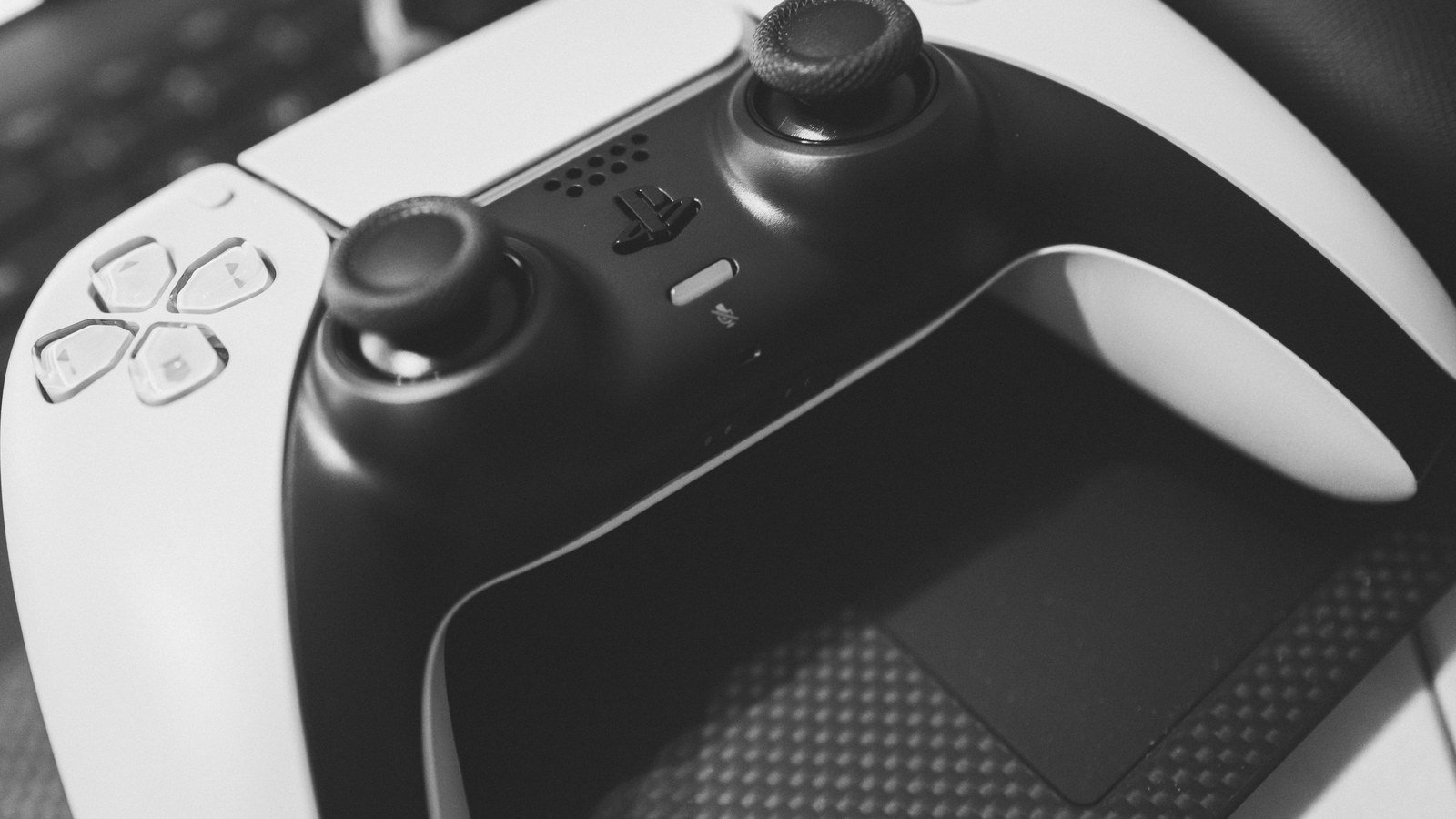
Lead image: A PlayStation 5 DualSense controller, not the Pulse headset. Photo: Sergey Galyonkin via Wikimedia Commons, licensed CC BY-SA 2.0. Cropped and resized.