


Microsoft’s Surface Laptop Ultra has been shipping for a month, and the reviews keep landing on the same split. Microsoft calls its 15-inch Mini-LED screen the brightest display it has ever shipped, and its Nvidia RTX Spark chip can hold big AI models in memory. But Notebookcheck says the panel makes black content look “washed-out,” Microsoft says the screen’s local dimming is on by default, and the whole thing starts at $2,599.99.
Key points
- Microsoft’s Surface Laptop Ultra runs on Nvidia’s Arm-based RTX Spark chip and costs $2,599.99 with 24GB of memory and $5,899.99 with 128GB.
- Notebookcheck says it found no way to turn on local dimming and measured a 0.61-nit black level, while Microsoft told Windows Central the screen dims by default across 1,344 zones.
- Engadget measured Apple’s M5 Pro MacBook Pro well ahead in Cinebench CPU tests, and reviewers say the Surface makes the most sense for running local AI models.
- Tom’s Hardware got 10 hours 43 minutes of battery life against Microsoft’s rating of up to 12 hours of web use, and some games still won’t run on it.
What Microsoft is selling
Microsoft first showed the laptop in May, opened pre-orders at its Oct. 7 event and started shipping Oct. 16, Windows Central reported. We covered the wider RTX Spark laptop launch that week. The reviews are now in, as Microsoft opens its Ignite conference in San Francisco today.
Per Microsoft’s spec sheet, every model gets the same 15-inch 3:2 touchscreen (3,270 x 2,180, up to 120Hz), the same aluminum body at 4.41 pounds, and the same ports: three USB4 ports (one with a magnetic breakaway charging connector Microsoft calls Magnetic Connect), HDMI 2.1b, USB-A, an SD card reader and a headphone jack. What changes is the chip and memory:
- $2,599.99: 18-core CPU, 5,120-core Blackwell GPU, 24GB of unified memory, 512GB SSD and Windows 11 Home.
- $3,699.99: the full 20-core CPU and 6,144-core GPU, 32GB and 1TB, per Tom’s Hardware.
- About $4,300: the same chip with 64GB, per Notebookcheck and Engadget.
- $5,899.99: 128GB and 1TB. Tom’s Hardware says it “sold out almost immediately” during pre-orders on Microsoft’s site.
“Unified memory” means the CPU and GPU share one pool of RAM, the trick Apple’s M-series chips use. It’s why this laptop exists: an AI model has to fit in memory to run locally, and Microsoft’s launch blog says the laptop can run models of up to 120 billion parameters locally. That’s a company claim. The memory is part of the chip package and can’t be upgraded, so Tom’s Hardware’s advice applies: “get what you need when you buy it.”
The screen fight
Mini-LED screens are LCD panels lit by thousands of tiny LEDs grouped into zones. “Local dimming” turns down the zones behind dark parts of the picture. Without it, blacks look gray.
Notebookcheck says it “did not find a way to activate local dimming.” It measured a black level of 0.61 nits and a contrast ratio of 1,736:1, and said the panel’s slow response times (57.2 milliseconds black to white) cause ghosting “even in 120 Hz mode.” Its verdict: “The only real highlight is the brightness.”
Microsoft pushed back. It told Windows Central that the screen has local dimming on by default, with 5,400 LEDs across 1,344 zones. Its display-measurement guide tells testers to set Windows’ “Change brightness based on content” option to Always, warning that turning it off “reduces the display’s dynamic local dimming behavior.”
So it dims. Windows Central’s Zac Bowden, who could see the zones working, still called it “not very good local dimming.” He found that switching HDR off makes the dimming most effective, while switching it on “pretty much fixes the ghosting issue” at the cost of dimming. You get to choose which flaw you’d rather look at. Microsoft’s Oct. 22 firmware update fixed screen flickering, long reboots and unexpected restarts, Windows Central reported, but not the ghosting.
Not every reviewer minds. Engadget’s Devindra Hardawar said he “can’t praise Microsoft’s screen technology enough,” and Tom’s Hardware called it “really, really good.”
Spec sheet vs. the reviewers’ tests
Here’s how Microsoft’s numbers compare with what testers measured. Test methods differ.
| Spec | Microsoft says | Reviewers measured |
|---|---|---|
| Contrast | 100,000:1 | 1,736:1 (Notebookcheck, which found no way to turn on local dimming) |
| SDR brightness | 1,000 nits typical | 1,050 nits average (Notebookcheck); 944 nits (Tom’s Hardware) |
| HDR brightness | 2,000 nits peak, 10% window | More than 2,000 nits (Notebookcheck) |
| Color | 100% DCI-P3 | 74.1% DCI-P3 coverage (Tom’s Hardware) |
| Battery | Up to 12 hours web, 15 hours video, at 150 nits | 10:43 (Tom’s Hardware); 10.5 hours at 150 nits and about 7 at 500 nits (Notebookcheck); about 7.5 hours of real work (Engadget) |
| Weight | 4.41 lb | “More like a brick” (Engadget) |
Our read: the brightness claim holds up. The contrast claim depends on dimming that reviewers had trouble seeing or found weak. Notebookcheck still praised the panel’s “accurate colors,” so the color gap may come down to how each outlet measures. Battery life is fine for a day of light work and well short of Apple’s: the MacBook Pro in Tom’s Hardware’s test ran 17 hours 58 minutes.
Fast GPU, slower CPU, patchy games
Engadget’s numbers show where RTX Spark stands. In Cinebench 2024, the Surface scored 1,553 multi-core and 120 single-core. The M5 Pro MacBook Pro hit 2,188 and 192. Hardawar’s summary: “Apple’s M5 Pro is far faster.” Tom’s Hardware said RTX Spark “often won” against the M5 Max in AI tests, but on a 128GB test unit. Its 32GB review laptop was “tight for AI,” with 12GB set aside for the GPU out of the box, so it had to stick to smaller models.
Games run better than on older Windows-on-Arm laptops, but not all of them do. Engadget got 87 frames per second in Cyberpunk 2077 at 1440p with path tracing and 4x frame generation. Tom’s Hardware couldn’t run Red Dead Redemption 2, and Notebookcheck lists Call of Duty, Battlefield 6 and F1 25 as incompatible for now. A cheaper Gigabyte Aero X16 beat the Surface in Shadow of the Tomb Raider and Far Cry 6 in Tom’s Hardware’s tests.
Software is the other catch. Tom’s Hardware notes that InDesign, Illustrator and Lightroom Classic still run through emulation, and that Windows itself has no features yet that use the chip’s AI power. “There’s nothing that RTX Spark does that makes Windows itself better yet,” it wrote.
What the money buys
Memory is where the price climbs. Going from 32GB to 64GB costs about $600 more. Going from 32GB to 128GB costs $2,200 more. For comparison, Apple’s OLED MacBook Pro starts at $2,899, which is $300 more than the Surface’s base model, and the 16-inch version weighs 4 pounds to the Surface’s 4.41, per Engadget.
Microsoft is sweetening the deal. Its store offers up to $1,000 cash back with a qualifying trade-in, pitched with the line “Break up with your MacBook,” for US and Canadian orders through Nov. 23. The offer terms say trade-ins are final. On Amazon, the base 24GB model and the 32GB, 20-core model were listed at Microsoft’s prices this morning.
Who should buy it, and who should skip
Buy it if you run AI models locally every day, need Windows or CUDA, and will pay for 64GB or more. TechRadar put the test simply: “Grab it if local models above 24GB are your daily work.” Engadget gave it an 8.9 out of 10 and called it “a solid choice” for “a diehard Windows user” who’s “really into AI.”
Skip it if you mostly want a fast, good-looking laptop. Engadget says most gamers and creators “would likely be better off saving $1,000” on a gaming laptop. PCMag’s Chris Hoffman, writing about his colleague’s review, put it more bluntly: “you are much better off saving money and buying another laptop.” Skip it too if you want deep blacks, play one of the games that won’t run, or can only afford the 24GB base model, which lacks the memory for the big local models that justify the price.
The takeaway
Microsoft built what Tom’s Hardware calls its most beautiful laptop around a chip that shines at one job: holding big AI models in memory on a Windows laptop. Our read: the screen is extremely bright, its dimming is weak, and the configs with real room for big models cost about $4,300 and up. Watch this week’s Ignite for the Windows AI features Tom’s Hardware says are still missing, and Microsoft’s firmware updates for any change to how the screen dims. If neither shows up soon, this is a $2,599 laptop waiting for its software.
Hype in. Signal out.
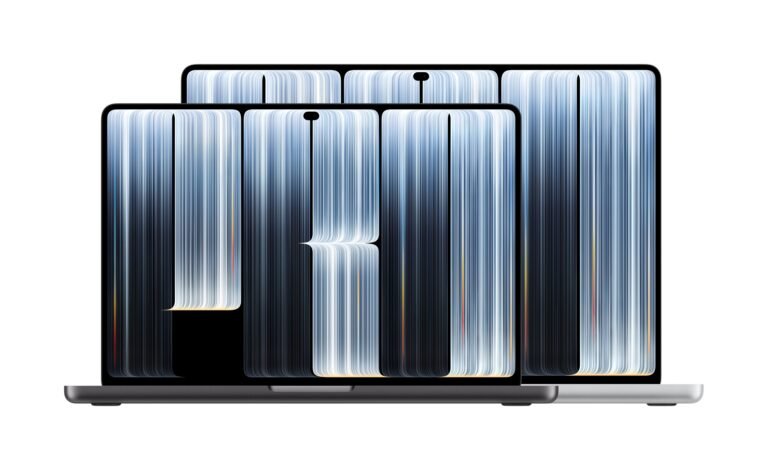
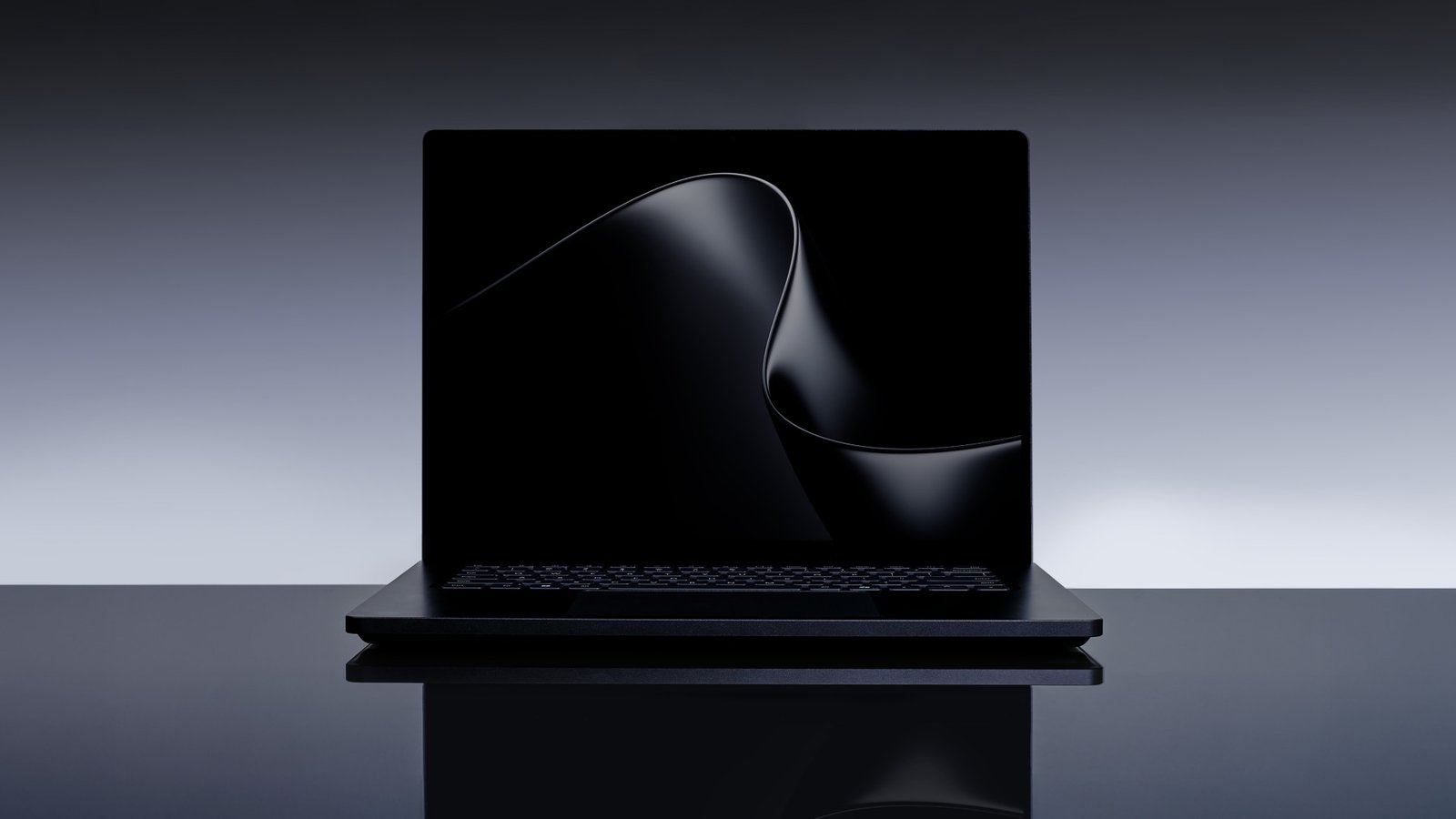
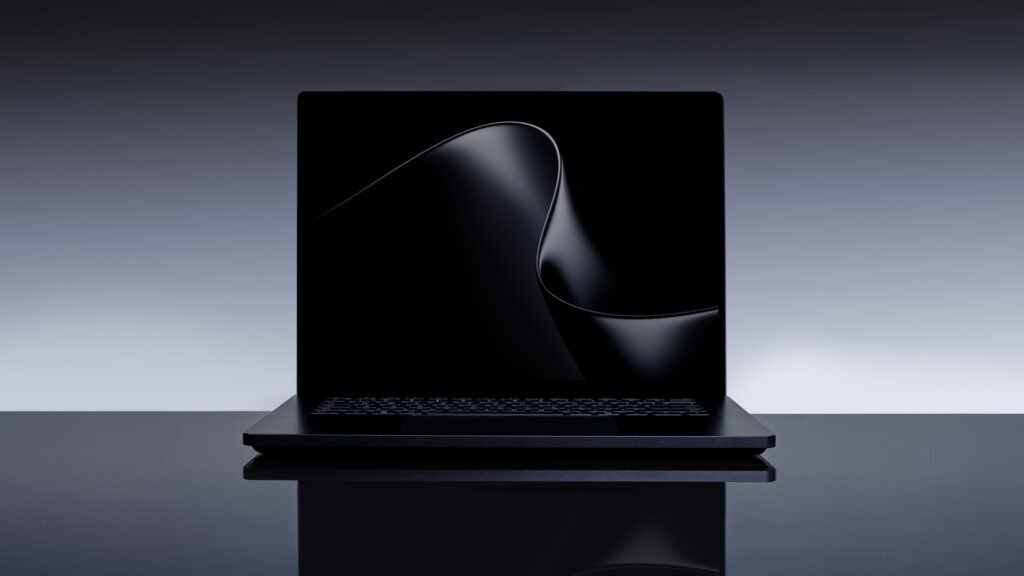
Lead image: Surface Laptop Ultra in Nightfall. Image: Microsoft press image from its October 2026 Windows and Surface news page, offered there for web and print download; used for editorial purposes, unaltered apart from format conversion.