The FDA on Tuesday, October 20, approved GSK’s Hibsago (bepirovirsen), the first antisense oligonucleotide for chronic hepatitis B. It is also the first treatment that gives some patients a realistic shot at stopping their hepatitis B medicine for good, according to the agency’s announcement.
That matters because today’s standard treatment is a daily antiviral pill that many people take indefinitely. It suppresses the virus but rarely clears it.
The headline number is real, and so is the fine print. Both deserve a look.
The problem it’s aimed at
Chronic hepatitis B is a long-term liver infection. It happens when the immune system fails to clear the hepatitis B virus (HBV), and over years it can lead to cirrhosis (scarring of the liver) and liver cancer.
The scale is large. GSK, citing published estimates, puts it at roughly 1.7 million people in the US and more than 240 million worldwide, with about 1.1 million deaths a year. It’s the leading cause of liver cancer globally.
Current treatment relies on nucleos(t)ide analogues (NAs), antiviral drugs such as Gilead’s Viread and Bristol Myers Squibb’s Baraclude. They block the virus from copying itself and keep viral levels low. But the virus keeps a stable genetic reservoir inside liver cells, so stopping the pills usually lets it come back. Hence “indefinitely.”
What “functional cure” means
The goal the field has chased for years is a functional cure. It’s not total eradication. It means the virus’s DNA and its surface protein, HBsAg (hepatitis B surface antigen), stay undetectable for at least 24 weeks after all treatment stops. In practice, the immune system is keeping the virus in check without drugs.
GSK says standard NA therapy typically achieves that in less than 1% of patients after a year. That’s the baseline for every number below.
How the drug works
Bepirovirsen is an antisense oligonucleotide (ASO): a short, synthetic strand of genetic material designed to latch onto a specific RNA and shut it down. In this case, the targets are the viral RNAs HBV uses to copy itself and make its proteins, including HBsAg.
The theory is that flooding the body with HBsAg helps keep the immune system from mounting a proper response. Knock HBsAg down, and the immune system may get a chance to take over. GSK says the drug “may stimulate the immune system” too, a hedge worth keeping in mind.
ASOs aren’t new as a class. Ionis, which discovered bepirovirsen, built the technology and licensed this drug to GSK in a 2019 deal, Fierce Pharma reports. This is the first time one has been approved against hepatitis B.
Who qualifies
The label is narrow. Hibsago is for adults who:
- don’t have cirrhosis,
- have been on NA antiviral therapy for at least six months,
- have suppressed virus levels in their blood, and
- have HBsAg of 3,000 IU/mL or less on an FDA-authorized test.
The FDA also cleared a Roche HBsAg test as the companion diagnostic, to pick patients and monitor them during treatment.
Patients inject Hibsago under the skin for up to 24 weeks while staying on their antiviral, then continue the antiviral for at least 24 more weeks after the last shot. Some can then stop the antiviral if they meet health and lab criteria. GSK’s release says patients can self-inject after the first dose.
The numbers
From the FDA’s summary of the two placebo-controlled trials, B-Well 1 and B-Well 2:
- 24% of Hibsago patients met the requirements to stop their existing medicine, versus none on placebo.
- 19% still had the virus under control, with undetectable HBsAg, 24 weeks after stopping all hepatitis B treatment.
GSK’s pooled data puts that 19% at 233 of 1,220 patients, versus 0 of 614 on placebo. Among patients who started with HBsAg at 1,000 IU/mL or lower, the rate was 26% (200 of 768). GSK says that lower-HBsAg group represents about 45% of diagnosed cases globally. The full phase III results were published in the New England Journal of Medicine.
The trials ran in 29 countries, and both met their primary endpoint on their own.
The honest framing: about one in five eligible patients reached a functional cure. Four in five didn’t. For a disease where the previous number was under 1%, that’s still a big deal.
The catch: the safety label
Hibsago carries a boxed warning, the FDA’s most serious label warning, for two things: serious liver reactions and low platelet counts that can cause potentially life-threatening bleeding.
The label details are sobering:
- Liver flares. ALT, a liver enzyme, rose as high as 69 times the upper limit of normal in some patients, mostly in the first 12 weeks. Some cases came with rising bilirubin.
- Platelets. Drops can be “sudden and unpredictable.” Most patients also saw a gradual, dose-dependent decline. Platelets must be checked at least weekly during treatment, and the drug is stopped permanently if they fall below 50 x 10⁹/L.
- Kidneys. Kidney function (eGFR) declined within four weeks and kept falling during treatment, though GSK says it was generally reversible afterward.
- Immune effects. Vasculitis (inflammation of blood vessels), immune thrombocytopenia, autoimmune hemolytic anemia and a systemic inflammatory response were all reported.
- Injection technique. One trial participant had an omental infarction, the death of abdominal fatty tissue, linked to not rotating injection sites.
There’s an awkward irony in the liver flares. GSK’s label ties them to falling HBsAg, which may be partly the immune system attacking infected liver cells, the very thing the drug is trying to provoke. That doesn’t make them less dangerous.
Why it matters
Why it matters: a short course that lets even a fraction of patients walk away from lifelong pills changes what doctors can aim for. Functional cure has been the stated goal of hepatitis B research for years. Until now, it wasn’t something a typical patient could realistically hope for.
The FDA gave the drug Fast Track, Breakthrough Therapy and Priority Review designations. Japan approved it first, in late August, and GSK says other regulatory decisions are expected in the coming months.
The skeptical read
The catch: the monitoring burden is heavy. Weekly platelet checks for six months, plus liver and kidney tests, is a lot to ask of patients. Analysts at Jefferies, quoted by Fierce Pharma, called the requirements “intensive” and warned they “could slow adoption outside specialist hepatology centers.” They also said the real-world journey may be “less simple despite self admin.”
Then there’s access. Hepatitis B disproportionately affects people born in parts of Asia and Africa, communities that often face barriers to specialist care. A drug that needs weekly blood work may not reach many of them. The label also excludes people with cirrhosis, those most at risk of liver cancer.
Price is unknown. A GSK spokesperson told Fierce that the list price will be made public after talks with payers, and that it will reflect the drug’s “significant clinical value.” That’s rarely a phrase that precedes a small number. Jefferies still expects peak sales of about £2.2 billion.
And durability is an open question. The trials measured control 24 weeks after stopping treatment. How long that lasts over years is the thing patients most want to know.
The takeaway
Our read: GSK’s release calls the cure rate “unprecedented,” and for this disease, the number genuinely is new. But 19% is a door opening, not a cure for everyone, and the door comes with a weekly blood test.
What to watch:
- The US list price, and whether insurers cover it without hoops.
- How many patients actually qualify under the 3,000 IU/mL HBsAg cutoff in routine practice.
- Real-world safety once the weekly blood tests leave the trial setting.
- Long-term follow-up on whether functional cure holds beyond 24 weeks.
- GSK says Hibsago should reach US patients before the end of the year.
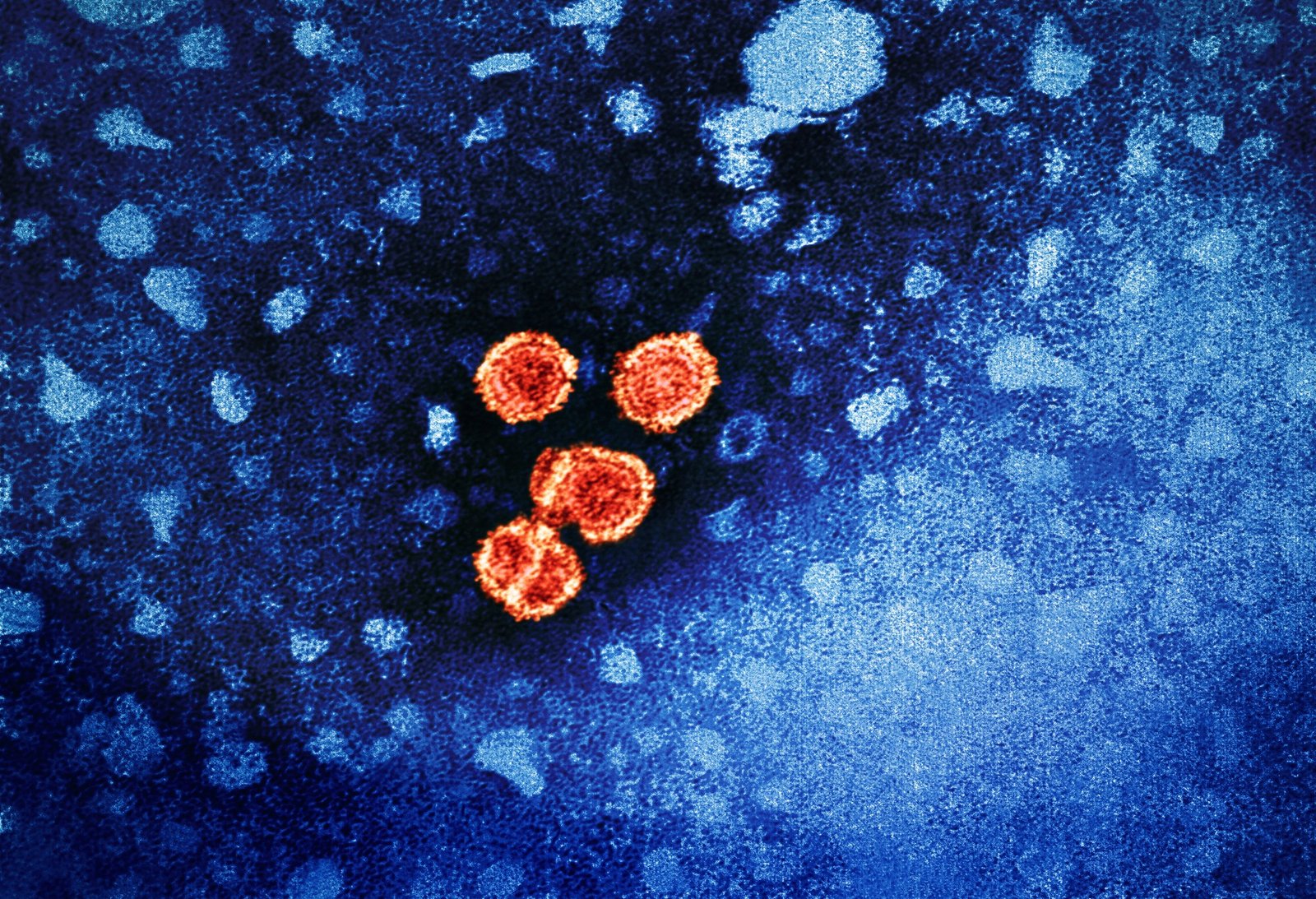
Image: National Institute of Allergy and Infectious Diseases (NIAID) and Centers for Disease Control and Prevention (CDC) / Wikimedia Commons, Public domain