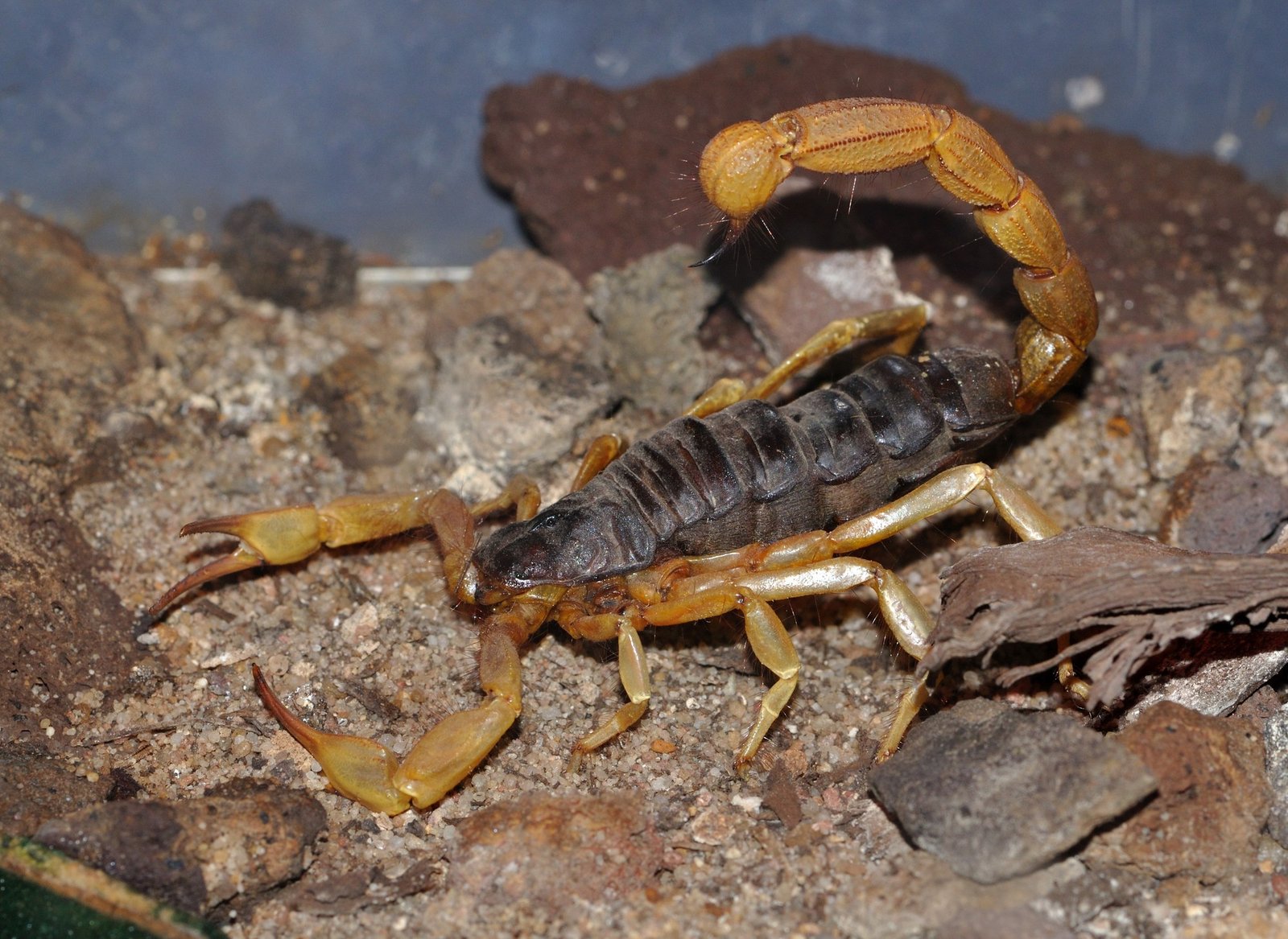
Anthropic and OpenAI both made biotech moves on Tuesday, October 20. Anthropic published research showing Claude designed proteins that bind to scorpion neurotoxins. OpenAI announced it has acquired Orchestra Bio, a startup that coordinates drug-development programs.
One is about the science. The other is about the paperwork. Both say a lot about where AI labs think the next big market is.
Anthropic: 211 designs, 17 binders, 0 antivenoms
In its research post, Anthropic says an internal research model working inside Claude Science generated 318,484 protein designs over 64 hours. It worked mostly on its own, steered by four follow-up prompts from humans.
Some vocabulary first. A binder is a molecule that attaches tightly to a specific target; antibodies are the natural example. A minibinder is a small, designed protein that does the same job. De novo design means building such proteins from scratch on a computer rather than harvesting them from immunized animals.
Claude picked 180 designs for testing, and the team added 31 more with Claude’s help. Two contract labs, Adaptyv Bio and Twist Bioscience, tested all 211. Seventeen met Anthropic’s criteria as binders, each against a single toxin.
The criteria were strict, which is to Anthropic’s credit. A design had to show binding at both labs, in every replicate, at a strength (KD) of 1 micromolar or tighter. It also had to show no signal against an unrelated human protein used to catch “sticky” designs that bind everything.
Why scorpions
Scorpions sting at least 1.2 million people a year, causing more than 3,250 deaths, mostly children in places with limited medical care, according to Anthropic. Scorpion envenomation has been described as a neglected tropical disease. Treatments are expensive to make and unlikely to earn back their development costs.
The dangerous toxins attack sodium channels, the proteins that let nerve cells fire. Disrupted channels make nerves misfire, releasing floods of stress chemicals like adrenaline. Severe cases can lead to heart failure and fluid in the lungs.
Today’s antivenoms are made the old-fashioned way: venom is milked from thousands of scorpions and injected into horses, and the resulting antibodies are purified from the horses’ blood. They can work if given early, but typically cover only a few toxins and are often costly or scarce.
The results, in detail
Anthropic targeted five toxins from four regions: Cn2 (Mexico), Ts1 (Brazil), AaH I and AaH II (North Africa) and LqhIII (Middle East). It asked for binders against each toxin individually, and also for binders that would hit several toxins at once. A multi-toxin binder would mean fewer molecules in a future universal antivenom cocktail.
That second goal flopped. None of the multi-toxin designs worked against more than one toxin, and no design hit Ts1 at all. Of the 17 binders, seven targeted Cn2, four AaH II, four AaH I and two LqhIII. Among single-toxin designs, the hit rate was 18%, which Anthropic says is typical for protein design campaigns.
The two strongest, against Cn2 from the Mexican scorpion Centruroides noxius, bound with single-digit nanomolar affinity. Competition experiments suggest they attach near the same site as an antibody called LR, which has neutralized Cn2 in mice. For comparison, Anthropic notes three existing antibodies and nanobodies bind more tightly, below 1 nanomolar, and have protected mice.
Anthropic is upfront about the limits. Binding was tested only against lab-made toxins, not venom. No design was tested for neutralization in cells or animals, “so we do not claim to have produced an antivenom.” It’s releasing all 211 designs and their data.
The campaign used on the order of 10,000 GPU hours. Anthropic concedes in a footnote that’s “much more than most researchers have access to,” and says a simplified single-GPU version reaches comparable computer-predicted scores in 24 hours.
The backstory, and the skeptics
The project started with Citrini Research, an investment research firm that admitted “none of us could claim to know anything about AI as it related to biology,” The Verge reported.
The Verge’s account adds color Anthropic’s post leaves out. Citrini first ran into Claude’s biosecurity guardrails, then cold-called people at AI labs until Anthropic agreed to help. Anthropic dropped the restrictions and gave the team an unreleased model, on the condition that they work from its offices. It also covered a compute and token bill just shy of $50,000. Lab testing cost about $150,000 more.
Experts The Verge spoke with were cool on the results. “It is easy-ish to discover a good binder against snake and scorpion toxins,” said Andreas Hougaard Laustsen-Kiel of the Technical University of Denmark (DTU). “The hard part is to translate it into a medicine.”
Two of his DTU colleagues, Melisa Benard Valle and Anne Ljungars, called the results “technically promising” but “far from a medicine and hyped.” They said the novel part was the “autonomous discovery process rather than the biological results.” Andreas Bender of Khalifa University said binder design is “kind of” a solved problem: “It’s exactly this translation that lacks.”
Anthropic’s own outside reviewers were warmer but made the same point. “Binding itself is no longer the main bottleneck,” wrote Susana Vázquez Torres of Spain’s CNIO. The challenge is making molecules “that are safe, affordable, and widely accessible.”
OpenAI: buying the project manager
OpenAI’s announcement folds Orchestra’s team and platform into Rosalind, its life-sciences effort. That includes GPT-Rosalind, a model for reasoning through biology and chemistry, and Rosalind Workbench, which connects it to scientific tools and data.
Orchestra’s agents monitor studies and campaigns for biopharma teams. When something breaks, such as a failed manufacturing batch that could delay a clinical trial, they map which activities and timelines are affected and lay out options. Humans decide.
Terms weren’t disclosed. TechCrunch reports Orchestra is four years old and had reportedly raised around $20 million as of 2025 from backers including Andreessen Horowitz and 8VC. OpenAI cites Novo Nordisk and Moderna as Rosalind partners.
OpenAI notes drug development takes roughly 10 to 15 years from target discovery to US approval. The pitch is that a lot of that time is coordination, not chemistry.
What it means
Why it matters: both labs are positioning for pharma, an industry with deep pockets and decade-long timelines. Anthropic is showing it can do science. OpenAI is betting the money is in operations. TechCrunch frames the deal as a familiar pattern: startups building on top of AI labs worry the labs will eventually compete with them. Orchestra got absorbed instead.
For neglected diseases, cheaper discovery could matter. If credible binders can be designed in days and lab-checked in weeks, the slow, expensive part shifts to development, which is where funding for diseases like scorpion envenomation has always run dry.
The skeptical read
The catch: The Verge points out Anthropic’s post lands weeks before the company’s IPO, which is useful context for the publicity. The headline-friendly framing (“Claude designed…”) also blurs how much human scaffolding was involved: a prompt developed with Citrini, four follow-ups and 31 human-added designs. The 35-page prompt The Verge mentions is not a casual ask.
Then there’s the bill. Roughly $200,000 in compute and lab costs for 17 binders, none yet shown to neutralize anything, isn’t the “free” AI that Citrini touted in its own video, as The Verge noted.
And OpenAI’s deal may be less flashy but more practical. Nobody’s drug is late because of a shortage of binder designs. Coordination problems, like the failed manufacturing batch OpenAI uses as its example, are a much more ordinary source of delay.
The takeaway
Our read: Anthropic’s post is admirably careful and its data release is genuinely useful. The coverage around it is not always as careful, and “Claude made antivenom” is a headline the evidence doesn’t support.
What to watch:
- Whether anyone tests Cn2-B1 against real venom, in cells, and then in mice.
- Whether other labs build on the 211 released designs.
- Whether Rosalind becomes a paid product pharma companies actually adopt, and what Orchestra’s agents look like inside it.
Image: Quartl / Wikimedia Commons, CC BY-SA 3.0