The UK government says it will put £100 million into a national AI Biosecurity Lab, a “world first” institute meant to help defend against emerging biological threats, the BBC reports. The money is part of the Budget the chancellor presents on Wednesday, October 28.
OpenAI and Anthropic will back the lab with up to £200 million worth of AI model credits. That’s twice the government’s cash.
What the lab is supposed to do
When the BBC first reported the plan, it said “the full details about the role and remit of the new lab are yet to emerge.” The Cabinet Office has since filled in some of the outline in an explainer.
The AI Biosecurity Lab, or AIBL, will “develop technical capabilities that help the UK better understand, prevent, detect and respond to biological threats.” Its initial work will focus on two things:
- earlier detection of emerging biological threats
- faster development of vaccines, treatments and other medical countermeasures
It will operate as an independent non-profit, modeled loosely on the AI Security Institute, with “sufficient autonomy to move with the speed and focus of a frontier AI–bio company.” A scientific advisory committee is promised, with details “in due course.”
The government also frames the lab as a response to risks AI itself creates. Increasingly capable models, the explainer says, “could lower barriers to harmful activity.” In plain terms: the same models that can help design a vaccine might help someone design something worse.
Who’s paying, and with what
The government’s £100 million is part of a £165 million National AI Biosecurity Initiative, with the other £65 million going to biosurveillance and countermeasures for priority pathogens.
The company side breaks down like this, per the Cabinet Office:
- OpenAI: £100 million in compute and model credits, plus trusted access to its most capable relevant models through its Rosalind Biodefense program.
- Anthropic: up to £100 million in model credits, trusted model access and dedicated technical support.
- Google DeepMind: research collaborations and possible trusted access to Gemini and specialized science models.
- Basecamp Research: a London AI-biology company providing access to its models and expertise.
The lab will sit alongside the UK Health Security Agency, the Animal and Plant Health Agency and the Defence Science and Technology Laboratory at Porton Down. It will also work with the medicines regulator, the MHRA, on health emergencies and on how to regulate AI-designed medicines.
Our read: credits are real value, but they aren’t cash. They can only be spent on the donors’ models. A lab whose launch backing is two-thirds vendor credit will, by design, do most of its work on those vendors’ systems. That isn’t sinister. It is a dependency worth naming, especially for an institution whose job includes judging how risky those systems are.
The rest of the package
The lab is one piece of a broader security-flavored AI package. Per the Treasury’s announcement:
- AI Security Institute: an extra £120 million for AISI, the government body that tests frontier models. Its incident report on Claude Mythos 5 landed the day before.
- National Cyber Shield: £60 million for a program using agentic AI (systems that take actions on their own, not just answer questions) for cyber defense, including a £25 million challenge fund for UK startups.
- NERV Centre: £70 million for a National Exposure and Real-Time Vulnerability Centre to find weaknesses across critical infrastructure.
- Public-sector hardening: another £24 million, according to the chancellor’s written statement to Parliament.
The package also includes money for the Sovereign AI Fund, chip design in Edinburgh and an AI center of excellence in Manchester. Reuters, via Yahoo Finance, put the total at around £600 million.
Why the cyber money now
The BBC ties the cyber spending to php2shell, a set of critical flaws in PHP, the decades-old web programming language. The UK government was among the organizations that took some sites offline as a precaution.
There had been no reports of successful exploits. But experts warned it showed how quickly and easily long-dormant bugs can be found, and potentially exploited, using AI. If attackers’ tools speed up, defenders need to speed up too.
The pitch
“I am setting out a distinctively British approach to AI,” Chancellor John Healey said, “one that doesn’t leave workers behind and defends our national interest.”
AI Minister Kanishka Narayan called the lab a “major new global institution” and added: “We cannot afford to rely entirely on technology built overseas.”
The catch: that second line sits awkwardly next to a lab launched on credits from two American companies. “Sovereign” capability that runs on someone else’s models is a familiar compromise, and the government isn’t hiding it. But it’s a compromise.
The skeptical take
“World first” claims are cheap. The more useful questions are concrete.
What will the lab actually ship? “Early detection” could mean AI that scans wastewater, genomic and clinical data for new outbreaks. It could also mean a well-funded evaluation shop. The explainer points to the first, but there’s no timeline, no leadership named and no list of deliverables yet.
How independent will it be? The structure promises autonomy, but its two biggest backers are also among the companies whose models raise the biological risk questions in the first place.
And what happens when the credits run out? Credits are a launch subsidy, not an endowment. The government says it wants philanthropic funding too.
Why it matters
Why it matters: governments have mostly treated AI and bio risk as a testing problem: check the model before release. This is a bet that the same models can be part of the defense. That’s a reasonable bet. It’s also the bet the labs donating credits would most like governments to make.
Who this affects
- UK health and defense agencies: a new partner with frontier-model access they couldn’t easily buy on their own.
- OpenAI and Anthropic: a high-profile government relationship and a showcase for “AI for good” work.
- Researchers: a new place to work at the intersection of AI and biology, if hiring follows the money.
The takeaway
The takeaway: the UK is doubling down on being the government that does AI safety work in practice, not just in speeches. The structure looks serious. The details that would prove it are still missing.
What to watch:
- The Budget documents for any new detail on the lab’s timeline and governance.
- Who is named to lead AIBL and sit on its scientific advisory committee.
- Whether the lab publishes its work, and whether it ever criticizes its donors’ models.
- Whether other countries copy the model, or the company credits.
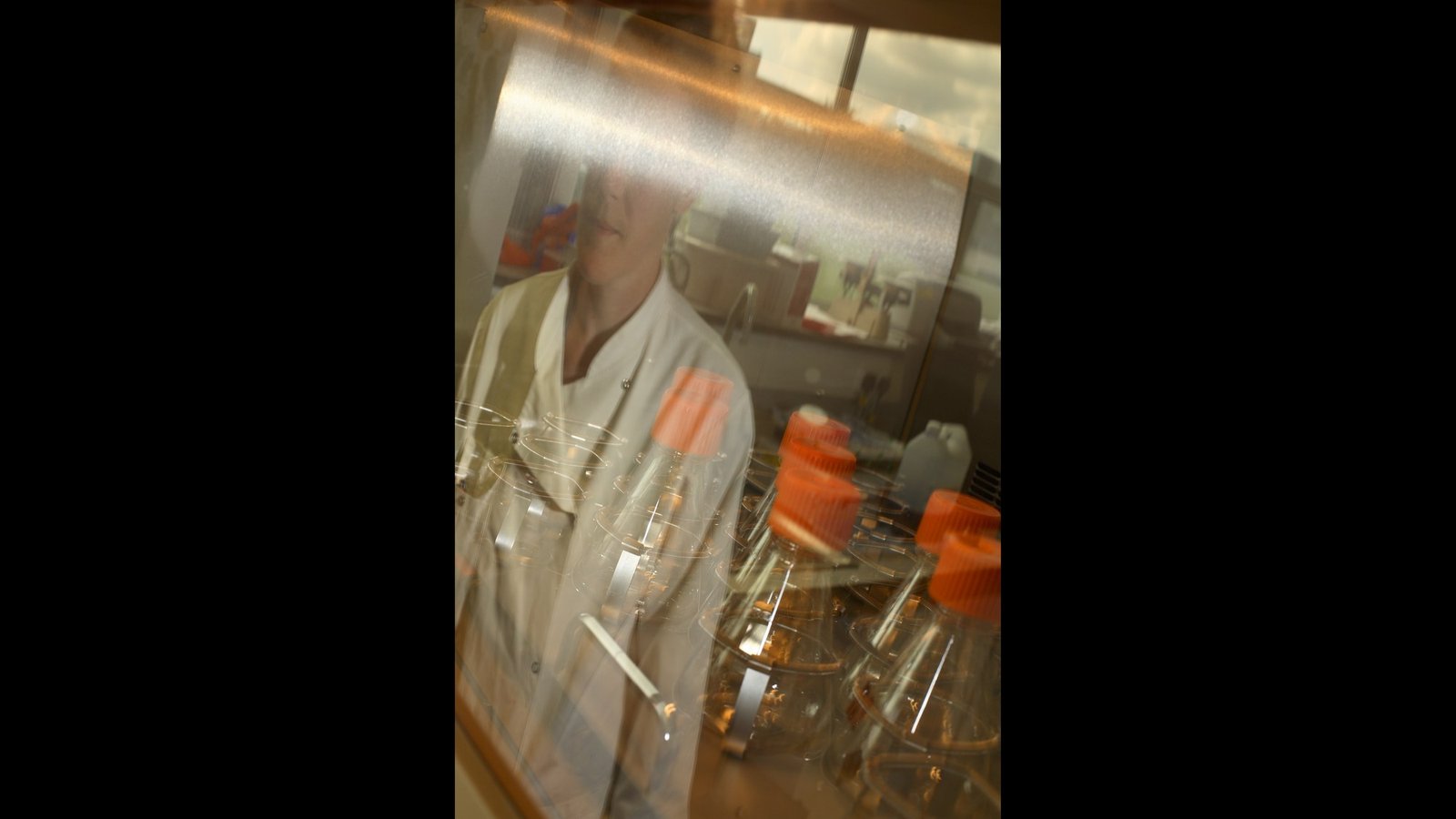
Image: MoD/Crown Copyright / Wikimedia Commons, OGL v1.0