



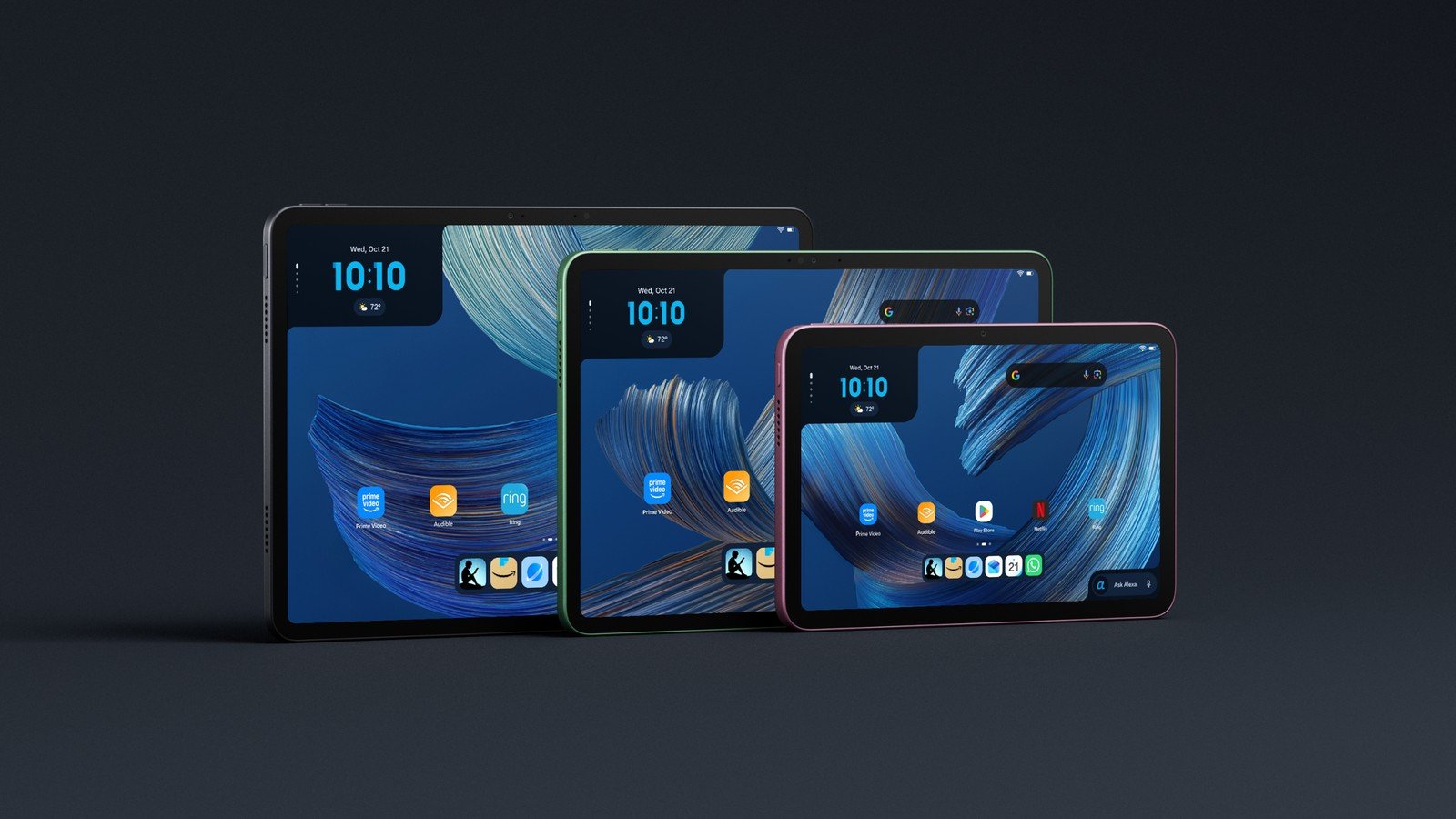
Amazon’s new Alexa Tablets, announced Oct. 8 and shipping in the US since Oct. 14, are the company’s first tablets that run full Android and the Google Play Store instead of Fire OS. The lineup is on sale now from $229.99 for the Alexa Tablet 8, $329.99 for the Alexa Tablet 11 and $499.99 for the Alexa Tablet 12 Pro, or $549.99 with the anti-glare Nanomatte screen. Reviewers who have lived with the 12 Pro like that display. They are less fond of the ads Amazon still puts on the home screen.
Key points
- Amazon’s new Alexa Tablets, which started shipping in the US on Oct. 14, are on sale now from $229.99 for the 8, $329.99 for the 11 and $499.99 for the 12 Pro, with a Nanomatte 12 Pro from $549.99.
- All three sizes run full Android and the Google Play Store, a break from the Fire OS Amazon used on earlier Fire tablets.
- The Verge’s David Pierce, testing a $549.99 Nanomatte 12 Pro, called the screen gorgeous and said Amazon still places non-removable advertising widgets on the home screen.
- Amazon rates the 12 Pro at up to 16 hours of video playback; Pierce measured about eight hours of screen time. On Amazon, ad-free lockscreen versions of the 8 and 11 cost $20 more than the ad-supported starting configs.
Fire OS is gone. The Play Store is not
For about 15 years, Amazon’s Fire tablets ran a forked version of Android with Amazon’s own app store. The new Alexa Tablets, Amazon says, run Android and include the Play Store, plus built-in Prime Video, Kindle, Audible, Amazon Music and Luna. Android Authority‘s Harish Jonnalagadda wrote on Oct. 17 that they ship with Android 16. Amazon’s announcement does not name a version. Either way, the Play Store is no longer a sideloading project.
Amazon also built Alexa+ into the software. A wake word or an “Ask Alexa” button can read what’s on the screen. Amazon says On-Screen Intelligence is off by default and needs an opt-in, with a visual indicator when Alexa can see the display. The US listings add a narrower point: the tablets come with a “free and focused” Alexa+ experience, and full access on all compatible devices requires Prime or an Alexa+ subscription, plus a US Amazon account set to US English.
The 12 Pro’s screen is what reviewers keep praising
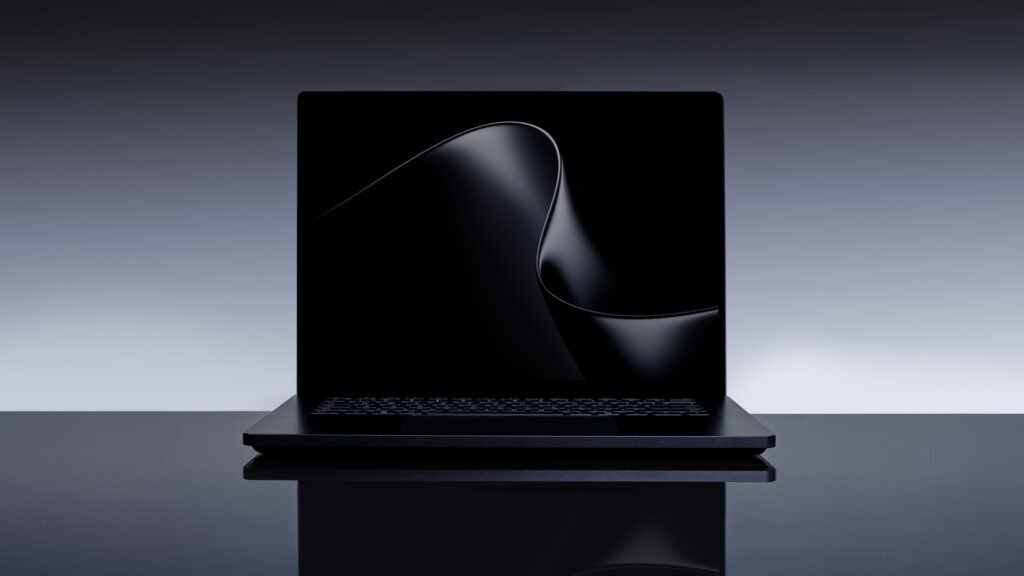
The 12 Pro with Nanomatte is the model most early reviews actually used. Amazon says the 12-inch panel is 280 pixels per inch, refreshes at 120Hz and uses a 3:2 aspect ratio. The Verge‘s David Pierce, reviewing the $549.99 8GB/128GB Nanomatte unit on Oct. 14, reported a 2,800-by-1,840 resolution and called the screen the first thing you notice.
Nanomatte, Amazon says, is a Corning process that etches a pixel-aligned texture into the glass to cut glare. Pierce wrote that it worked: outdoors, his iPad often reflected what was behind him “like I’m staring into a mirror,” while the 12 Pro showed only a small sheen and stayed sharp. He still wanted it brighter, noticed shimmer on light text against black, and said movie letterboxes were slightly lit compared with an iPad’s OLED. His unit arrived in “Boosted” color, which he found too punchy; he preferred “Natural.” After a few days he preferred this screen to any iPad he had tried, though he did not have a much more expensive nano-texture iPad Pro to compare.
Amazon bills the 12 Pro as “nearly three times faster” and “nine times faster” in graphics than any tablet it has shipped, with a 4nm eight-core chip and up to 16GB of RAM. Those figures are against Amazon’s own older tablets, not an iPad. Pierce identified a MediaTek Dimensity 8400 and said a current 13-inch iPad Pro scored about nine times higher in one graphics benchmark. Day to day, he found “plenty of power.” Jonnalagadda also named the Dimensity 8400 and said the 8 and 11 use an older MediaTek Kompanio 540; Amazon names neither chip. Amazon rates the 12 Pro at up to 16 hours of video and 20 hours of Kindle reading; Pierce measured about eight hours of screen time, “less than Amazon advertises.” The Standard 12 Pro is $499.99 for 8GB and 128GB. A 16GB/256GB Nanomatte config is $679.99 on Amazon.
The 11 and the 8 do the same job for less
The Alexa Tablet 11 starts at $329.99 for 8GB of RAM and 64GB of storage. Amazon gives it an 11-inch 2.5K, 276 ppi display, 90Hz, a 16:10 aspect ratio, two Dolby Atmos speakers and up to 15 hours of video, in Graphite, Amethyst and Matcha. We found no in-depth review of the 11 comparable to Pierce’s 12 Pro piece.
The Alexa Tablet 8 is the cheap ticket: an 8.7-inch display in a body Amazon lists at 7.95mm thin and 329 grams, with an eight-core processor, Wi-Fi 6 and up to 14 hours of video. It starts at $229.99 for 4GB of RAM and 64GB, in Graphite, Rosette and Teal. That is a lot of tablet if you mainly stream and read, with the least RAM in the lineup.
Amazon’s announcement skips a detail the listings do not: lockscreen ads. The starting $229.99 8 and $329.99 11 we checked are ad-supported. Versions without lockscreen ads are $249.99 for the same 64GB Graphite 8 and $349.99 for the same 64GB Graphite 11, $20 more in each case. The 12 Pro configs we checked did not offer that split.
The ads, the assistant and the accessories
Pierce tolerated a slide-over shelf of Amazon recommendations and preloaded Amazon apps. What he called “frankly outrageous” were two non-removable home-screen widgets whose job, as he described it, was to advertise Amazon products. His advice: install a new Android launcher, which “takes 30 seconds.” He was also unimpressed by Alexa+, which he found slow, easily lost in conversation, and prone to assuming you wanted to shop for whatever was on screen. He recommended switching the assistant to Google’s Gemini in settings. That is one reviewer’s experience, and it sits awkwardly next to Amazon’s pitch that Alexa+ is a reason to buy the tablet.
Accessories are 12 Pro only. The Pro Keyboard is $149.99 and magnetically attaches with no Bluetooth pairing, Amazon says. The Pro Pen is $89.99, a USI 2.0 stylus with 4,096 pressure levels, magnetic docking and wireless charging. Pierce found the keyboard nice to type on but awkward to detach, and the pen smooth, though many Android apps still do little with a stylus. Both are sold separately, so a 12 Pro you use like a laptop is $549.99 plus $239.98 for the keyboard and pen.
Who should buy one, and who should skip it
Shop: Alexa Tablet 8, Alexa Tablet 11, Alexa Tablet 12 Pro (Standard), Alexa Tablet 12 Pro (Nanomatte).
Consider the 12 Pro Nanomatte if you want a large Android tablet for reading and streaming, you care about using it outdoors, and you will replace the launcher. Pierce, who had an iPad on the same desk, still reached for the Amazon tablet when he wanted to watch or read.
Consider the 11 or the 8 if you want the Play Store on a cheaper slab and do not need the Nanomatte display or 12 Pro accessories. Budget $20 extra for the ad-free lockscreen if ads there would bother you. We have less independent testing of these two sizes.
Skip the lineup if you want a tablet as a primary computer. Pierce would not recommend that, citing “the still sorry state of large-screen Android apps,” and noted that for the same $550 a base iPad with 256GB was available, with better tablet software. Skip it too if Alexa+ was the point, or if you will not strip the home screen. If you want an e-reader, a Kindle still uses an E Ink panel these LCDs can only imitate.
The takeaway: Amazon finally shipped the Android tablets people have been sideloading toward for years, and the 12 Pro’s Nanomatte screen is what convinced a reviewer who also had an iPad. The ads, the assistant and the accessories are the fine print that decides whether $229.99, $549.99 or an iPad is the better spend.
Hype in. Signal out.
Lead image: Amazon’s official marketing image of the Alexa Tablet 12 Pro, 11 and 8, from the company’s Oct. 8 announcement on About Amazon. Staged product render; image: Amazon. Cropped and resized.