




Two new humanoid robots stepped out this week, and neither one is pretending to fold your laundry. ASUS unveiled Gallop, a two-armed robot it says is learning to pack motherboard accessories at one of its own factories. In Tokyo, Android creator Andy Rubin’s Genki Robotics showed its humanoid in public for the first time, to Prime Minister Sanae Takaichi. Meanwhile, Caixin reports that China’s carmakers are quietly pulling humanoids off their assembly lines.
Last checked: Nov 14, 2026
Key points
- ASUS says its first humanoid, Gallop, is learning a 20-second accessory-packing job at an ASUS group factory, with a 99.5% success target it hasn’t yet reported hitting.
- Genki Robotics showed its biped to Japan’s prime minister on Nov. 12 and says that unit was assembled over a weekend and first walked days earlier.
- Japan’s government says it wants about 10 million AI robots in use and a 20 trillion yen market by 2040.
- Caixin reports Chinese automakers are scaling back humanoid plans after factory trials, citing cost, speed, accuracy and worn-out hands.

ASUS picks one station and one stopwatch
Gallop is ASUS’s first humanoid, built by a Humanoid Robotics unit inside its Physical AI Solutions Business Group. Co-CEO S.Y. Hsu introduced it on CNBC, and ASUS’s Dr. Albert Chang followed with a pressroom post dated Nov. 13 that lays out the plan in unusual detail.
The job is specific. At an ASUS group electronics manufacturing (EMS) plant, Gallop is learning to pack the accessories that go in a motherboard box. ASUS says the station has 15 small parts, many in thin, clear bags, and takes about 20 seconds per board. Its target is 99.5% success within those 20 seconds, which the company calls “the same standard we hold a person to.”
Note the word target. ASUS says “the full loop now works: a person shows the task, the robot learns it, and we test it on the line.” It doesn’t say how close Gallop gets to 99.5% today, and Humanoids Daily notes that ASUS hasn’t published a measured rate, a height, a weight, a payload or a price.
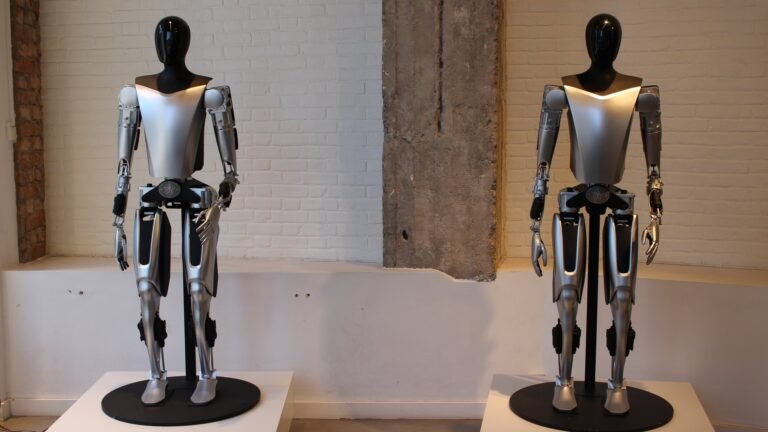
Calling Gallop a “humanoid” also takes some generosity. Today it works from a fixed base with two arms, ASUS says, and a wheeled version comes next. Over the coming year ASUS plans to bring its own touch-sensing dexterous hand into the robot, put it on wheels and show it to customers at Computex 2027. Customer pilots are planned for 2027, and ASUS is targeting the second half of 2028 for market availability. CNBC’s summary of Hsu’s interview puts the partner release in the second half of 2027.
How ASUS says Gallop learns
ASUS says it doesn’t build its own giant AI model. It starts from “leading open models” (unnamed), then has experienced workers wear head cameras, with their consent, while they do the job. Simulation generates variations of those recordings. An operator in a VR headset and gloves then guides the robot through the task with the same parts and cameras as the real station. Once deployed, what the robot records feeds back into training.
The software is stacked in four layers: a planner that breaks the job into steps, a second AI “supervisor” that checks each step and re-plans, a skills layer for reaching and grasping, and a control layer that stops the arms if anything is wrong. All of it runs on a single NVIDIA Jetson AGX Thor computer inside the robot. The fixed interfaces between layers are there so ASUS can swap in a better model “without rebuilding the robot,” which matters when, as the company puts it, new models arrive every few months.
Genki brings a robot it built last weekend to the prime minister
On Nov. 12, Takaichi met six physical-AI companies at the Prime Minister’s Office: ugo, TELEXISTENCE, GROOVE X, MinebeaMitsumi, Noetra and Genki Robotics, according to her post on X. Genki, the Tokyo startup Rubin co-founded in May 2025, sent Rubin and CTO Koichi Nishiwaki, along with the robot.
The backstory is the fun part. According to Takaichi’s summary on X of what Genki told her, as translated by Humanoids Daily, the parts for that unit arrived the previous Friday, the team assembled it over the weekend, and it walked on Monday. The company said it’s building its first product model toward the end of the year.
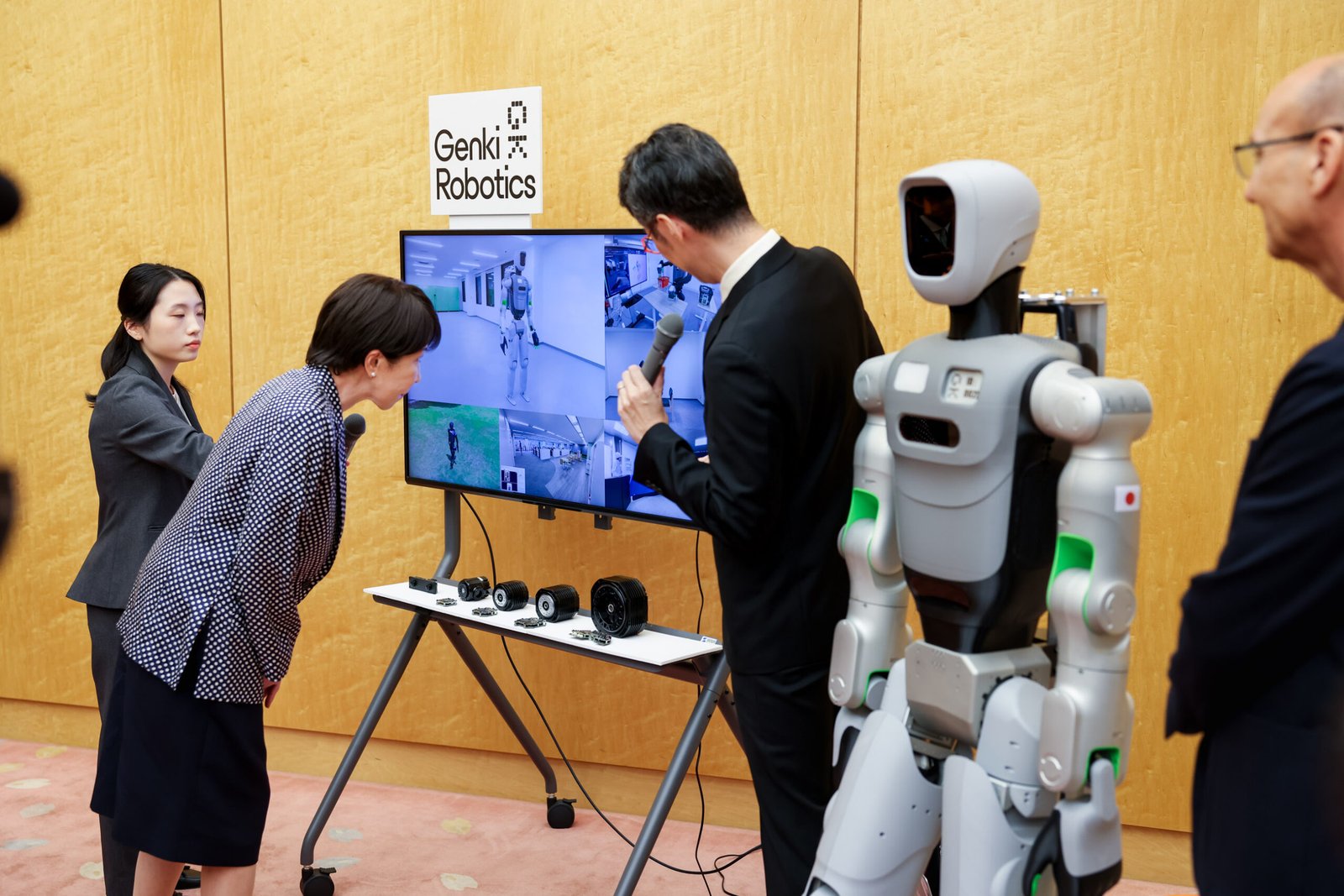
It did not walk for the prime minister. Humanoids Daily reports the full-size biped stood on a fixed support stand while a screen beside it played footage of it walking in an empty room, an office and on grass, and doing tabletop work. Four of Genki’s in-house joint actuators sat on a table in front of the screen. The government’s own photo set shows the same setup.
Rubin’s pitch is the one you’d expect from the man behind Android: an open software platform that outside developers can build on. Humanoids Daily says Genki designs its own actuators and cameras, plans to lean on Japanese component makers, and is talking to Japanese carriers about putting the robot on cellular networks. The startup raised a seed round of about $50 million, and Axios reported in April that a Series A valued it at about $1 billion, per Humanoids Daily. Genki’s website still shows no images or specs of the robot.
Japan wants 10 million of these by 2040
The meeting wasn’t a photo op for one startup. In remarks posted by her office, Takaichi said her cabinet lists physical AI among the 17 strategic fields in its growth strategy, with goals of deploying about 10 million AI robots and winning a 20 trillion yen market (Humanoids Daily converts that to about $130 billion), over 30% of the global share, by 2040. She told economic policy minister Minoru Kiuchi to spell out support measures and the budget needed in a predictable form in the growth strategy’s execution plan.
Per her office, the companies asked for four things: support from R&D through mass-production plants for domestic robots and key parts, faster development of a domestic AI foundation, a government data-pooling scheme like the GENIAC program, and multi-year support for early adoption. Three of those four are about factories, data and buyers, not research.
Meanwhile in China: the car plants are the reality check
Caixin’s in-depth report, published the same day as ASUS’s post, describes the opposite mood. Car factories were supposed to be the humanoid’s ideal proving ground: stamping, welding and painting are already automated, but final assembly still runs on human hands. Geely, Xiaomi, Changan and GAC all announced humanoid deployments on their floors, Caixin notes.
Now, Caixin reports, automakers are “drastically scaling back their ambitions.” Its reporting includes:
- Speed. A plant building 60 cars an hour gives a workstation about a three-second window, a pace Caixin says current humanoids can’t match.
- Accuracy and honesty. One unnamed executive who trialed humanoids told Caixin even picking and sorting parts suffered from poor accuracy and slow movement, and that the startup partner sped up promotional videos to make the robots look viable.
- Hands. Caixin says XPeng spent over a year trying to fit its IRON humanoid into factories before judging it economically unviable, with chairman He Xiaopeng saying the dexterous hands, the costliest part, wore out too fast. It also says Figure identified the forearm as the main mechanical failure point on robots at BMW’s plant.
- The incumbent. Geely’s Zhou Jun told Caixin a heavy-duty industrial robot that lifts 270 kilograms costs a fraction of a humanoid and averages 80,000 to 100,000 hours between failures.
The retreat isn’t a surrender. Caixin says Geely is trialing robots for parts sorting, BYD and XPeng are developing humanoids for retail showrooms, and Li Auto reportedly downgraded its humanoid project to focus on self-driving. Experts it quotes put factory readiness three to five years out.
Our read: it’s the stopwatch, not the legs
Put ASUS’s numbers next to Caixin’s and the week makes sense. ASUS’s packing station gives Gallop about 20 seconds per board. Caixin’s car line gives a workstation about three. That’s roughly a 7x difference in time budget, before you count the weight of the parts or the sparks and glare Caixin says confuse camera-driven robots near welding lines.
ASUS seems to have read the same room. Its post opens by contrasting dancing robot videos with a factory manager’s real question, “can it do this station, for a full shift, to my quality standard?” It chose a slow-ish, high-mix electronics job where a fixed robot with two hands can sit at a station designed for people, and it owns the factory it’s testing in. Most robotics startups, ASUS points out, have to rent that.
The hard part is still the last fraction of a percent. We’ve seen this movie: Google’s robot model hit 96% on a Mercedes line, and the missing 4% was the job. ASUS’s 99.5% bar is the right number to publish. Now it has to publish the other number, the one Gallop actually hits.
Hands are the common thread. ASUS calls the hand “the hardest part of any humanoid” and builds its own, which it says it will bring into the robot over the coming year. Caixin says XPeng’s hands wore out on the factory floor. Genki says it designs its own actuators. Everyone agrees where the money goes. Nobody has published durability data.
The catch
Every forward-looking claim here comes from the companies or a government. ASUS’s timeline, Genki’s “first product by year-end” and Japan’s 10 million robots are plans. Gallop has no published success rate or specs. Genki’s robot has no published specs, and the one public appearance had it on a stand. Caixin’s harshest details, including the sped-up videos, come from an unnamed executive, and the startup involved isn’t identified.
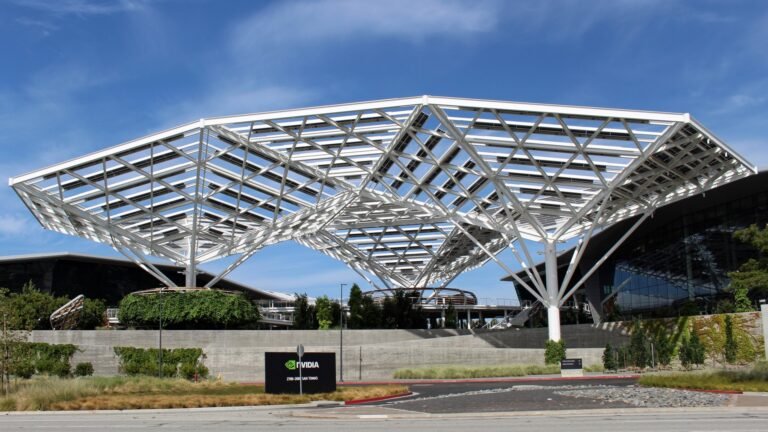
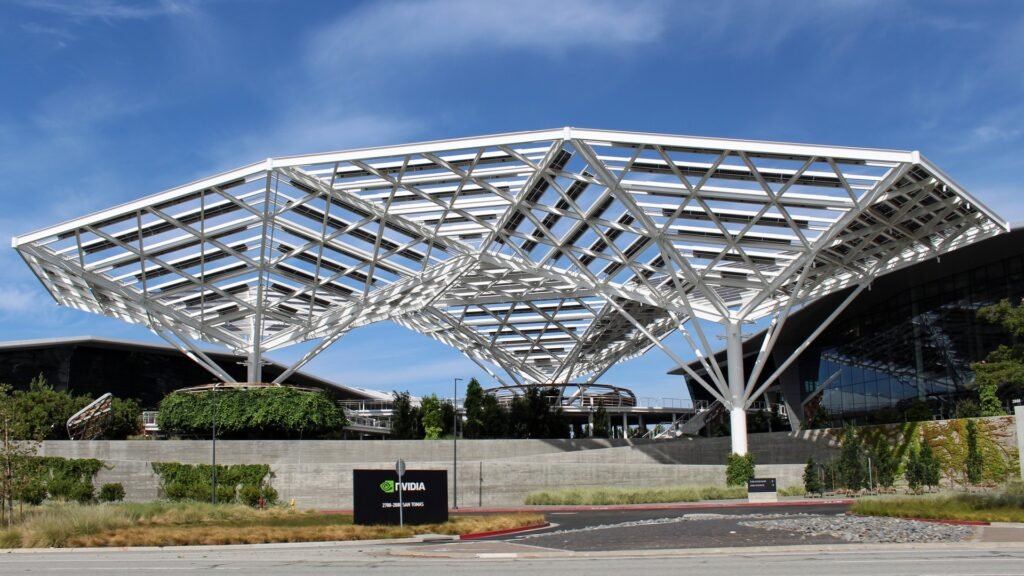
There’s also a timing wrinkle. ASUS builds Gallop on NVIDIA’s Jetson Thor, and Hsu’s CNBC appearance came right after Jensen Huang resigned as NVIDIA’s CEO. Humanoids Daily reports Hsu said ASUS is still working with NVIDIA on the robot. Nothing suggests that changes, but it’s a dependency worth noting.
What to watch next
- Gallop’s real success rate. ASUS promised to “keep sharing our progress.” The first measured number against the 99.5% target, and whether it comes from the robot with ASUS’s own hand, will say more than any demo.
- Computex 2027. ASUS says Gallop shows up there on wheels. A wheeled base is what turns a station robot into something that can move between stations.
- Genki’s product and its software. The company says a first product model is coming toward year-end. Watch for specs, a price and whether the open developer platform Rubin described ships with it.
- Japan’s execution plan. Takaichi asked for support measures and budget figures in the growth strategy’s execution plan. Whether multi-year adoption subsidies appear with real yen amounts will decide if 10 million robots is a target or a slogan.
- Which Chinese automaker says it on the record. Caixin’s story leans on unnamed sources for its sharpest claims. An automaker formally cutting a humanoid program, or a startup confirming a pulled deployment, would turn a mood into a data point.
The humanoid pitch is quietly changing from “it can do anything” to “it can do this one station, eventually, at 99.5%.” That’s less exciting and far more believable.
Hype in. Signal out.
Image credit: Prime Minister Sanae Takaichi views Genki Robotics’ display at the Prime Minister’s Office, Tokyo, Nov. 12, 2026. Photo: Prime Minister’s Office of Japan (Kantei), used under the Public Data License 1.0 (compatible with CC BY 4.0). Unaltered.