




Apple’s first smart display is in stores. The $299 HomeView, a 7-inch square touchscreen on a speaker base, went on sale Friday, Nov. 13, at Apple Stores and online in select countries, Apple says. The first reviews landed a day earlier, and they agree on the hardware and split on almost everything else. The detail that stuck with us came from The Verge: its reviewer could read her teenage daughter’s text messages on the shared screen. Futureshock hasn’t tested a HomeView; the impressions below belong to the reviewers who did.
Key points
- Apple’s $299 HomeView, a 7-inch square smart display, went on sale Nov. 13 in the US and several other countries, but not in the EU.
- Reviewers praised its smart home control, cooking help and sound, and criticized slow Siri AI, limited apps and the lack of physical buttons.
- The Verge’s reviewer says she could sometimes read her daughter’s texts on the shared screen after switching users.
- The wall-mounted model also costs $299, but its mounts are sold separately, starting at $59.95.
What $299 buys
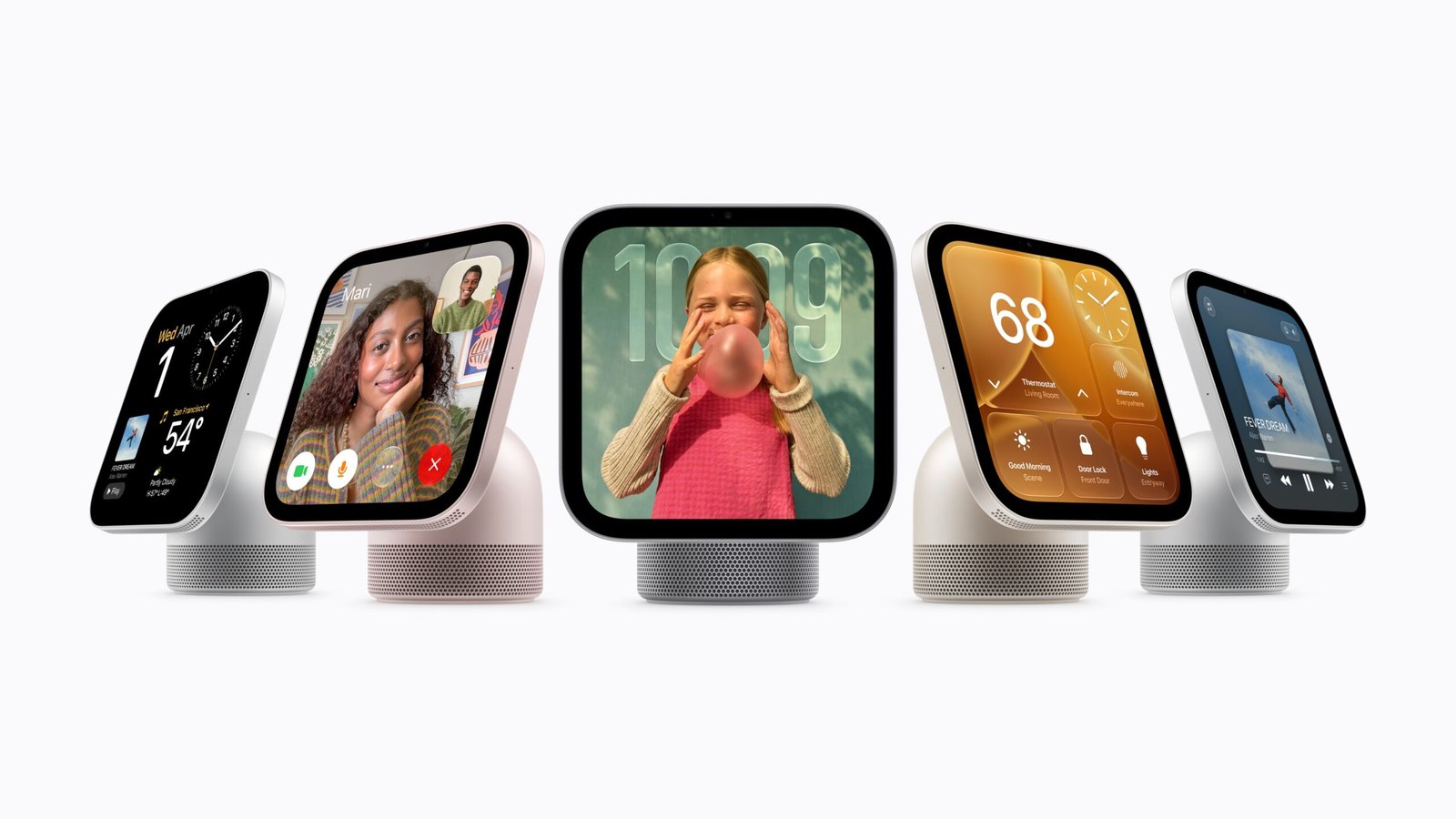
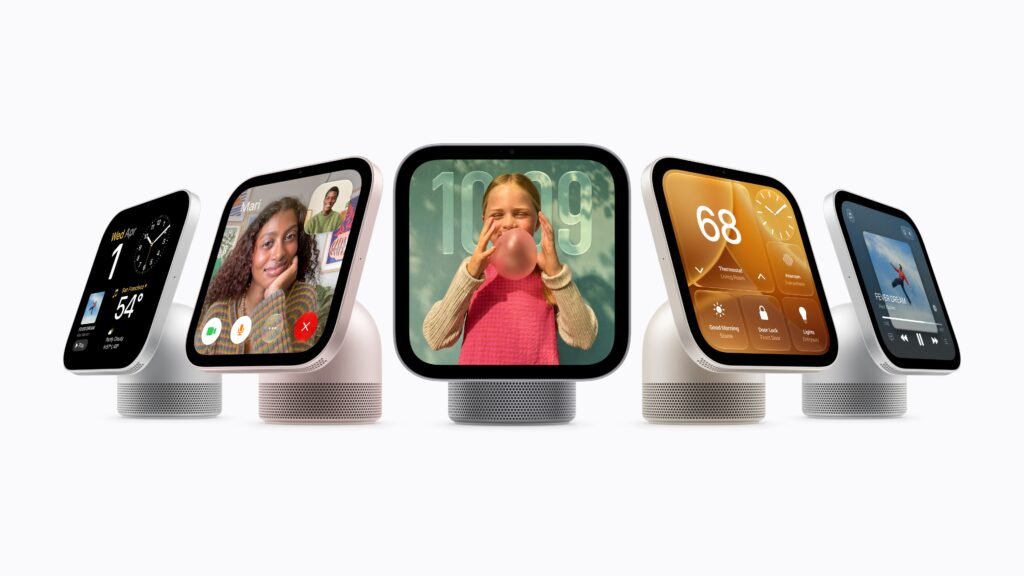
Per Apple’s October announcement, HomeView pairs a 7-inch Liquid Retina display with an aluminum speaker base, joined by a stainless steel hinge that tilts. Brightness runs from 500 nits down to 0.3 nits for a nightstand. The tabletop model has two full-range drivers in the display plus a down-firing woofer and two passive radiators in the base. It runs on Apple’s A18 chip and recognizes up to six people by face, each with their own home screen.
Reviewers filled in what the spec sheet skips. Tom’s Guide and 9to5Mac list the screen at 1,088 by 1,088 pixels (220 pixels per inch); Tom’s Guide measured the usable area at about 6.4 inches diagonally because of the bezels. A 12-megapixel Center Stage camera sits in the top bezel. Both 9to5Mac and Tom’s Guide complain that there are no physical buttons, so changing the volume means tapping the screen or asking Siri. Tom’s Guide adds that there’s no button to disable the camera.
It is also a smart home hub. The Verge says HomeView has a Thread radio and a Matter controller, so it can run Apple Home and any HomeKit or compatible Matter device. Apple’s Home Camera face can stream up to nine camera feeds at once.
There’s no App Store. According to MacRumors, HomeView’s preinstalled apps include Calendar, FaceTime, Find My, Home, Messages, Music, Safari and Timers, and can show audio and video apps that support CarPlay from a paired iPhone or iPad.
The texting problem
HomeView’s big pitch is a shared screen that turns personal when it sees you. Apple says content from apps like Messages and Calendar only appears when an enrolled user is recognized by face and their paired iPhone or iPad is nearby and recently unlocked.
The Verge’s Jennifer Pattison Tuohy found the edges of that promise. Testing with her teenage daughter (with consent, she notes), she says she could sometimes keep scrolling her daughter’s texts for up to 10 seconds if she stepped up within about five seconds of her daughter leaving. When her daughter moved to a couch behind them, still in the camera’s view, Tuohy says she “could scroll through her messages for as long as I wanted” because the device didn’t switch to her, even though she was closer. It didn’t happen every time, she writes, but often enough to be a problem. Her daughter’s verdict: “I’ll just use my iPhone.”
Our read: the behavior is less a bug than a design choice showing its seams. A shared kitchen screen has to guess who is looking at it, and it looks to us like Apple tuned the guess to avoid locking people out mid-task. That’s a reasonable trade for timers and recipes, and a bad one for private messages. An option to keep Messages off the shared screen, which The Verge also asks for, would fix most of it. Apple hasn’t said whether one is coming.
Siri AI: faster at lights, slower at life
HomeView is the first Apple speaker with Siri AI, the rebuilt assistant, and Apple’s own footnote says it is “available in beta in HomeView software version 27.2.” The same footnote warns that some server-based features have daily usage limits, with “expanded access” to come “for a fee in the future.”
The Verge found smart home commands very fast because they run locally, and liked follow-ups like “make it a bit dimmer.” Personal requests were another story. Tuohy describes Siri as slow, error-prone (“Uh oh, something’s wrong”) and, once, confidently wrong: asked how long a drive would take, it estimated an hour and 47 minutes for a trip that was actually about five hours, after guessing the location from a line in a calendar event.
Tom’s Guide ran Siri side by side with Amazon’s Alexa+ on an Echo Show 15. Alexa+ gave chattier weather reports, walked the reviewer through a pizza order on Uber Eats and through booking an Uber; Siri offered to call the restaurant and to open the Uber app. Siri did better at sending directions to the reviewer’s phone and at digging a neighbor’s party time out of the reviewer’s messages. The Verge’s ranking after a week: Alexa+ is the best smart home assistant, Gemini for Home is the smartest, and HomeView has the best smart display hardware and personal assistant.
The apps and the wall-mount math
Reviewers hit the same wall with third-party apps. Tom’s Guide says the Disney+, Eufy and YouTube widgets just told it those apps are “only available on iPhone,” and The Verge says the only video app that works is Apple TV, letterboxed to roughly phone size. Neither recommends it for watching video. Ring doorbells and Nest cameras don’t work with it natively, per The Verge, because HomeView only controls Apple Home-compatible devices.
Then there’s the wall version. Apple prices HomeView (Wall Mounted) at $299, the same as the tabletop model, but it has fewer speakers and Apple sells the mounts separately. Here is what Apple lists:
- Power Mount USB-C Wall Connector: from $59.95, order now.
- Power Mount AC Wired: from $79.95, order now (Tom’s Guide suggests you’ll probably want an electrician for this one).
- Power Mount PoE Wired: $129.95, early 2027.
So the cheapest wall setup is at least $358.95 before power. The Verge says the wall model doesn’t include a power adapter either and puts the starting total at around $400 with Apple’s adapter.
MacRumors’ weekly show questioned the wall model’s value for the same reason: same price, no big speaker base.
Also new today: the first Apple Home Collection preorders
HomeView is meant to anchor a bigger push. Apple’s Home Collection, accessories co-developed with LG and Schneider Electric and announced alongside HomeView in October, also opened for its first preorders today, The Verge reports. According to The Verge, only three are orderable so far, all from LG:
- Preorder now, shipping est. Dec. 11-17: LG Outdoor Cam ($299.95), LG Indoor Cam ($199.95), LG Video Doorbell ($249.95).
- No date yet: LG Floodlight Cam ($399.95), LG Smart Deadbolt Lock ($349.95), LG and Schneider Home smart thermostats ($199.95 each), Schneider Home Room Sensor ($39.95).
The Verge notes the collection has no exclusive features. The main perks are tap-to-set-up with an iPhone and Thread connectivity that keeps working if your Wi-Fi drops. Apple says each accessory is end-to-end encrypted in Apple Home.
Where you can and can’t buy it
Apple says both models are available in Australia, Canada, India, New Zealand, Singapore, the UK and the US, and through authorized resellers in South Africa. It isn’t sold in the European Union, because Siri AI isn’t available in iOS there. Tabletop colors are silver, starlight, rose pink and space gray; the wall model comes in space gray and silver. At launch, Apple lists its own stores, website and app as the places to buy it, so there’s no shopping link here.
Who should buy it, and who should skip it
Consider it if your household runs on iPhones and Apple Home, you want a fast kitchen screen for timers, recipes, music and a doorbell feed, and you like the look. The Verge and 9to5Mac were both won over after a week or more of daily use; 9to5Mac’s Chance Miller says it went from “a nice-to-have” to something he uses “for multiple tasks each day.” At $299, The Verge calls it “very competitively priced” for an Apple household.
Skip it, or wait, if you share it with teens or roommates whose messages should stay private, you rely on Ring or Nest cameras, you want a little TV for the kitchen, you need Alexa-style ordering and booking, or you live in the EU. And if you want the wall version, budget closer to $400 than $299. Tom’s Guide’s bottom line is the bluntest: Apple’s hardware is lovely, but its software “does not live up to the same standard.”
The takeaway: HomeView looks like a strong first draft of hardware waiting on its software. Most of the complaints, from the texts to the widgets to Siri’s beta stumbles, are software that Apple can change. The test is whether it does before the holidays.
Hype in. Signal out.
Lead image: Apple HomeView lineup, from the Apple Newsroom HomeView press release (media download). Image: Apple. Provided by Apple for editorial use; not altered.