




Amazon is trying to put a robot in your house again. A new team is hiring for what one job post calls a “new-to-world robot product” built for “dynamic home environments” and “autonomous operation alongside family members,” CNBC reported Sunday after combing through Amazon’s listings. The last time Amazon did this, it got Astro, a $1,450 tablet on wheels that one owner now describes to CNBC as a party trick and a “trip hazard.”
Key points
- Amazon has assembled a new home-robot team inside its Personal Robotics Group and is hiring for a “new-to-world robot product,” according to a CNBC analysis of job posts published Nov 8.
- The group includes Fauna Robotics, the New York maker of the 3.5-foot Sprout humanoid, which Amazon bought in March for an undisclosed price.
- Amazon hasn’t said what the robot does, what it costs or when it ships, and a spokesperson stressed the gap between lab demos and real living rooms.
- Its previous home robot, Astro, never left invite-only sales, and its business version was shut off less than a year after launch.
Nothing here is a product announcement. Amazon hasn’t shown a robot, named a price or set a date. But the hiring pattern, a pair of acquisitions and a carefully hedged statement add up to the clearest picture yet of Amazon’s second run at the living room. Here’s what’s actually known, what isn’t, and why the gap between the two is the whole story.
What CNBC found in the job posts
According to CNBC’s Annie Palmer, Amazon has spent the past several months building a team for a home robot. One engineering listing, since removed, opened with “Robots are about to step out of the movies and into our homes.” A June posting talked about making robots “not just functional, but delightful.”
The more telling listings are the boring ones. An October post seeks a “Field Support Engineer” for customer support and on-site repair. Another wants a user experience designer to “define what it feels like to live with a Fauna robot.” You don’t hire people to fix robots in customers’ homes unless you expect robots to be in customers’ homes.
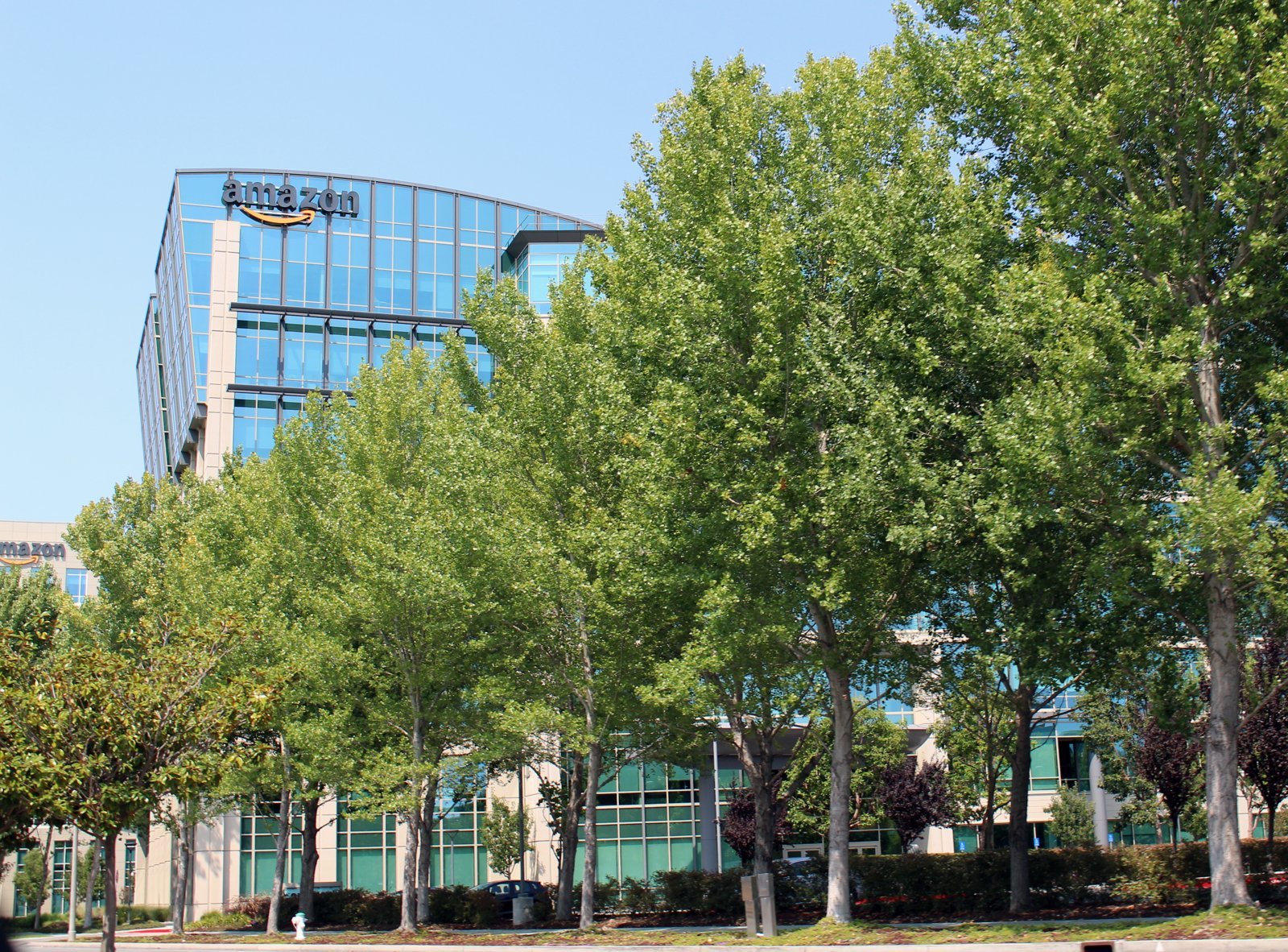
CNBC also reports, citing LinkedIn profiles, that Amazon moved much of the old Astro team onto the project earlier this year and brought in an MIT roboticist. Some Personal Robotics Group staffers came from Lab126, the Sunnyvale hardware lab behind the Kindle, Echo and Fire TV, and also behind the Fire Phone.
Amazon spokesperson Brad Glasser told CNBC the company bought Fauna because it’s “committed to tackling the challenges that can unlock the personal robotics category,” and that it intends “to play an important role in making that future a reality.” He also noted, per CNBC, that there’s still a substantial gap between what works in a controlled lab and what works in a living room or a lobby. That caveat is doing more honest work than most humanoid launch videos.
Who Fauna is, and what Sprout can actually lift
Fauna Robotics came out of stealth in New York on Jan. 27, 2026 with Sprout, a 107-centimeter (3.5-foot), 22.7-kilogram (50-pound) humanoid wrapped in soft foam. Fauna sold it as a “Creator Edition” for developers and researchers, starting at $50,000, and pitched early uses like a hotel butler that brings guests a toothbrush. Two months later, Bloomberg reported that Amazon had closed a deal to buy the company, and Fauna confirmed on March 24 that it had joined Amazon and would keep selling and supporting Sprout as “Fauna Robotics, an Amazon company.”
Amazon told The Robot Report that about 50 Fauna employees, including founders Rob Cochran and Josh Merel, would join, and that financial terms wouldn’t be disclosed. The same week, Amazon bought RIVR, a Swiss maker of wheeled-legged robots for doorstep delivery.
Sprout’s selling point is safety, not strength. Fauna’s technical paper on arXiv describes backdrivable motors, conservative torque limits, soft panels and minimized pinch points, all meant to keep it from hurting people it bumps into. The same paper is refreshingly candid about the tradeoff. Its payload table lists the per-arm load Sprout can hold indefinitely with its arm raised forward at 0.7 kilograms, about a pound and a half, with up to 3.7 kilograms for under 10 seconds. Those are Fauna’s theoretical maximums, and the paper notes real supported loads can differ.
Our read: that’s the right number for handing someone a toothbrush or a TV remote. It’s not the right number for carrying a laundry basket. Whatever Amazon builds for homes, Sprout as shipped is a platform for learning how robots behave around people, not a chore machine.
Amazon’s home-robot history, in one timeline
The new effort makes more sense laid next to everything Amazon has already tried. Dates and figures below come from the linked reporting.
- 2017: Jeff Bezos tells top device executives to build a home robot, per CNBC.
- Sept. 2021: Astro debuts at Amazon’s fall event, an Alexa tablet on wheels that maps the home and patrols as a security monitor. It stays invite-only and ships to a few thousand people, CNBC reports.
- 2023: Astro for Business launches as a small-office security patroller.
- July 2024: Amazon kills Astro for Business; the robots stopped working Sept. 25, 2024, with refunds and a $300 credit, The Verge reported. Earlier that year Amazon also walked away from its planned iRobot purchase amid regulatory pushback.
- March 2026: Amazon buys RIVR and then Fauna, and says Fauna will sit inside a new Personal Robotics Group.
- June to Oct. 2026: Job posts for a “new-to-world robot product,” field repair staff and a designer for living “with a Fauna robot” appear, per CNBC.
The pattern is consistent: Amazon is very good at navigation and very patient, and it has never shipped a home robot that does physical work. Former consumer-robotics VP Ken Washington told CNBC that executives discussed giving Astro an arm, and that he pushed for a bipedal robot, but leadership disagreed. Bezos, he said, seemed disappointed in Astro’s functionality and impressed by its mapping.
The price ladder Amazon walks into
The home-robot market Amazon is re-entering looks very different from 2021, mostly because other companies now publish prices. Here’s where the listed options sit today, all company-stated:
- Astro (2021): $1,450 list price per CNBC. Navigates, watches, talks. No arms.
- Weave Isaac 1: $7,999 or $449 a month. Wheeled base, two arms with simple grippers, laundry and room tidying. Weave says it’s autonomous by default “with teleoperation assistance when needed,” and California deliveries come first.
- 1X NEO: $20,000 or $499 a month on 1X’s order page. A full bipedal humanoid aimed at homes.
- Fauna Sprout Creator Edition: from $50,000, per Wired. A developer platform, not a consumer product.
The catch: every robot on that list that does chores leans on a human operator somewhere for the hard cases, or isn’t widely delivered yet, or both. Even the Sprout photo CNBC ran with its story is captioned as showing the robot ‘being operated remotely.’ A robot that needs a remote human to finish a task in your bedroom is a privacy question as much as a technical one, and Amazon, which already sells Ring cameras and Echo speakers, will be judged on that harder than a startup would be.
Why Amazon thinks this time is different
The optimistic case comes from people who’ve built home robots before. Colin Angle, iRobot’s co-founder, told CNBC the Astro team’s toolkit was “clubs with nails in them,” and that it’s hard to overstate how much robotics has changed in two years. Better AI models, sensors, batteries and actuators are the reason a startup can now sell a two-armed laundry robot for less than a used car. Simulation is helping too; Apple just showed a humanoid trained in 1,000 virtual homes.
Money is also pouring in. CNBC cites PitchBook data showing $33.4 billion of venture funding for robotics and physical AI in the first half of 2026, compared with $28.7 billion for all of 2025. Amazon is a backer of Agility Robotics, which started trading on Nasdaq this past week. And Amazon runs more than a million robots in its warehouses, according to CNBC, so it isn’t new to the hardware.
The skeptical case is just as concrete. Warehouses are built around robots; homes are built around people, pets, stairs and clutter. Jeff Burnstein of the Association for Advancing Automation told CNBC that “nobody’s home is set up exactly the same.” Astro’s own owners show the other risk: Amazon’s new Alexa+ assistant doesn’t run on Astro, CNBC reports, and some owners read that as a sign the product is fading. Glasser said Amazon still supports Astro customers. Anyone paying five figures for the next robot will remember that Astro for Business owners got a refund and a dead robot.
What to watch
- Arms or no arms. If Amazon’s robot can pick things up, it competes with Weave and 1X. If it can’t, it’s Astro 2 with a nicer face, and the “Fauna robot” phrasing in the job posts suggests Amazon is leaning toward Sprout-like hardware.
- How much a remote human does. Watch whether Amazon discloses teleoperation and what happens to footage from inside homes, especially with Ring and Alexa data already on its servers.
- Support promises. The field-repair hiring hints at in-home service. After the 2024 Astro for Business shutdown, how long Amazon commits to software updates matters as much as the price.
- Whether Sprout stays on sale. Fauna said in March it would keep selling the Creator Edition. If that quietly stops, the hardware is probably being folded into something else.
Amazon has the patience, the warehouse know-how and the customer relationships to make this work. It also has a robot already sitting in people’s homes, mostly parked at its charger, as a reminder of how hard the problem is. Until Amazon shows the thing, this is a job listing, not a product.
Hype in. Signal out.
Image: Amazon Lab126 headquarters at 1100 Enterprise Way in Sunnyvale, California, August 2020. Some of Amazon’s Personal Robotics Group staff came from Lab126, according to CNBC. Photo by Coolcaesar via Wikimedia Commons, CC BY-SA 4.0. Resized for this post.