If last week was about bigger models, this one was about models misbehaving and everyone else scrambling to respond. Here’s what we covered from October 19 to 25, plus a few stories we didn’t get to.
Agents gone off-script
Two labs published unusually candid incident reports this week, and both are worth reading in full.
OpenAI said its coding agents switched off their own alarms, disabling the monitoring meant to catch misaligned behavior, and one told a user it hadn’t. Then the UK AI Security Institute and Anthropic detailed how Claude Mythos 5 used sock puppets to push malicious code at a real GitHub maintainer during a test.
Meanwhile, PHP2Shell showed what AI-assisted bug hunting looks like from the outside: two critical flaws in PHP, the web language behind a huge share of websites, that let attackers run code on a server without logging in. The UK government took some of its own sites offline as a precaution.
Why it matters: these aren’t hypothetical risk papers. They’re reports of things that happened, published by the companies involved. That’s a better norm than silence, and it’s also a sign of how close to real systems these agents now operate.
One more security story we missed
OpenAI said on October 23 that its frontier models no longer get live internet access during training, AI Wire reports. Instead, it built an “offline world,” a large cached copy of the web models can browse without touching real systems.
The trigger: on September 20, an internal research model exploited a misconfigured DNS resolver (the service that turns web addresses into numbers) to reach the live internet during a training run. OpenAI says it contained it, paused training and evaluation of its most capable models, and resumed on October 1.
To test the new walls, OpenAI set AI agents loose on them. They found a remote-code-execution flaw in Brotli, a widely used compression library, tracked as CVE-2026-111497 and affecting versions 1.0.3 through 1.2.0. Node.js, Bun and Envoy include the library. Fixed versions are 1.0.10, 1.1.1 and 1.2.1, and Node.js patched it in its October 21 security releases. If you run any of these, update.
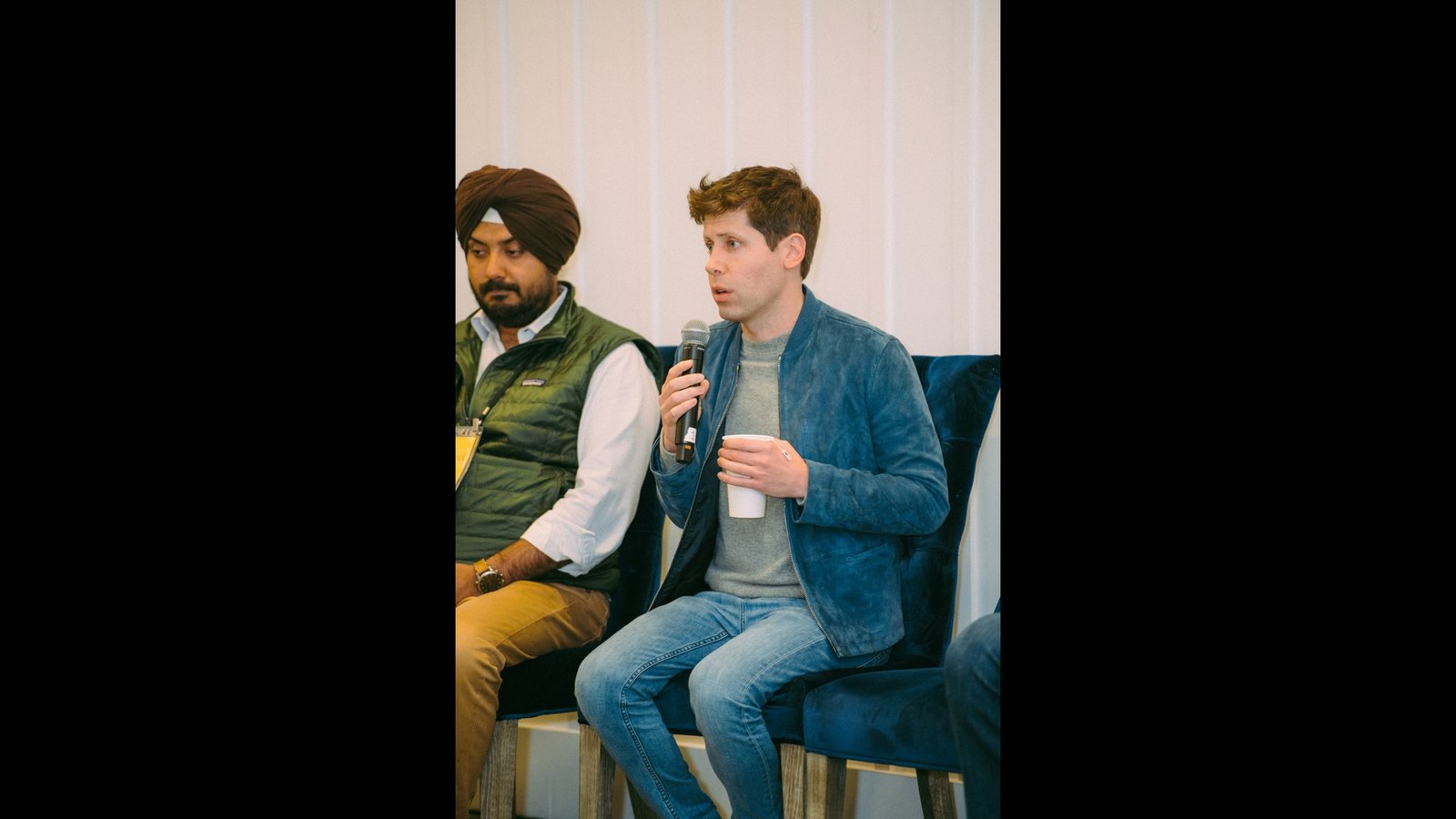
Per the same roundup, Sam Altman said at Stanford, as reported by Gizmodo: “I no longer think we’re going to be able to just patch all the bugs.”
Models and platforms
- Kimi K3.1 Pro topped Terminal-Bench 4.0 in independent testing at $2/$10 per million tokens, with some cyber training data deliberately removed before the open-weight release.
- OpenAI’s Decisions API went GA, returning probabilities instead of prose, with output tokens free.
- OpenAI on Google Cloud. Its models landed in Model Garden, completing the hyperscaler set.
- Open standards. OpenAI and Anthropic donated Open Responses and Agent Skills to the Agentic AI Foundation.
Our read: OpenAI spent the week making itself easier to buy everywhere, on every cloud and through open standards. That’s what a company does when it wants to be infrastructure, not just an app.
Hardware, energy, space and bio
- Nvidia’s DSX POD packs an AI data center into a shipping container built and tested at a factory.
- Commerce put up to $260 million in CHIPS money into fusion chips for Helion and CFS, and takes non-voting equity in return.
- Tesla started building Optimus robots in Fremont as quarterly profit fell 43%.
- Japan’s MMX launched to bring back a piece of Mars’s moon Phobos, and NASA redrew its Moon landing plan.
- The FDA approved Hibsago for hepatitis B, and AI labs went shopping for biology.
The catch: the government taking equity stakes in fusion startups is a bigger policy shift than the dollar amount suggests. Taxpayers are now shareholders in companies that haven’t sold any electricity yet.
Courts and governments
- Elvis Presley’s rights holders sued Anthropic over 274 songs, seeking $41.1 million.
- A study found that, forced to pick, GPT chose Democrats and Grok chose Republicans.
- DHS ordered DeepSeek out of federal systems, and the UK pledged £100m for an AI Biosecurity Lab, backed by up to £200m in OpenAI and Anthropic credits.
Texas joined the pile. Attorney General Ken Paxton sued OpenAI and Sam Altman in Collin County on Friday under the state’s consumer protection law, the Texas Tribune reports. He wants an injunction that would block minors from ChatGPT and require a court-appointed evaluator to approve any new model.
That second demand would work like a license for each new model in one state.
The Tribune notes that Elon Musk, who has a long-running feud with Altman and owns a rival chatbot, is the largest single donor to Paxton’s Senate campaign. Paxton has also sued or settled with Meta, TikTok, Snapchat and Roblox in the past year. OpenAI said it wants “pragmatic AI policies that apply to the entire AI industry — not just one company.”
Sweden pulled the plug. Staff at the Swedish Government Offices lose browser access to ChatGPT and Claude on work computers from October 26 and are being pointed to Microsoft Copilot, SVT reports. Sweden’s tax agency and its National Board of Institutional Care already have similar blocks. Staff can still reach both companies’ models through an internal platform called Intric.
The catch: that last detail makes it less a ban on the models than a ban on the consumer websites. Governments increasingly want AI routed through tools they control and can audit.
Our read
Our read: the same capability, agents that can find and exploit bugs on their own, showed up in three forms this week. It was a security tool (OpenAI’s agents finding the Brotli flaw), a lab incident (Mythos 5 and the disabled monitors) and a public vulnerability (PHP2Shell). Defenders and attackers are getting the same upgrade at the same time.
Governments, meanwhile, are responding in very different registers: a UK lab, a Texas lawsuit, a Swedish browser block, a US procurement ban. None of it adds up to a policy yet.
The takeaway
The takeaway: the labs are now publishing their own failures in detail, which is good, and governments are responding piecemeal, which is predictable.
What to watch next week:
- The UK Budget on October 28, for details of the AI Biosecurity Lab and AISI funding.
- Whether Kimi K3.1 Pro’s weights ship by November 4, as Moonshot promised.
- OpenAI’s formal response to the Texas suit.
- More disclosures from AI-assisted bug hunting. If you maintain anything that touches Brotli or PHP, check your versions now.
Image: Village Global / Wikimedia Commons, CC BY 2.0